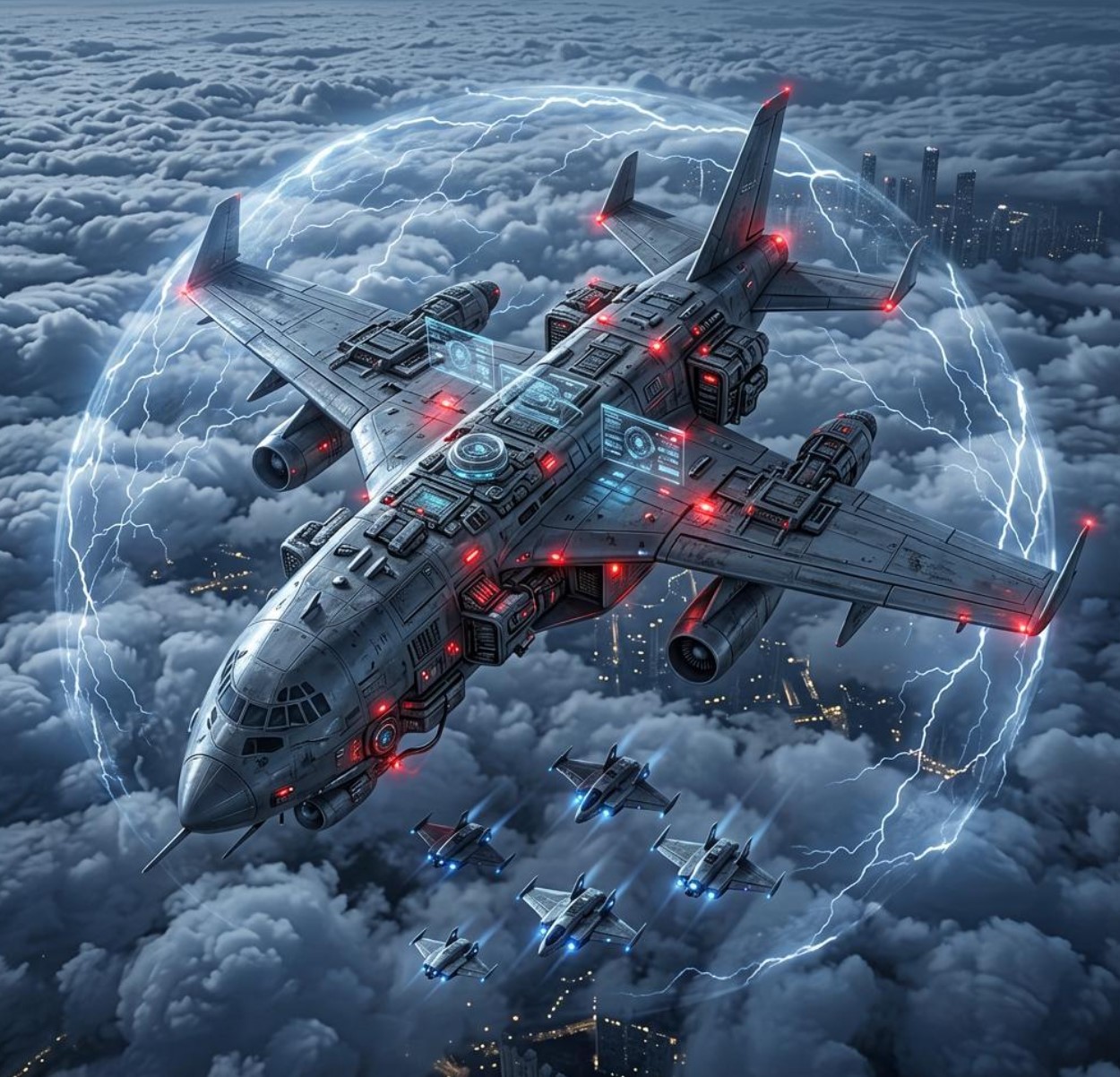
云端“末日堡垒”:全球特种空中指挥机全景科普
"Doomsday Fortresses" in the Sky: A Global Panoramic Overview of Specialized Airborne Command Posts
引言:当大地沉寂,苍穹接管指挥权
Introduction: When the Earth Falls Silent, the Sky Takes Command
在核大战、大规模灭绝级灾难或全球通信基础设施被彻底摧毁的极端假设下,地面指挥中枢将首当其冲化为废墟。特种空中指挥机(Specialized Airborne Command Posts),在西方语境中常被冠以“末日飞机(Doomsday Plane)”的称号,是人类文明在战略层面的“最后备份”。它们不是为了进攻而生,而是为了在文明崩塌的边缘,维持国家指挥当局(NCA)对战略力量的控制,确保“相互保证毁灭”逻辑下的二次打击能力或灾后重建的秩序锚点。
In scenarios involving all-out nuclear war, mass-extinction-level disasters, or the total destruction of global communication infrastructure, ground-based command centers would be among the first casualties. Specialized Airborne Command Posts, often dubbed "Doomsday Planes" in Western discourse, serve as the ultimate "backup" of national strategic survival. They are not designed for offensive operations but to maintain the National Command Authority's (NCA) control over strategic forces amid civilizational collapse—ensuring either second-strike capability under Mutual Assured Destruction (MAD) logic or serving as an anchor point for post-catastrophe order reconstruction.
目前,全球仅有少数核大国具备研发与运维此类极端复杂系统的能力,其中美国与俄罗斯构成了该领域的第一梯队,分别代表了冷战至今两种截然不同的工程设计哲学与战略生存逻辑。
Currently, only a handful of nuclear-armed powers possess the capability to develop and operate such extraordinarily complex systems. The United States and Russia constitute the first tier in this domain, representing two distinctly different engineering philosophies and strategic survival logics from the Cold War to the present day.
一、美国体系:全球霸权的空中神经中枢
I. The U.S. System: The Aerial Neural Hub of Global Hegemony
1. E-4B“守夜者”(Nightwatch)
平台基础:基于波音747-200B四发宽体客机深度改装,现役共4架,部署于内布拉斯加州奥弗特空军基地,隶属第595指挥控制大队。
Base Platform: Deep-modified from the Boeing 747-200B four-engine wide-body airliner. Four are currently in active service, deployed at Offutt Air Force Base, Nebraska, under the 595th Command and Control Group.
核心能力:
-
极端生存性:机身敷设抗辐射涂层、热辐射盾与电磁脉冲(EMP)屏蔽层,舷窗采用特殊防辐射玻璃,可在核爆环境及强电磁干扰下维持运作。
-
超长滞空:不加油续航约12小时,配合空中加油可连续飞行超72小时(曾创35.4小时不加油纪录),实现“一周不下地”的全球巡弋。
-
通信霸权:配备67部卫星天线及长达数英里的拖曳式超长波天线(TWA),可穿透海水与深海战略核潜艇建立联络,覆盖全频谱通信。[3]
-
指挥容量:三层舱室结构,设战情室、简报室,最多承载112人(含48人以上机组),兼具“飞行白宫”与“飞行五角大楼”职能。
Core Capabilities:
-
Extreme Survivability: The airframe is coated with radiation-resistant materials, thermal shields, and Electromagnetic Pulse (EMP) hardening layers; windows use special anti-radiation glass, allowing operation in nuclear blast environments and intense electromagnetic interference.
-
Extended Loiter Time: Approximately 12 hours of unrefueled endurance; with aerial refueling, it can exceed 72 hours aloft (holding a record of 35.4 hours unrefueled), enabling "stay-aloft-for-a-week" global cruising.
-
Communication Supremacy: Equipped with 67 satellite antennas and miles-long trailing wire antennas (TWA) for extremely low frequency (ELF) communication, capable of penetrating seawater to link with deep-sea strategic ballistic missile submarines across the full spectrum.
-
Command Capacity: Three-deck cabin structure with a battle staff room and briefing rooms, accommodating up to 112 personnel (including a crew of 48+), functioning as both an "Airborne White House" and an "Airborne Pentagon."
换代计划:2024年美国空军授出130亿美元合同,由内华达山脉公司(SNC)基于波音747-8F二手客机改装5架E-4C“可生存机载作战中心(SAOC)”,预计2036年前完成替换。
Replacement Program: In 2024, the USAF awarded a $13 billion contract to Sierra Nevada Corporation (SNC) to convert five used Boeing 747-8F airliners into E-4C Survivable Airborne Operations Centers (SAOC), with full replacement of the E-4B fleet expected by 2036.
2. E-6B“水星”(Mercury)
专司海军战略对潜指挥,由波音707改装,搭载“接管并从属(TACAMO)”系统,负责在核战后向大西洋与太平洋舰队核潜艇传达发射指令,部分职能将在未来整合至E-4C体系。
Dedicated to strategic submarine communications for the Navy, modified from the Boeing 707 and equipped with the "Take Charge and Move Out" (TACAMO) system. It relays launch orders to Atlantic and Pacific Fleet SSBNs post-nuclear strike, with some of its functions slated for future integration into the E-4C architecture.
3. E-130J“凤凰II”(Phoenix II)
2025年美国海军公布的新一代末日指挥机,基于C-130J运输机/波音机型探讨换代,延续TACAMO任务,象征“永生与复苏”。
The U.S. Navy’s next-generation doomsday aircraft announced in 2025, based on studies of C-130J or Boeing platforms to succeed TACAMO missions, its name symbolizing "immortality and resurrection."
二、俄罗斯体系:苏维埃重工与新时代的数字化重生
II. The Russian System: Soviet Heavy Industry and Digital Rebirth in the New Era
1. 伊尔-80(Il-80 / Il-86VKP),北约代号“大圆顶”(Maxdome)
平台基础:苏联“环形(Zveno)”项目产物,基于伊尔-86四发宽体客机改装,现役约4架,部署于莫斯科附近的奇卡洛夫斯基空军基地第3独立航空大队。
Base Platform: Product of the Soviet "Zveno" project, modified from the Ilyushin Il-86 four-engine wide-body airliner. About four are in service, deployed with the 3rd Independent Aviation Squadron at Chkalovsky Air Base near Moscow.
特征:
-
机身顶部硕大的整流罩(通信穹顶),原客舱舷窗大部分被封闭以抗EMP与核闪光,保留驾驶舱视野。
-
具备基本抗核加固与对陆基洲际导弹、战略轰炸机的指挥能力,但对潜通信依赖图-142MR中继机。
-
短板:机体源于1980年代,油耗高、航电老化,续航与生存冗余弱于E-4B。
Characteristics:
-
Large dorsal radome (communication dome) atop the fuselage; most original passenger windows were sealed to resist EMP and nuclear flash, retaining only cockpit visibility.
-
Possesses basic nuclear-hardening and command capability over land-based ICBMs and strategic bombers, but submarine communication relies on Tu-142MR relay aircraft.
-
Limitations: Airframe dates to the 1980s with high fuel consumption and aging avionics; endurance and survival redundancy are inferior to the E-4B.
2. 图-214PU(Tu-214PU / VPU),俄称“飞行指挥点”
平台基础:基于图-214双发喷气客机(图-204衍生型)改装,由总统事务管理局特种飞行中队运营,数量极少(约3–5架)。
Base Platform: Modified from the twin-engine Tupolev Tu-214 (derived from the Tu-204 family), operated by the Special Flight Detachment of the Presidential Administration; very few in number (approx. 3–5).
定位与能力:
-
兼顾总统/高官专机与危机空中指挥所双重职能,常在和平时期伴随首脑出访,搭载SBUS-214加密通信系统与现代化数字化航电。
-
机身背部设独木舟状大型整流罩集成多波段卫星天线,具备抗EMP与核爆冲击波设计,可指挥陆、空核力量及部分海基力量(辅以图-214SR中继机)。
-
体型小于伊尔-80与E-4B,机动性更好、起降距离更短,但载重、长期生存舱容与全球不经停航程相对受限。
Role & Capabilities:
-
Dual role as presidential/VIP transport and crisis airborne command post, frequently accompanying leadership on foreign visits during peacetime, equipped with SBUS-214 encrypted comms and modern digital avionics.
-
Canoe-shaped dorsal radome housing multi-band satellite antennas; designed with EMP resistance and nuclear blast overpressure protection, capable of commanding land-based and air-delivered nuclear forces and partially naval forces (augmented by Tu-214SR relay aircraft).
-
Smaller than Il-80 and E-4B, offering better maneuverability and shorter takeoff/landing distances, but with trade-offs in payload, long-duration survival cabin space, and unrefueled global range.
3. 下一代规划:伊尔-96-400M为基础的第三代指挥机
俄罗斯计划以伊尔-96-400M宽体客机为平台建造新一代末日飞机,替换老龄伊尔-80,提升续航、抗干扰与现代作战指挥系统集成度。
Next Generation Planning: Russia plans to build a new-generation doomsday aircraft based on the Ilyushin Il-96-400M wide-body platform to replace aging Il-80s, enhancing endurance, jamming resistance, and integration with modern combat command systems.
三、其他国家的空中指挥与通信体系
III. Airborne Command and Communication Systems in Other Nations
除美俄外,全球多数核国家并未公开装备严格意义上的“重型末日飞机”,但通过以下方式构建备份指挥能力:
-
英国与法国:依托预警机(如E-3D、E-7)、政府专机(如RAF Voyager A330 MRTT改装专机)及地面/海底光纤指挥链,在危机时利用现有宽体机加装加密链路实现有限空中指挥,未单独建造重型核战指挥机。
-
中国:公开资料未见类似E-4B或伊尔-80的重型末日飞机报道,战略指挥依赖高生存性地下指挥所、机动发射平台及卫星通信网;部分分析认为大型特种机(如基于运-20或客机改装的指挥通信机)可能承担区域空中指挥任务,但未获官方确认。
Beyond the U.S. and Russia, most other nuclear-armed states have not publicly deployed heavy "doomsday planes" in the strict sense, instead building backup command capabilities through:
-
UK & France: Relying on AEW&C aircraft (e.g., E-3D, E-7), government VIP transports (such as RAF Voyager A330 MRTT conversions), and ground/undersea fiber-optic command links. In crises, existing wide-body aircraft may be fitted with encrypted links for limited airborne command, without dedicated heavy nuclear-war command posts.
-
China: No public reports confirm heavy doomsday aircraft akin to E-4B or Il-80. Strategic command relies on survivable underground command centers, mobile launch platforms, and satellite comms networks. Some analyses suggest large special-mission aircraft (based on Y-20 or commercial airliners) may perform regional airborne command roles, but this remains unconfirmed officially.
四、美俄“末日飞机”核心维度对比
IV. Core Dimension Comparison: U.S. vs. Russian "Doomsday Planes"
|
维度 / Dimension |
美国 E-4B |
俄罗斯 Il-80 |
俄罗斯 Tu-214PU |
|---|---|---|---|
|
载机平台 / Airframe |
波音747-200B(四发重型宽体) |
伊尔-86(四发重型宽体) |
图-214(双发中型客机) |
|
续航(不加油) / Endurance (unrefueled) |
~12小时(纪录35.4小时) |
~6–10小时 |
~6.5–7小时 |
|
抗核加固 / Nuclear Hardening |
高(EMP盾、热盾、防辐射层) |
中等(封窗、基础加固) |
中等(现代电子加固、EMP防护) |
|
对潜通信 / Submarine Comms |
拖曳超长波天线,直接指挥SSBN |
依赖图-142MR中继机 |
需图-214SR中继辅助 |
|
乘员容量 / Crew Capacity |
最多112人 |
约50–100人 |
约60余人 |
|
定位 / Primary Role |
国家最高应急空中指挥所 |
战略力量空中指挥中枢 |
高机动专机+空中指挥点 |
五、技术演进与伦理底色
V. Technological Evolution and Ethical Undertones
“末日飞机”的存在本身即是一种悖论性威慑:它们越先进、越能在核地狱中存活,理论上越能强化“二次打击必至”的可信度,从而遏制先发制人的核冲动;但与此同时,它们也是人类将指挥链条延伸至大气层之上的终极冷战遗存。
The existence of "doomsday planes" is itself a paradoxical deterrence: The more advanced they are and the more capable they become of surviving a nuclear hellscape, the more they theoretically reinforce the credibility of "assured second strike," thereby discouraging first-use nuclear temptation. Yet simultaneously, they remain the ultimate vestiges of the Cold War, extending humanity's command chains above the atmosphere.
未来趋势呈现三条主线:
-
平台换代:美E-4C、俄Il-96新机将引入数字化抗干扰链路、模块化任务舱与更优燃油经济性。
-
网络-太空融合:指挥机不再是孤岛,将与低轨卫星星座、网络战节点深度耦合,在EMP环境下寻求量子通信等抗毁信道。
-
模糊和平与战争的界限:如图-214PU在和平时期常态化伴随元首,使“末日符号”日常化,既展示战略定力,也增加误判风险。
Future trends manifest along three axes:
-
Platform Replacement: The U.S. E-4C and Russia's new Il-96-based aircraft will introduce digital anti-jamming links, modular mission pods, and improved fuel efficiency.
-
Cyber-Space Integration: Command posts will no longer be isolated islands but deeply coupled with LEO satellite constellations and cyber warfare nodes, seeking EMP-resilient channels such as quantum communications.
-
Blurring Peace-War Boundaries: Aircraft like Tu-214PU accompany heads of state during peacetime, normalizing the "doomsday symbol"—demonstrating strategic composure while potentially raising miscalculation risks.
结语:在人类尚未摆脱核武器阴影的今天,这些盘旋于平流层的钢铁巨兽,既是理性威慑的工程丰碑,也是悬顶达摩克利斯之剑的无声注脚。只要它们仍在待命跑道上15分钟内可升空,世界便仍在那微妙的“同人与临卦”交织的平衡之中。
Epilogue: As long as humanity has not shed the shadow of nuclear weapons, these steel leviathans cruising the stratosphere stand both as monumental feats of rational deterrence engineering and as silent footnotes to the sword of Damocles overhead. So long as they remain on alert runways ready to scramble within 15 minutes, the world persists within that delicate balance interwoven between the hexagrams of "Tong Ren" (Fellowship with Men) and "Lin" (Approach).
此文由 怡心湖 编辑,若您觉得有益,欢迎分享转发!:首页 > 常识论 » 云端“末日堡垒”:全球特种空中指挥机全景科普
 锋刃向西:群山空军基地韩美联合演习
 云端“铁拳”与“天眼”的耦合:轰-6
 制度化遏制与岛链并网: 美国2027财
 中国空军"全球第二":客观评估还是战
 哪些美国公司具备军用无人机生产能
 美国工业基础是否处于战时状态?
 美军再度打击伊朗与撤销石油豁免对
 俄乌战争到如今对俄罗斯金融市场的