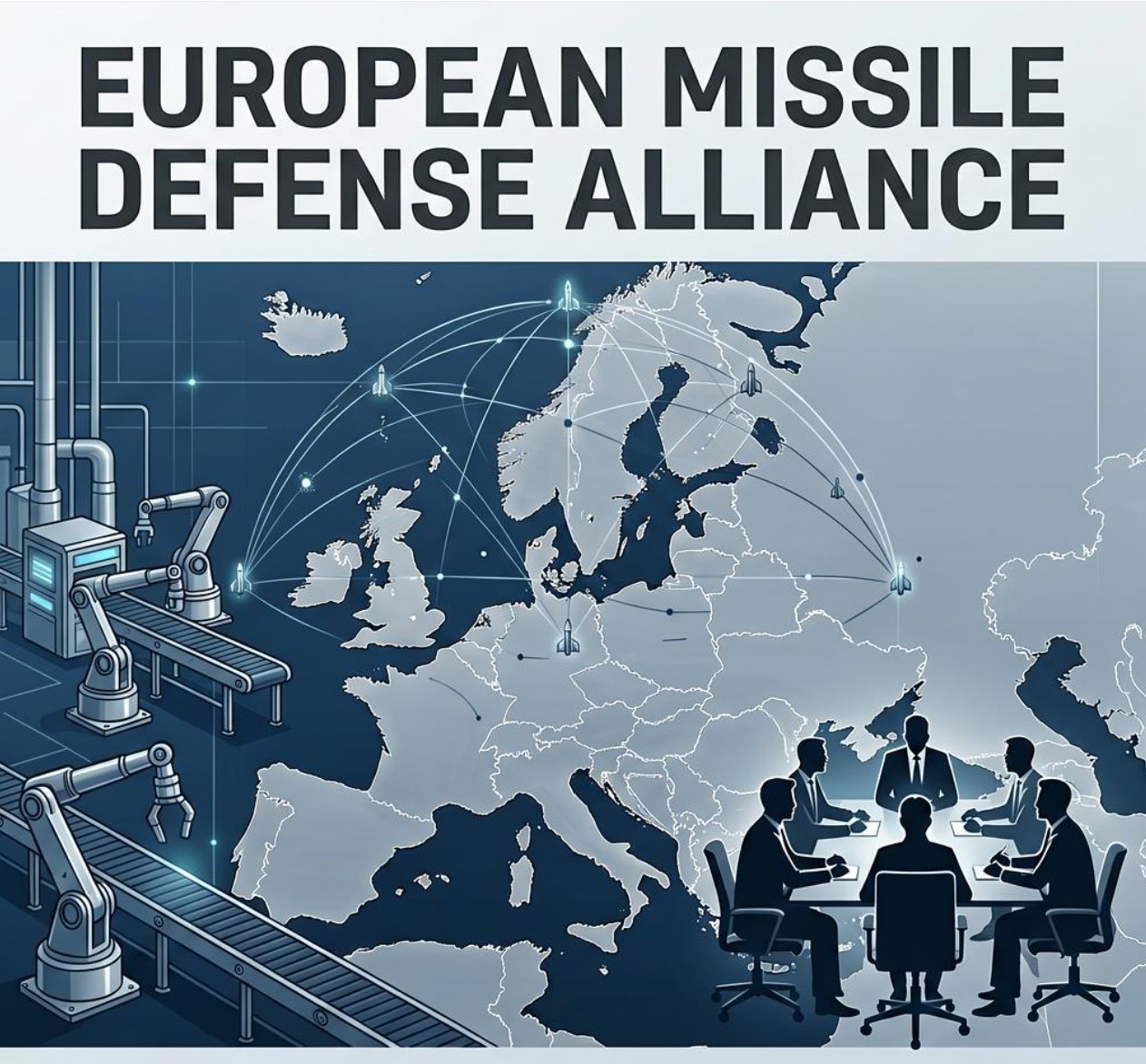
欧洲防务自主与战场工业化的交汇:乌克兰与九国反弹道导弹联盟深度分析
The Convergence of European Strategic Autonomy and Battlefield Industrialization: An In-depth Analysis of the Ukraine–Nine European Nations Anti-Ballistic Missile Coalition
一、引言:巴黎峰会的新信号
I. Introduction: New Signals from the Paris Summit
2026年7月13日,在法国巴黎举行的“志愿联盟”(Coalition of the Willing)峰会期间,乌克兰与丹麦、法国、德国、意大利、荷兰、挪威、西班牙、瑞典、英国九国签署联合声明,正式宣布组建“纯防御性质的反弹道导弹联盟”。此举被视为欧洲在俄乌长期消耗战背景下,从“紧急输血式援助”向“本土化联合军工造血”转型的关键节点。
On July 13, 2026, on the sidelines of the “Coalition of the Willing” summit in Paris, France, Ukraine and nine European nations—Denmark, France, Germany, Italy, the Netherlands, Norway, Spain, Sweden, and the United Kingdom—signed a joint declaration officially announcing the establishment of a “purely defensive Anti-Ballistic Missile Coalition.” This move is regarded as a critical pivot for Europe amid the protracted war of attrition in Ukraine, shifting from “emergency transfusion-style aid” to “localized joint defense industrial capacity-building.”
二、战略背景:高端消耗战下的防空困境
II. Strategic Context: Air Defense Dilemmas Under High-End Attrition Warfare
-
拦截成本失衡:俄乌冲突证明,使用数百万美元的“爱国者”PAC-3拦截弹(约380万美元/枚)去拦截数万至数十万美元的巡航导弹与无人机,在经济上难以持续。欧洲亟需低成本、可量产的替代方案。
Interception Cost Imbalance: The Russia–Ukraine conflict has demonstrated that using multi-million-dollar Patriot PAC-3 interceptors (~US$3.8M per round) against cruise missiles and drones costing tens to hundreds of thousands of dollars is economically unsustainable. Europe urgently needs low-cost, mass-producible alternatives.
-
现有体系短板:尽管法、英拥有一定战略威慑与防御能力,但多数欧盟国家在弹道导弹防御(BMD)上长期依赖美国保护伞,面对俄“匕首”“伊斯坎德尔”等高超音速武器存在感知与拦截盲区。
Shortfalls of Existing Architectures: Although France and the UK possess certain strategic deterrence and defense capabilities, most EU states have long relied on the U.S. protective umbrella for Ballistic Missile Defense (BMD), facing gaps in detection and interception against Russian hypersonic weapons such as “Kinzhal” and “Iskander.”
-
乌克兰实战经验:乌克兰在三年的高强度对抗中积累了独特的反导与防空作战数据,成为欧洲唯一拥有大规模弹道威胁应对经验的行为体,这使其从“受援方”转变为“技术共创方”。
Ukraine’s Combat Experience: After three years of high-intensity confrontation, Ukraine has amassed unique operational data on counter-missile and air defense, making it the only European actor with large-scale ballistic threat response experience. This shifts its role from a “recipient of aid” to a “co-developer of technology.”
三、核心抓手:FREYJA(弗雷亚)项目与技术路径
III. Core Initiative: The FREYJA Project and Technical Pathway
联盟的旗舰项目是由乌克兰“燃点”(Fire Point)公司主导、欧洲多国参与的FREYJA反弹道导弹防御系统,其设计逻辑具有鲜明的前线导向特征:
The coalition’s flagship initiative is the FREYJA Anti-Ballistic Missile Defense System, led by Ukraine’s Fire Point company with participation from multiple European nations. Its design logic bears distinct frontline-oriented characteristics:
-
成本与量产优势:基于FP-7.X拦截导弹,目标单次拦截成本约70万美元,显著低于“爱国者”;计划实现规模化量产(目标日产数枚起步),填补高端系统产能缺口。
Cost and Mass-Production Advantage: Based on the FP-7.X interceptor missile, the target cost per interception is approximately US$700,000, significantly lower than Patriot systems. It aims for scalable mass production (initial target of several rounds per day) to fill the capability gap left by high-end system production bottlenecks.
-
跨国分工体系:
-
乌克兰:总体集成、FP-7.X导弹、发射装置与指控系统;
-
德国(Hensoldt):雷达探测与火控集成;
-
法国(Thales)、意大利(Leonardo)、挪威(Kongsberg):跟踪与指挥控制子系统。
Transnational Division of Labor:
-
Ukraine: Overall integration, FP-7.X missiles, launchers, and command-control systems;
-
Germany (Hensoldt): Radar detection and fire-control integration;
-
France (Thales), Italy (Leonardo), Norway (Kongsberg): Tracking and C2 subsystems.
-
-
时间表:泽连斯基称预计12个月内研制并完成初步量产,作为对“爱国者”“紫菀”(Aster)系统的补充而非替代。
Timeline: President Zelensky stated that the system could be developed and initially mass-produced within 12 months, serving as a complement rather than a replacement to Patriot and Aster systems.
四、地缘战略意涵
IV. Geostrategic Implications
1. 欧洲防务自主的试探性一步
1. A Tentative Step Toward European Strategic Autonomy
该联盟在名义上回避北约框架,由欧盟核心大国与乌克兰自行缔结,体现了“欧洲自主构建安全公共产品”的意图。然而,技术底层仍可能依赖美方授权(如“爱国者”生产许可谈判),其自主性存在上限。
The coalition formally circumvents the NATO framework, being concluded by core EU powers and Ukraine, reflecting an intent to “build European security public goods autonomously.” However, its technological baseline may still rely on U.S. licensing (e.g., Patriot production license negotiations), implying inherent limits to its autonomy.
2. 援助逻辑的根本转折:从输血到嵌入
2. A Fundamental Pivot in Aid Logic: From Transfusion to Embeddedness
西方不再仅提供库存武器,而是通过“德国出资+乌克兰制造+多国技术配套”模式,将乌克兰嵌入欧洲防务产业链。即便未来冲突降温,这一工业与安全架构也难以拆除,对俄罗斯形成长期战略压力。[波兰部分媒体分析转述]
The West is no longer merely providing stockpiled weapons. Through models such as “German funding + Ukrainian manufacturing + multi-national tech integration,” Ukraine is being embedded into the European defense industrial chain. Even if hostilities de-escalate, this industrial and security architecture would be difficult to dismantle, exerting long-term strategic pressure on Russia.
3. 俄罗斯的反应与风险升级
3. Russian Response and Risk Escalation
俄方将“志愿联盟”称为“好战分子联盟”与“战争轴心”,并大概率视该反导联盟为北约东翼进攻性部署的前沿伪装。导弹攻防博弈可能倒逼俄方加速高超音速与饱和攻击手段的迭代,增加意外升级风险。
Russia labels the “Coalition of the Willing” as a “coalition of belligerents” and a “war axis,” and will likely view this ABM coalition as a forward disguise for offensive deployments on NATO’s eastern flank. The missile offense-defense dynamic may compel Russia to accelerate iterations of hypersonic and saturation-attack capabilities, increasing the risk of unintended escalation.
五、挑战与前景评估
V. Challenges and Prospective Assessment
-
技术与时间压力:弹道导弹拦截涉及复杂的中段/末段制导、高能动力与大系统协同,乌克兰与欧洲能否在12个月内拿出可靠系统,业内普遍存疑(俄专家称可能需5–10年)。
Technical and Temporal Pressure: Ballistic missile interception involves complex mid-course/terminal guidance, high-energy propulsion, and large-system synchronization. Whether Ukraine and Europe can deliver a reliable system within 12 months is widely questioned in the industry (Russian experts suggest 5–10 years may be required).
-
内部协调成本:十国联合研发面临需求分歧、预算分摊与知识产权归属等典型“欧洲军工通病”,历史上有法德联合坦克等项目受挫先例。
Internal Coordination Costs: Ten-nation joint R&D faces typical “European defense industrial ailments”: divergent requirements, cost-sharing disputes, and IP ownership issues, as seen in past failures like the Franco-German joint tank project.
-
资金可持续性:在欧盟共同财政约束与成员国国内政治波动下,长期投入“乌克兰本土军工”面临政治审验风险。
Financial Sustainability: Under EU fiscal constraints and domestic political fluctuations in member states, long-term investment in “Ukrainian local defense industry” faces political scrutiny risks.
六、结论
VI. Conclusion
乌克兰与欧洲九国反弹道导弹联盟的成立,既是战场生存压力的产物,也是欧洲试图在防务领域走出“保护伞依赖”的试验。FREYJA项目若成功,将重塑欧洲防空的经济学逻辑(从精英化走向规模化);若失败,则将再次暴露欧洲战略自主的工业与政治短板。无论结果如何,这一联盟已将乌克兰安全与欧洲防务架构深度绑定,为后冲突时代的欧亚地缘版图埋下长期变量。
The establishment of the Ukraine–Nine European Nations Anti-Ballistic Missile Coalition is both a product of frontline survival pressure and an experiment in Europe’s attempt to step out of “protective umbrella dependency” in defense. If the FREYJA project succeeds, it will reshape the economic logic of European air defense (from elitist to scalable); if it fails, it will once again expose the industrial and political shortcomings of European strategic autonomy. Regardless of the outcome, this coalition has deeply coupled Ukrainian security with the European defense architecture, sowing long-term variables into the post-conflict Eurasian geopolitical landscape.
此文由 怡心湖 编辑,若您觉得有益,欢迎分享转发!:首页 > 观·世界 » 欧洲防务自主与战场工业化的交汇:乌克兰与九国反弹道导弹联盟深度分析
 弹壳下的东亚密码:乌克兰拆解俄导弹
 烽火欧陆,震荡东海:乌克兰战场升级对