美军再度打击伊朗与撤销石油豁免对国际经济环境的冲击分析
The Geoeconomic Impact of the July 2026 U.S. Military Strike on Iran and Revocation of Oil Sanctions Waiver
机构/Institution: 全球宏观战略研究院(Global Macro Strategy Institute, GMSI)
日期/Date: 2026-07-08
分类/Classification: 地缘经济简报 Geoeconomic Brief No.2607-IRN
密级/Clearance: 公开 Open Source
一、事件概述|Executive Summary
【中文】
2026年7月7日,美国中央司令部(CENTCOM)对伊朗锡里克、格什姆岛及阿巴斯港沿岸防空体系、无人机基地和导弹设施发动大规模空袭,回应霍尔木兹海峡三艘商船遭袭事件。同日,美财政部OFAC撤销6月签发的伊朗石油销售通用许可(General License X),要求所有相关交易于7月17日前结清。这是美伊冲突从"停火试探"重返"实质军事—金融双压"的标志性升级,全球市场瞬时重定价能源风险溢价。
【English】
On July 7, 2026, U.S. CENTCOM launched extensive airstrikes on Iranian coastal air-defense systems, UAV bases, and missile sites at Sirik, Qeshm Island, and Bandar Abbas, responding to recent attacks on three merchant vessels in the Strait of Hormuz. Concurrently, the U.S. Treasury's OFAC revoked the June-issued General License authorizing Iranian crude and petroleum product sales, mandating a wind-down of all related transactions by July 17. This dual kinetic-financial escalation marks the collapse of the tentative ceasefire understanding and forces an immediate repricing of geopolitical risk premia across global energy and financial markets.
二、能源市场:霍尔木兹风险溢价与供给侧冲击|Energy Markets: Hormuz Risk Premium & Supply-Side Shock
【中文】
-
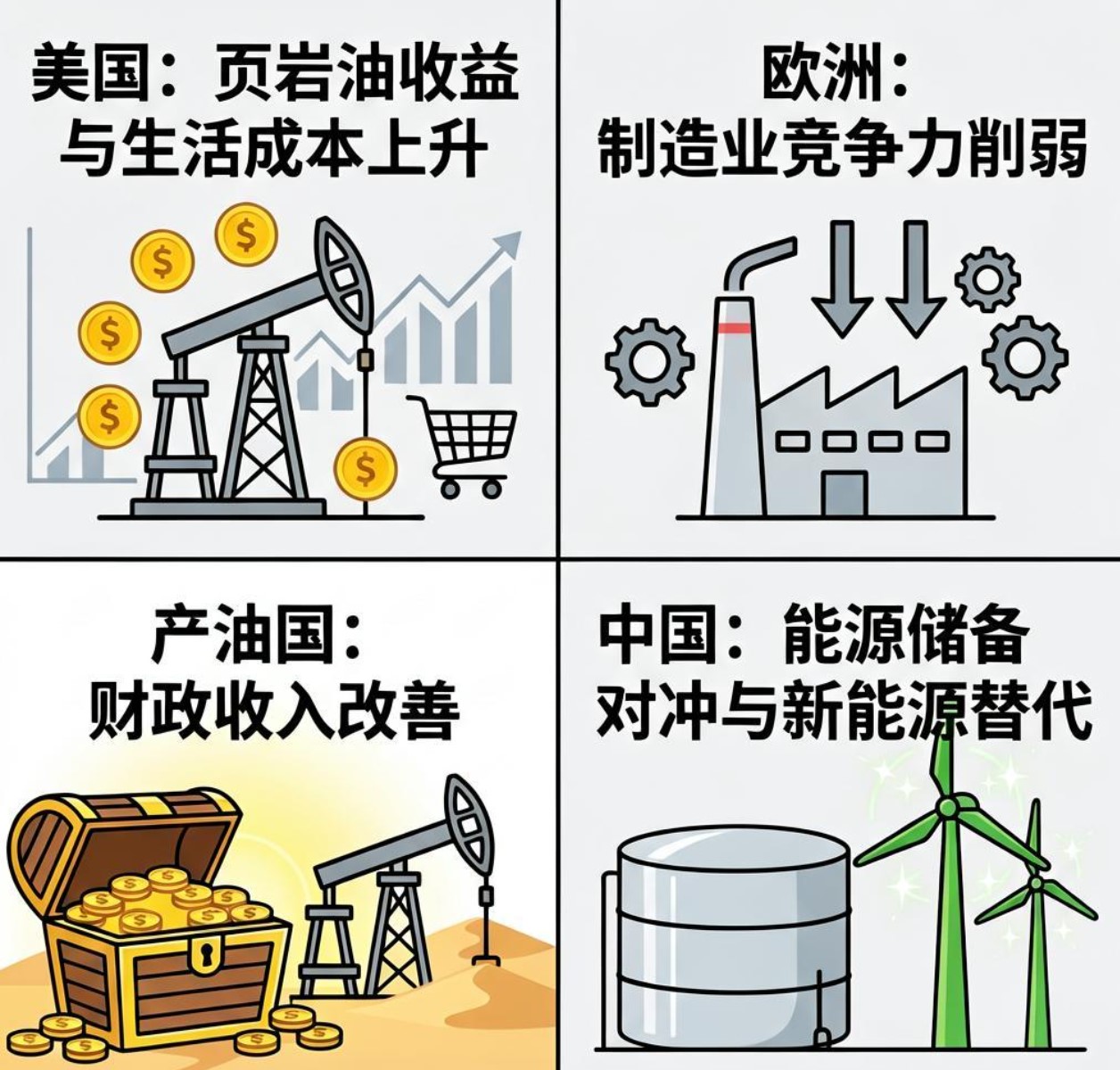
原油急涨:霍尔木兹海峡承载全球约20%海运石油与逾30%LNG贸易。打击消息传出后,布伦特原油盘中最高触及76.36美元/桶(+6.1%),WTI升至72.51美元/桶(+5.8%)。若伊朗实施不对称报复或局部封锁,短期油价或测试80–100美元区间。
-
伊朗出口归零效应:撤销豁免使此前通过临时许可流通的伊朗重油与凝析油(主要流向亚洲独立炼厂)被迫停止,亚洲炼厂需紧急切换至沙特/伊拉克/俄油替代,抬升中东酸性原油贴水。
-
航运与保险:战争风险保费(War Risk Premium)急升,部分船东暂停霍尔木兹过境,绕行好望角将使亚欧航线延长10–14天,推高LNG与成品油到岸成本。
【English】
-
Crude Spike: The Strait of Hormuz handles ~20% of globally traded oil and >30% of LNG seaborne trade. Following the strike and waiver revocation, Brent crude peaked at 76.36/bbl(+6.172.51/bbl (+5.8%). Should Iran pursue asymmetric retaliation or partial blockage, prices could test the 80–100/bbl range near-term.
-
Loss of Iranian Barrels: The waiver revocation forces an immediate halt to Iranian Heavy crude and condensate flows—largely destined for Asian teapot refiners—compelling a rapid switch to Saudi, Iraqi, or Russian sour grades, tightening OSP (Official Selling Price) discounts across the Middle East complex.
-
Shipping & Insurance: War-risk insurance premiums surged; several owners suspended Hormuz transits. Diversion via the Cape of Good Hope would add 10–14 days to Asia–Europe routes, elevating delivered costs for LNG and clean/dirty products.
三、金融市场反应:避险分化与"黄金悖论"|Financial Market Response: Risk-Off Rotation & the "Gold Paradox"
【中文】
-
股市:纳指跌1.16%,费城半导体指数重挫4%–5%(美光-4.7%、台积电ADR -4.2%),科技高估值板块对地缘不确定性最敏感;能源(XLE)、军工、油运板块逆势走强。
-
黄金反常下跌:现货金失守4100美元/盎司(-1.47%)。油价→通胀预期→美债收益率上行(10年期至4.53%–4.60%)→美元指数反弹至101+,共同压制无息资产黄金,避险买盘被"更高更久(Higher-for-Longer)"利率预期抵消。
-
汇市与债市:美元受避险资金支撑短线走强;美债遭温和抛售,收益率曲线熊平,反映市场对美联储推迟降息的重定价。
【English】
-
Equities: The Nasdaq Composite fell 1.16%; the Philadelphia Semiconductor Index dropped 4%–5% (Micron −4.7%, TSMC ADR −4.2%), with high-multiple tech names most vulnerable to geopolitical uncertainty. Energy (XLE), defense, and tanker equities outperformed.
-
Gold Paradox: Spot gold slipped below $4,100/oz (−1.47%). The causal chain—rising oil → higher breakeven inflation → upward pressure on U.S. Treasury yields (10Y hitting 4.53%–4.60%) → USD strength—offset safe-haven bids. The "higher-for-longer" rate repricing weighed more heavily on non-yielding bullion than geopolitical fear bid it up.
-
FX & Bonds: The DXY rebounded above 101 on safe-haven inflows. U.S. Treasuries saw a modest bear-flattening move as markets delayed pricing of Fed cuts into 2027.
四、宏观经济传导:输入型通胀与滞胀隐忧|Macroeconomic Transmission: Imported Inflation & Stagflationary Pressure
【中文】
-
通胀二次抬头:能源成本上扬将向运输、航空燃油、石化中间体及居民用能传导。美欧CPI回落进程可能放缓,若布伦特持续站上80美元,核心通胀粘性将显著增强。
-
滞胀式冲击:供给侧负向冲击(油价↑+产出潜在↓)典型符合滞胀特征——抬价同时抑制增长,对能源净进口的新兴亚洲和欧元区尤为不利。
-
中国传导:A股油气/油服板块受益;但进口原油成本抬升压缩下游化工、交运毛利;依赖伊朗凝析油的北方地炼面临合规与断供双重风险。
-
货币政策路径:Bloomberg Economics预估——受此冲击,美联储2026–2028利率终点或较战前上调25–50bp;欧央行同样面临再鹰化压力。
【English】
-
Resurgent Inflation: Higher energy costs will cascade into transportation, jet fuel, petrochemical feedstocks, and household utility bills. The disinflation trajectory in the U.S. and Eurozone may stall; sustained Brent above $80/bbl would materially reinforce core CPI stickiness.
-
Stagflationary Shock: A negative supply shock (↑input costs + ↓potential output) is classically stagflationary, disproportionately harming energy-importing emerging Asian economies and the Euro area.
-
China Channel: Onshore oil & gas/service names benefit near-term, but rising import costs compress margins in downstream chemicals and transportation. Teapot refiners reliant on Iranian condensate face both compliance risk and feedstock uncertainty.
-
Monetary Policy: Bloomberg Economics suggests the Fed's terminal rate through 2026–2028 could be marked up 25–50bp relative to the pre-escalation path; the ECB faces similar re-hawkishness pressures.
五、情景推演与关键监测指标|Scenario Analysis & Key Monitoring Indicators
|
情景 Scenario |
概率 Est. |
油价区间 Brent Range |
宏观含义 Macro Implication |
|---|---|---|---|
|
有限冲突+较快降温 Limited skirmish, quick de-escalation |
45% |
72–80 |
风险溢价逐步回吐,美联储按兵不动 Moderate stagflation scare, Fed on hold |
|
霍尔木兹部分受阻/伊朗报复 Partial Hormuz disruption / Iranian retaliation |
40% |
80–95 |
输入通胀抬头,降息延后,股市承压 Imported inflation, delayed easing, equity risk-off |
|
海峡持续性封锁或区域产油设施受损 Sustained blockade or GCC facility damage |
15% |
100–130+ |
全球衰退风险剧增,紧急释储,需求破坏 Severe recession risk, SPR releases, demand destruction |
关键监测点 Key Watch Items:
-
伊朗是否试图骚扰/封锁霍尔木兹海峡航运 Iran's posture on Hormuz interference
-
美国是否追加次级制裁(针对购油第三方)Potential secondary sanctions on Iranian oil buyers
-
霍尔木兹海峡周度油轮通行量与战争险费率 Weekly tanker transit count & war-risk premium
-
美联储官员对通胀路径的最新点阵图 FOMC dots / speeches on revised inflation outlook
结论与政策建议|Conclusion & Policy Recommendations
此文由 怡心湖 编辑,若您觉得有益,欢迎分享转发!:首页 > 观·世界 » 美军再度打击伊朗与撤销石油豁免对国际经济环境的冲击分析
 美军MDTF-I2CEWS电子战模块在联合
 日本陆自NEWS系统与美军陆基电子战
 乌克兰和伊朗谁面积大?军力孰更强?
 1973年是美股历史上著名的熊市开启
 阿努比斯无人机与伊朗“沙赫德-136