
弹壳下的东亚密码:乌克兰拆解俄导弹发现日本零部件的全球供应链观察
East Asian Codes Inside the Warhead: A Global Supply Chain Observation on Ukraine Finding Japanese Parts in Russian Missiles
引言:残骸中的“意外发现”
Introduction: The "Unexpected Discovery" in the Debris
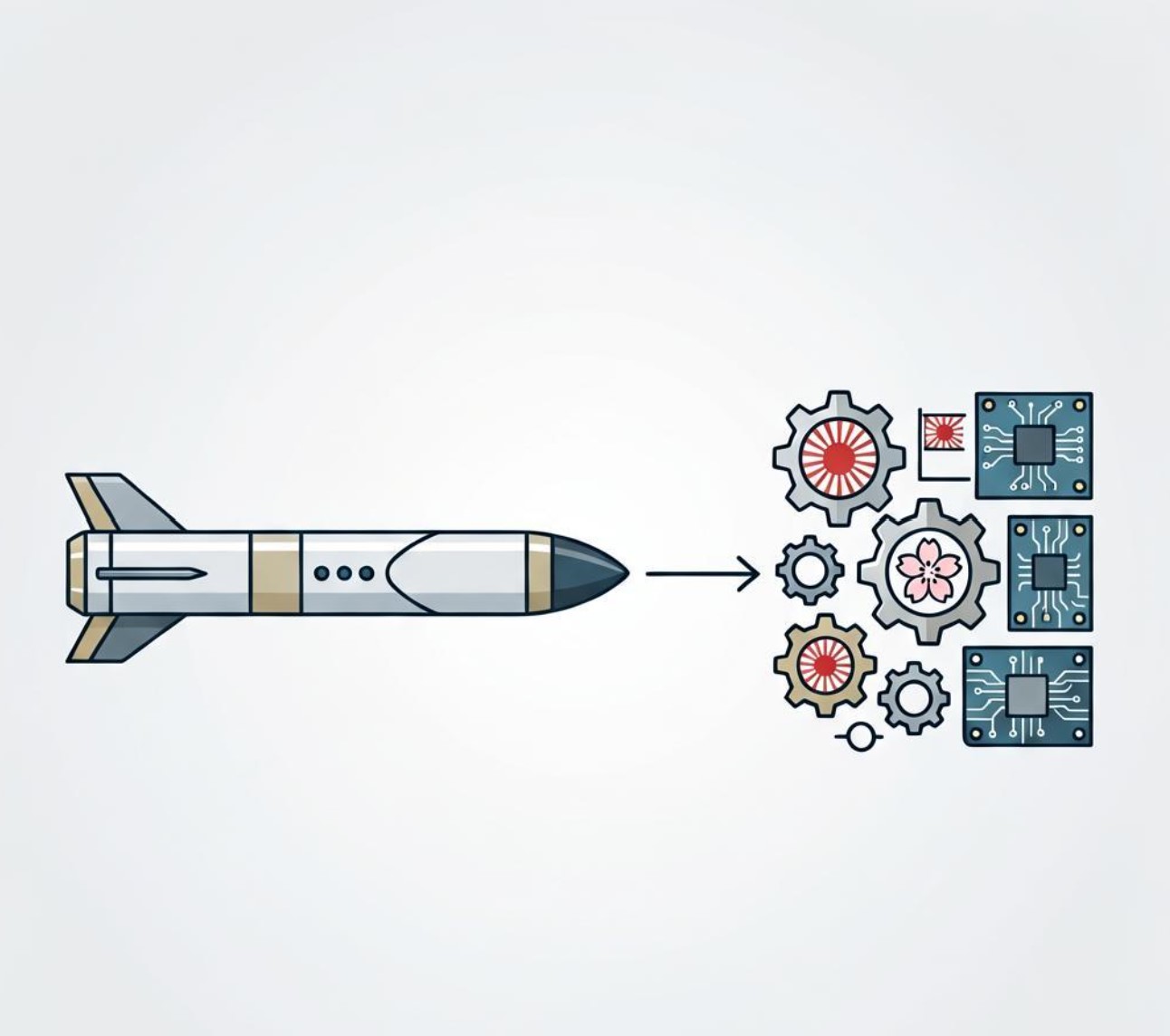
2026年6月底,乌克兰总统制裁政策顾问弗拉季斯拉夫·弗拉修克(Vladyoslav Vlasyuk)在接受日本共同社专访时披露了一个震动国际社会的细节:乌方技术团队系统拆解了大量在战场击落或坠落的俄军Kh-101巡航导弹、“柳叶刀”无人机、仿制“沙赫德”无人机及伊朗提供的“迁徙者-6”侦察无人机残骸,发现约九成的受分析武器型号中至少含有一种日本企业制造的电子零部件。这些元件多为民用级别的电容、电阻、半导体、惯性导航模块与传感器,广泛存在于导弹的制导、控制与通讯系统中。
In late June 2026, Vladyoslav Vlasyuk, Advisor to the Ukrainian President on Sanctions Policy, disclosed a detail that shocked the international community in an exclusive interview with Kyodo News: Ukrainian technical teams systematically dismantled debris from Russian Kh-101 cruise missiles, Lancet drones, Shahed-type drones, and Iranian Mohajer-6 reconnaissance UAVs shot down or crashed on the battlefield, and found that about 90% of the analyzed weapon models contained at least one electronic component manufactured by Japanese companies. Most of these parts are civilian-grade capacitors, resistors, semiconductors, inertial navigation modules, and sensors, widely present in the guidance, control, and communication systems of the missiles.
一、数据背后的事实边界
I. The Factual Boundary Behind the Data
需要首先厘清的是,乌方所说的“九成”并非指俄罗斯导弹90%的原材料或重量来自日本,而是指在被拆解溯源的武器型号样本中,约90%检出了日本制造的零部件。乌克兰政府向媒体公开的内部资料点名了约13家日本企业,包括半导体巨头、大型电机制造商及无晶圆厂芯片设计公司,如村田制作所、京瓷、罗姆、松下、东芝、日本航空电子工业等。部分残骸上的元件生产批号甚至显示为2024年至2026年,意味着在西方对俄严厉制裁实施后,这条灰色供应链依然在运转。
It needs to be clarified first that the "90%" mentioned by the Ukrainian side does not mean that 90% of the raw materials or weight of Russian missiles come from Japan, but rather that among the sampled weapon models dissected and traced, about 90% were detected with Japanese-made parts. The Ukrainian government's internal data disclosed to the media named about 13 Japanese companies, including semiconductor giants, large electrical machinery manufacturers, and fabless chip design houses such as Murata Manufacturing, Kyocera, ROHM, Panasonic, Toshiba, and Japan Aviation Electronics. The production lot numbers on some debris even indicated 2024 to 2026, meaning this gray supply chain continued to operate after the imposition of strict Western sanctions against Russia.
二、民用与军用的模糊地带:全球供应链的“双刃剑”
II. The Blurred Line Between Civilian and Military: The "Double-Edged Sword" of Global Supply Chains
现代军工早已不是“关起门来打铁”的时代。导弹的外壳、发动机与战斗部可以是纯国产的,但其内部的导航、电源管理、姿态控制与微控制器,高度依赖全球化民用电子工业网络。日本企业在车规级芯片、精密传感器与高端电容领域拥有全球竞争优势,这些“军民两用”(Dual-Use)产品在出厂时往往贴着汽车、机床、通信设备、工业控制器甚至家电的标签。俄罗斯通过第三国的贸易中转公司、空壳公司与灰色渠道,将这些民用通用件批量采购并迂回转运回国,再整合进国防生产线。弗拉修克也承认,企业对最终收货方与终端用途的追踪极其困难。
Modern military industry is no longer an era of "forging iron behind closed doors." While the missile casing, engine, and warhead may be domestically produced, the internal navigation, power management, attitude control, and microcontrollers heavily rely on the globalized civilian electronic industrial network. Japanese companies have global competitive advantages in automotive-grade chips, precision sensors, and high-end capacitors. These "Dual-Use" products often leave factories labeled for automobiles, machine tools, communication equipment, industrial controllers, or even home appliances. Through intermediary trading companies, shell companies, and gray channels in third countries, Russia bulk-purchases these general-purpose civilian components, transships them back home via detours, and integrates them into defense production lines. Vlasyuk also admitted that it is extremely difficult for companies to track the ultimate consignee and end-use of their products.
三、流转路径与情报暗流
III. Transit Routes and Underlying Intelligence Currents
根据《纽约时报》等媒体的跟进调查,这些日本零部件大多经由中国、中亚国家(如哈萨克斯坦等)、越南等地中转,通过更换单据、多层转手流入俄罗斯。更为复杂的是,西方情报机构披露,俄罗斯军事情报机构(GRU)下属的“第20局”可能在东京利用俄航办事处等商业身份作掩护,组织高科技采购网络,部分被欧洲驱逐的俄情报人员也被指转移到了日本。这使得日本在反间谍管控与出口全链条追溯上的制度漏洞被进一步放大。
According to follow-up investigations by The New York Times and other media, most of these Japanese parts are transshipped via China, Central Asian countries (such as Kazakhstan), Vietnam, etc., and flow into Russia through document swapping and multi-layer hands. More complexly, Western intelligence agencies disclosed that the "Unit 29155/20th Directorate" under Russia's military intelligence (GRU) may be organizing high-tech procurement networks in Tokyo under the cover of commercial identities such as Aeroflot offices, and some Russian intelligence personnel expelled from Europe were alleged to have moved to Japan. This further amplifies the institutional loopholes in Japan's counter-intelligence controls and full-chain export traceability.
四、外交尴尬与企业回应
IV. Diplomatic Awkwardness and Corporate Responses
乌克兰已将涉事企业清单通过外交渠道递交日本外务省,并要求升级两用产品出口管制。对此,多数被点名的日本企业回应称“因信息有限无法确认是否为本公司产品”,或表示难以追踪最终流向,目前无证据表明这些企业明知最终用于俄军武器仍主动对俄出售。日本政府在政治上紧跟西方对俄制裁,但在供应链实操层面面临全球化民用贸易难以彻底切割的现实困境,陷入外交与产业双重尴尬。
Ukraine has submitted the list of involved companies to the Japanese Ministry of Foreign Affairs through diplomatic channels and demanded upgraded export controls on dual-use products. In response, most named Japanese companies stated they "cannot confirm whether the products are theirs due to limited information" or expressed difficulty in tracking final flows. Currently, there is no evidence that these companies knowingly sold to Russia anticipating military use. While the Japanese government politically follows Western sanctions against Russia, it faces the practical dilemma of being unable to completely sever globalized civilian trade at the supply chain level, falling into dual diplomatic and industrial awkwardness.
五、观察与反思:制裁的裂缝与战争的工业逻辑
V. Observations and Reflections: Cracks in Sanctions and the Industrial Logic of War
这起事件折射出的核心问题,并非单一国家“暗中援俄”,而是全球化时代高端制造业与低端地缘冲突之间的结构性错位。当一枚2026年生产的Kh-101导弹在基辅上空被拦截,其残骸里却躺着最新批次的日本电容与芯片,这既是对制裁执行穿透力的拷问,也是对现代军工“民用心脏”依赖度的残酷注脚。对于乌克兰而言,公开点名既是向日本施压以封堵漏洞,也带有推动日乌防务合作、巩固反俄国际阵线的战略考量;而对于全球供应链管理者来说,如何在民用通用件与军事转用风险之间建立更精细的“熔断机制”,将是后制裁时代长期无解的难题。
The core issue reflected by this incident is not a single country "secretly aiding Russia", but rather the structural misalignment between high-end manufacturing in a globalized era and low-end geopolitical conflicts. When a Kh-101 missile produced in 2026 is intercepted over Kyiv, yet its debris contains the latest batches of Japanese capacitors and chips, this is both a challenge to the penetration power of sanction enforcement and a cruel footnote to the dependence of modern military industry on a "civilian heart". For Ukraine, public naming is both a pressure tactic on Japan to block loopholes and a strategic move to promote Japan-Ukraine defense cooperation and consolidate the anti-Russia international front; for global supply chain managers, how to build a more refined "circuit breaker mechanism" between civilian general-purpose parts and military diversion risks will be a long-term intractable problem in the post-sanction era.
此文由 怡心湖 编辑,若您觉得有益,欢迎分享转发!:首页 > 观·世界 » 弹壳下的东亚密码:乌克兰拆解俄导弹发现日本零部件的全球供应链观察
 烽火欧陆,震荡东海:乌克兰战场升级对
 从“台湾支点”到“第一岛链并网”
 分层拒止与梯次火力:PHL-191远程火
 A2/AD与网络战:网电融合时代的反介
 反介入与区域拒止(A2/AD):现代大国海
 日本陆自NEWS系统与美军陆基电子战
 日本SEAD任务中,陆自NEWS系统如何运
 日本电子战飞机如何与F-35J协同进