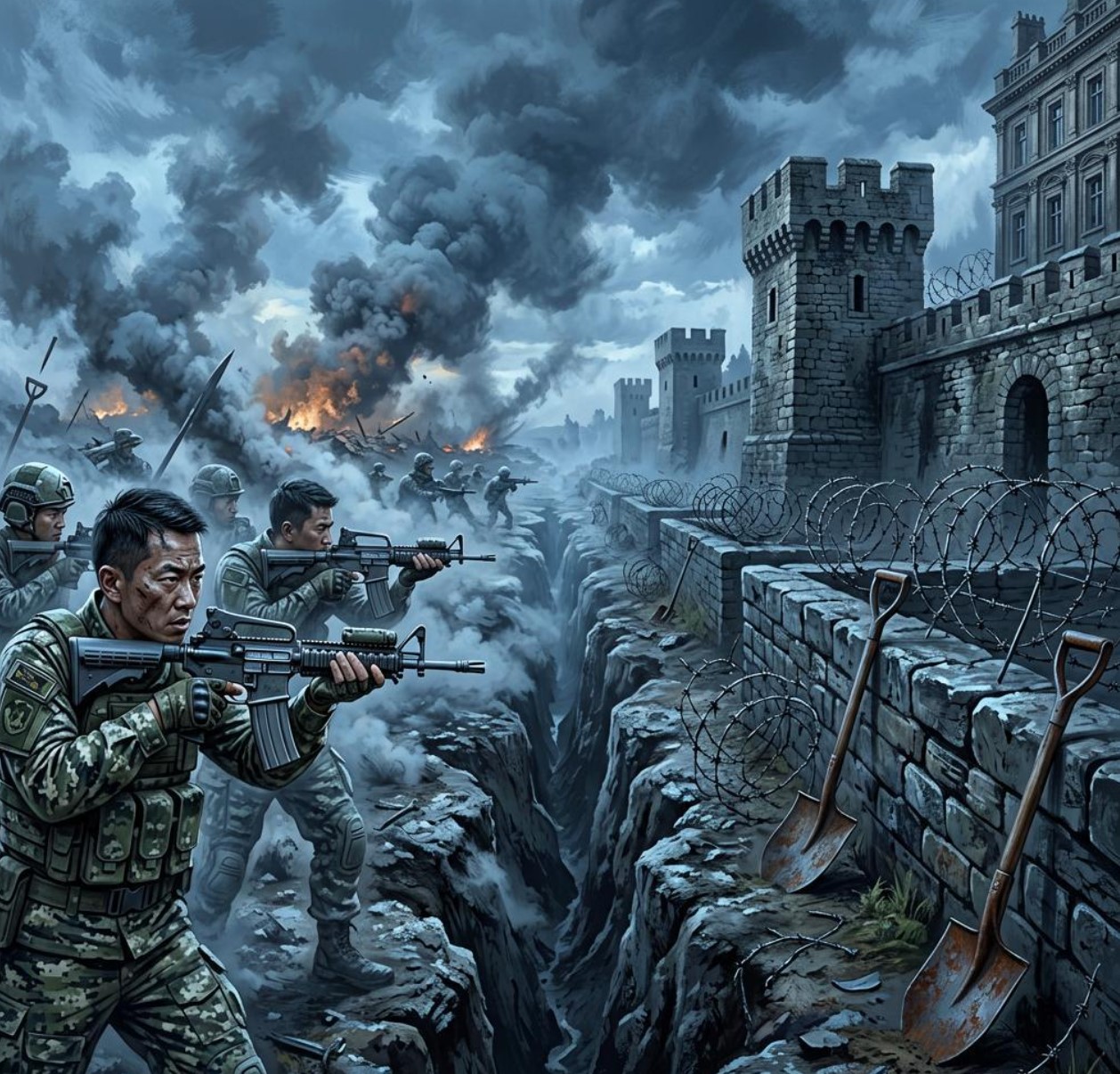
烽火欧陆,震荡东海:乌克兰战场升级对东亚地缘格局的深度重塑
Flames in Europe, Shockwaves in the East: The Deep Impact of Escalation in Ukraine on the East Asian Geopolitical Landscape
【摘要 / Abstract】
俄罗斯与西方在乌克兰战场上的显著升级,不仅是欧洲二战后安全秩序的最大断裂,也通过战略联动、经济制裁外溢、军事技术转移与同盟重组等渠道,深刻重塑东亚的安全与经济生态。本文从地缘政治、军事安全、经济供应链及外交战略四个维度,系统剖析乌克兰危机升级对东亚(中国、日本、韩国、朝鲜及东盟相关方)的多重影响。
The significant escalation between Russia and the West on the Ukrainian battlefield represents not only the most severe rupture of the post-WWII security order in Europe but also profoundly reshapes East Asia’s security and economic ecology through strategic linkage, spillover of economic sanctions, military technology transfer, and alliance restructuring. This paper systematically analyzes the multifaceted impacts of the Ukraine crisis escalation on East Asia (China, Japan, South Korea, North Korea, and relevant ASEAN parties) from four dimensions: geopolitics, military security, economic supply chains, and diplomatic strategy.
一、地缘政治联动:“今日的乌克兰,明日的东亚?”
I. Geopolitical Linkage: “Ukraine Today, East Asia Tomorrow?”
乌克兰危机爆发以来,美国及其亚太盟友频繁渲染“地缘类比”,日本前首相岸田文雄等政要多次公开警告“今日之乌克兰可能是明日之东亚”。这种叙事将俄乌冲突与台海、南海及朝鲜半岛议题强行绑定,旨在为北约“亚太化”与“印太战略”的融合提供合法性。
Since the outbreak of the Ukraine crisis, the United States and its Asia-Pacific allies have frequently promoted a “geopolitical analogy,” with figures like former Japanese PM Fumio Kishida repeatedly warning that “Ukraine today may be East Asia tomorrow.” This narrative forcibly links the Russia-Ukraine conflict with the Taiwan Strait, South China Sea, and Korean Peninsula issues, aiming to legitimize the integration of NATO’s “Asia-Pacificization” and the “Indo-Pacific Strategy.”
-
阵营化对抗加剧:西方将冲突框架化为“民主VS威权”,迫使东亚国家在制裁俄罗斯问题上选边站。日韩澳等美国盟友紧跟西方制裁步伐,而中国与部分东盟国家主张劝和促谈,东亚内部意识形态裂痕加深。
Intensified Bloc Confrontation: The West frames the conflict as “democracy vs. authoritarianism,” forcing East Asian countries to take sides on sanctioning Russia. US allies like Japan, South Korea, and Australia follow Western sanctions, while China and some ASEAN countries advocate for peace talks, deepening the ideological rift within East Asia.
-
俄罗斯“向东看”加速:在极限制裁下,俄罗斯外交加速非西方化与“向东转”,深化与中国的战略协作,拓展与越南、老挝、缅甸等亚太国家的务实合作,东亚成为俄罗斯规避西方压力的战略纵深。
Accelerated Russian “Pivot to the East”: Under extreme sanctions, Russian diplomacy accelerates its non-Western orientation and “turn to the East,” deepening strategic coordination with China and expanding practical cooperation with Vietnam, Laos, Myanmar, and other Asia-Pacific countries, making East Asia a strategic depth for Russia to circumvent Western pressure.
二、军事安全外溢:实战经验转移与军备竞赛激化
II. Military Security Spillover: Transfer of Combat Experience and Intensified Arms Race
乌克兰战场被称为“21世纪第一场大规模高技术消耗战”,其无人化作战、电子对抗、防空反导等经验正在被东亚各方密切关注与吸收。
The Ukrainian battlefield, regarded as the “first large-scale high-tech war of attrition of the 21st century,” sees its experiences in unmanned warfare, electronic countermeasures, and air/missile defense closely monitored and absorbed by various East Asian actors.
-
技术与战术向东亚扩散:乌克兰向日本输出远程打击无人机与蜂群控制技术;朝鲜向俄罗斯提供炮弹与派遣人员换取尖端军事技术与实战检验,直接提升朝鲜半岛南北对抗烈度。
Technology and Tactics Diffusion to East Asia: Ukraine exports long-range strike drones and swarm control tech to Japan; North Korea supplies artillery and personnel to Russia in exchange for cutting-edge military tech and combat testing, directly raising the intensity of North-South confrontation on the Korean Peninsula.
-
东亚军备竞赛升级:日本借机突破“专守防卫”,防卫预算连续攀升并于2026财年突破9万亿日元,谋求对敌基地攻击能力;美日韩三边安全合作趋于机制化,AUKUS与Quad联动增强,东亚安全困境呈螺旋上升。
Escalation of East Asian Arms Race: Japan capitalizes on the situation to break through “exclusive defense,” with defense budgets rising consecutively to exceed 9 trillion yen in FY2026, seeking enemy base attack capability; US-Japan-South Korea trilateral security cooperation becomes institutionalized, AUKUS and Quad linkages strengthen, and the East Asian security dilemma spirals upward.
-
北约触角伸向亚太:北约秘书长频繁访日韩,设立联络处呼声不断,跨大西洋与印太安全架构出现历史性咬合。
NATO’s Reach into the Indo-Pacific: NATO Secretary-Generals frequently visit Japan and South Korea, with ongoing calls to establish liaison offices, creating a historic interlocking of transatlantic and Indo-Pacific security architectures.
三、经济与供应链重构:制裁反噬与能源贸易转向
III. Economic and Supply Chain Restructuring: Backfire of Sanctions and Energy Trade Realignment
西方对俄极限制裁(金融SWIFT剔除、能源禁运、技术出口管制)产生了显著的全球外溢效应,东亚作为高度依赖能源进口与全球供应链的区域首当其冲。
Western extreme sanctions on Russia (SWIFT removal, energy embargo, tech export controls) produce significant global spillover effects, with East Asia, as a region heavily reliant on energy imports and global supply chains, bearing the brunt.
-
能源价格与通胀压力:俄乌占全球关键能源与粮食出口重要地位,冲突升级推高油气与粮价,日韩等净进口国面临输入性通胀与制造业成本上升压力。
Energy Prices and Inflation Pressure: Russia and Ukraine are critical global exporters of energy and grain; escalation drives up oil, gas, and food prices, exposing net importers like Japan and South Korea to imported inflation and rising manufacturing costs.
-
供应链“去风险”与次级制裁风险:美国以涉俄为由加强对华科技遏制与次级制裁威胁,东亚半导体、新能源产业链被迫加速“中国+1”或自主可控布局;中俄本币结算与能源东输成为防御型全球化的样本。
Supply Chain “De-risking” and Secondary Sanction Risks: The US uses Russia-related reasons to intensify tech containment and secondary sanction threats against China; East Asian semiconductor and new energy supply chains are forced to accelerate “China+1” or self-reliance layouts; China-Russia local currency settlement and energy eastward transfer become models of defensive globalization.
-
陆路走廊风险:若冲突长期化导致中欧班列等连接中国与欧洲的陆路通道受阻,将倒逼东亚贸易路线向海运集中,抬高物流与保险成本。
Land Corridor Risks: Prolonged conflict obstructing land routes like the China-Europe Railway Express would force East Asian trade routes to concentrate on sea transport, raising logistics and insurance costs.
四、外交战略再平衡:中小国家的对冲与大国博弈
IV. Diplomatic Strategy Rebalancing: Hedging by Smaller States and Great Power Competition
乌克兰危机迫使东亚各国重新审视“安全—经济”权衡:
The Ukraine crisis forces East Asian countries to re-examine the “security-economy” trade-off:
-
日韩的“价值观外交”固化:在安全焦虑下进一步绑定美西方,韩国加入北约合作网络防御中心(CCDCOE),日本推动“自由开放的印太”与G7议程挂钩。
Solidification of Japan and South Korea’s “Value-based Diplomacy”: Under security anxiety, they further tie to the US-West; South Korea joins NATO CCDCOE, Japan promotes “Free and Open Indo-Pacific” linked to the G7 agenda.
-
东盟与印度的战略自主诉求:多数东盟国家拒绝选边,维持与俄中经贸往来;印度在QUAD框架内与西方合作却又大量进口俄油,体现“多头下注”的对冲逻辑。
Strategic Autonomy Aspirations of ASEAN and India: Most ASEAN countries refuse to take sides, maintaining economic ties with Russia and China; India cooperates with the West within QUAD while importing large volumes of Russian oil, reflecting a hedging logic of “multi-alignment.”
-
中国的底线思维与斡旋角色:中国在避免卷入冲突的同时,强化能源、粮食与产业链安全,提出《关于政治解决乌克兰危机的中国立场》,在欧亚大陆东西两端维持战略平衡。
China’s Bottom-line Thinking and Mediation Role: While avoiding entanglement in the conflict, China strengthens energy, food, and supply chain security, proposes the “China’s Position on the Political Settlement of the Ukraine Crisis,” and maintains strategic balance across the Eurasian continent.
五、结论:东亚进入“安全优先”的新博弈周期
V. Conclusion: East Asia Enters a New Game Cycle Prioritizing “Security First”
俄罗斯与西方在乌克兰的显著升级,标志着冷战后“和平红利”在欧亚大陆的终结。对东亚而言,经济相互依存不再自动转化为安全互信,战场经验、制裁工具与同盟网络的全球化正在压缩地区国家的战略回旋空间。
The significant escalation between Russia and the West in Ukraine marks the end of the post-Cold War “peace dividend” on the Eurasian continent. For East Asia, economic interdependence no longer automatically translates into security mutual trust; the globalization of battlefield experience, sanction tools, and alliance networks is compressing the strategic maneuvering space of regional countries.
未来东亚将面临三重长期挑战:
-
安全困境固化:军事部署与联盟对抗的自我强化循环;
-
经济工具化:供应链成为地缘武器,科技与金融制裁常态化;
-
危机联动性上升:欧洲战线与亚太热点的共振风险增加,“多点爆发”的大国博弈成为新常态。
East Asia will face three long-term challenges ahead:
-
Institutionalized Security Dilemma: Self-reinforcing cycles of military deployment and alliance confrontation.
-
Weaponized Economy: Supply chains as geopolitical weapons, normalization of tech and financial sanctions.
-
Increased Crisis Interconnectivity: Rising resonance risks between European fronts and Indo-Pacific flashpoints, with “multi-point outbreak” great power competition becoming the new normal.
在此背景下,东亚各方需在动荡中探索“竞争性共存”的边界,防止乌克兰式的热战逻辑在东海、南海或朝鲜半岛重演。
Against this backdrop, East Asian actors need to explore the boundaries of “competitive coexistence” amid turbulence, preventing the hot-war logic of Ukraine from replaying in the East China Sea, South China Sea, or Korean Peninsula.
参考文献与数据来源 / References & Sources(部分):
-
清华大学战略与安全研究中心,《2026年中国外部安全风险》报告
-
中国社会科学院,《俄乌冲突下东亚安全格局新趋势》
-
RSIS, “The Russia-Ukraine War: Lessons for Northeast Asia”
-
法国外贸银行(Natixis)亚太区宏观经济分析
-
俄罗斯卫星通讯社、赫尔辛基地缘经济协会相关访谈
此文由 怡心湖 编辑,若您觉得有益,欢迎分享转发!:首页 > 观·世界 » 烽火欧陆,震荡东海:乌克兰战场升级对东亚地缘格局的深度重塑
 亚洲水塔的黄昏:冰川拐点、气候危机
 IMF逆势上调中国2026年GDP增速至4.
 中国大豆进口来源多元化进展(巴西/
 中国粮食进口依赖度高的问题何时能
 对比中国与俄罗斯粮食自给结构差异