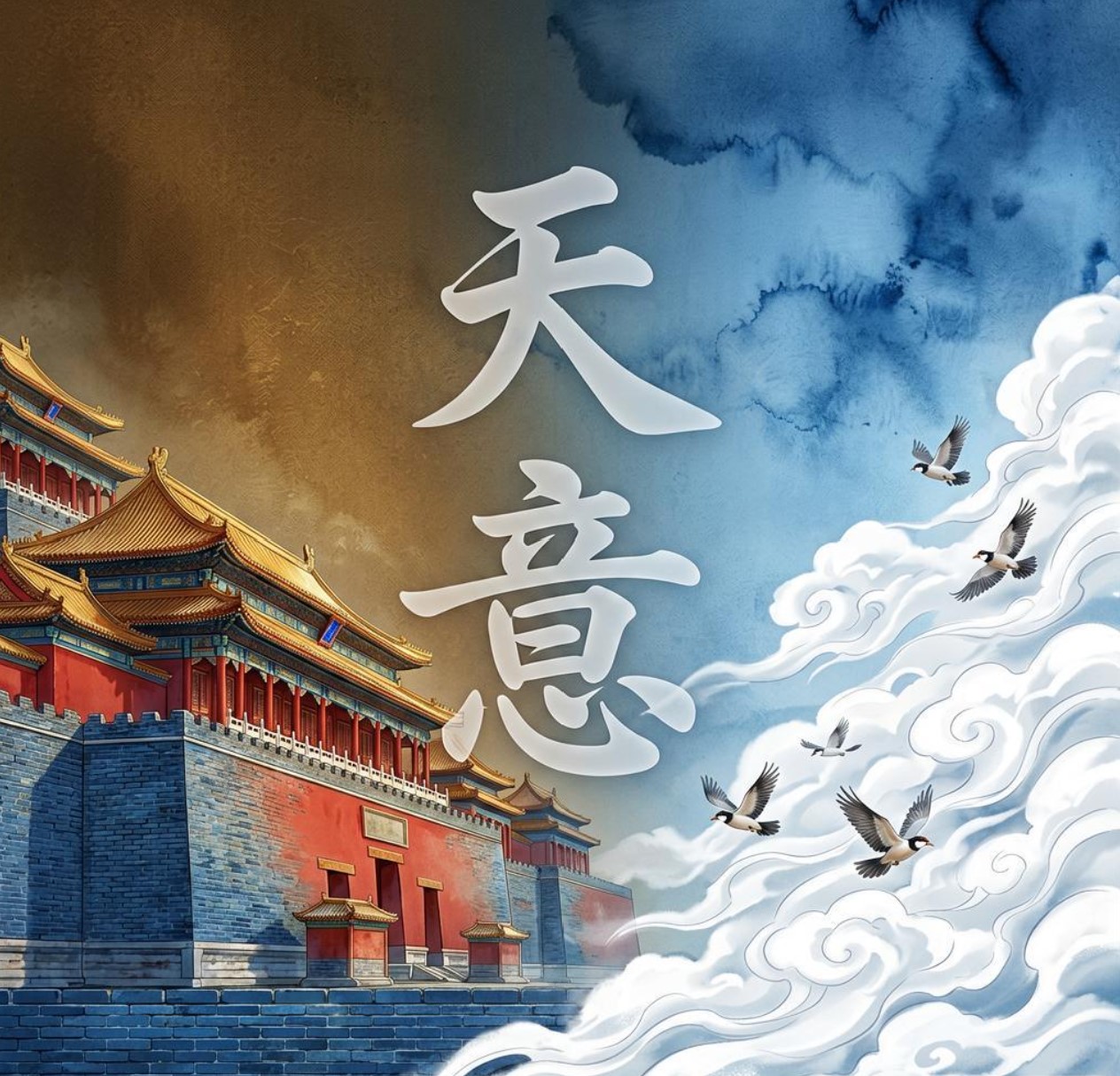

历史的必然与偶然:重审“天意”在历史进程中的角色
Historical Necessity and Contingency: Re-examining the Role of "Providence" in the Course of History
引言:宿命与自由的永恒张力
Introduction: The Eternal Tension Between Fate and Freedom
人类文明始终徘徊在两个看似矛盾的认知之间:一方面,我们坚信自己是理性的造物,能够凭借意志改变环境;另一方面,当我们回望时间长河,那些巨大的、不可逆的历史转折——罗马的衰亡、大航海时代的开启、工业革命的爆发——往往呈现出一种压倒性的必然性。这种必然性,在古代常被归结为“天意”(Providence)或“天命”(Mandate of Heaven)。但在科学昌明的今天,我们是否还能将宏大的历史进程归功于一双无形的手?
Human civilization has always hovered between two seemingly contradictory perceptions. On one hand, we firmly believe that we are rational beings capable of altering our environment through willpower; on the other hand, when we look back at the river of time, those massive, irreversible historical turning points—the fall of Rome, the dawn of the Age of Discovery, the eruption of the Industrial Revolution—often present an overwhelming sense of necessity. In ancient times, this necessity was often attributed to "Providence" or the "Mandate of Heaven." But in an age of scientific enlightenment, can we still attribute grand historical processes to an invisible hand?
一、神学的诠释:天意作为终极编剧
I. The Theological Interpretation: Providence as the Ultimate Screenwriter
在西方传统中,圣奥古斯丁(St. Augustine)与托马斯·阿奎那(Thomas Aquinas)构建了一个严密的神学体系。对他们而言,历史并非杂乱无章的事件堆砌,而是一部由上帝执导的神圣戏剧。天意(Providence)不仅仅是预知,更是“预先安排”。在这种视角下,即便暴君肆虐、瘟疫横行,也都是上帝为了更高尚的道德教化或最终救赎所设下的棋局。历史的方向是固定的:从创世(Creation)走向末日审判(Last Judgment)。
In the Western tradition, St. Augustine and Thomas Aquinas constructed a rigorous theological system. To them, history is not a random pile of events but a divine drama directed by God. Providence is not merely foreknowledge but "pre-arrangement." From this perspective, even the ravages of tyrants and the spread of plagues are part of God's chess game for higher moral education or ultimate salvation. The direction of history is fixed: from Creation to the Last Judgment.
东方智慧同样赋予了历史以道德属性。中国的“天命观”强调“皇天无亲,惟德是辅”。历史的大趋势(如王朝更替)被视为一种道德反馈机制:当统治者失德,支撑秩序的“天命”便会收回,引发动荡,直到新的有德者承接天命。这里的“天”虽不如人格化的上帝具体,却依然是一种具有伦理意志的超验力量。
Eastern wisdom similarly endows history with moral attributes. The Chinese concept of the "Mandate of Heaven" (Tianming) emphasizes that "Heaven is impartial; it assists only the virtuous." Major historical trends (such as dynastic cycles) are seen as a moral feedback mechanism: when a ruler loses virtue, the "Mandate" supporting order is withdrawn, causing turmoil until a new virtuous leader emerges. Although "Heaven" here is less anthropomorphic than the Western God, it remains a transcendental force imbued with ethical will.
二、哲学的转向:理性的狡计与铁的法则
II. The Philosophical Turn: The Cunning of Reason and Iron Laws
随着启蒙运动的兴起,哲学开始驱逐神学。黑格尔(G.W.F. Hegel)提出了一个极具颠覆性的概念:“理性的狡计”(The Cunning of Reason)。黑格尔认为,历史确实是朝着自由演进的,但这并非某个仁慈上帝的直接干预,而是“绝对精神”的自我实现。个体的人被自己的欲望驱动(如贪欲、权欲),但在追求私利的过程中,他们无意间成了世界精神的工具。拿破仑以为自己在征服欧洲,实际上他是在替“自由”开辟道路。
With the rise of the Enlightenment, philosophy began to expel theology. G.W.F. Hegel proposed a highly subversive concept: "The Cunning of Reason." Hegel argued that history indeed evolves toward freedom, but this is not the direct intervention of a benevolent God, but the self-realization of the "Absolute Spirit." Individuals are driven by their own desires (greed, lust for power), yet in pursuing private interests, they inadvertently become tools of the World Spirit. Napoleon thought he was conquering Europe, but in reality, he was paving the way for "freedom."
马克思主义则更进一步,将“天意”彻底祛魅,转化为“历史唯物主义”。在这里,历史的动力不再是精神,而是物质生产方式。技术革命、阶级斗争、经济基础决定上层建筑——这些构成了冷酷无情的“历史规律”。在马克思看来,无产阶级的胜利不是因为上帝站在工人一边,而是因为这是生产力发展的客观要求。历史的大势,是结构的必然,而非神灵的旨意。
Marxism went even further, demystifying "Providence" into "Historical Materialism." Here, the driving force of history is no longer spirit, but material modes of production. Technological revolutions, class struggles, and the base determining the superstructure constitute cold, ruthless "historical laws." For Marx, the victory of the proletariat is not because God is on the side of the workers, but because it is an objective requirement of the development of productive forces. The general trend of history is structural necessity, not divine decree.
三、现代的困境:结构与人谋的博弈
III. The Modern Dilemma: The Game Between Structure and Human Agency
然而,20世纪的史学家们发现,纯粹的“决定论”无法解释一切。费尔南·布罗代尔(Fernand Braudel)为代表的年鉴学派提醒我们关注“长时段”(Longue Durée)。地理、气候、饮食结构和长期的人口增长,构成了历史的“潜流”,这是近乎“天意”般的不可抗力。无论凯撒是否存在,地中海世界的统一似乎都是某种地缘结构的必然。
However, historians of the 20th century realized that pure "determinism" cannot explain everything. The Annales School, represented by Fernand Braudel, urged us to focus on the "Longue Durée" (long term). Geography, climate, diet, and long-term population growth constitute the "undercurrents" of history—these are nearly "providential" forces of inevitability. Whether Caesar existed or not, the unification of the Mediterranean world seemed an inevitability dictated by geopolitical structure.
但反之,“黑天鹅”事件(Black Swan Events)又证明了偶然性的力量。如果斐迪南大公未被刺杀,第一次世界大战是否会推迟?如果广岛没有原子弹,冷战格局会如何演变?在这些节点上,历史的走向取决于具体的“人谋”与运气,而非预定的剧本。
Conversely, "Black Swan Events" demonstrate the power of contingency. If Archduke Ferdinand had not been assassinated, would World War I have been delayed? If there had been no atomic bomb in Hiroshima, how would the Cold War landscape have evolved? At these junctures, the direction of history depends on specific "human agency" and luck, rather than a predetermined script.
因此,现代的观点倾向于一种辩证的综合:
-
天意作为一种隐喻:它指代那些人类集体无法控制的长周期力量(熵增、生态极限、技术奇点)。
-
历史作为无作者的剧本:没有导演,只有演员;没有天意,只有无数个体意志叠加后的涌现性结果(Emergence)。
Therefore, the modern view tends toward a dialectical synthesis:
-
Providence as Metaphor: It refers to those long-cycle forces that humanity collectively cannot control (entropy, ecological limits, technological singularities).
-
History as a Script Without an Author: There is no director, only actors; there is no Providence, only the emergent results of countless individual wills superimposed upon one another.
四、结语:我们该信什么?
IV. Conclusion: What Should We Believe?
那么,历史的大进程一定是天意吗?
如果你问的是人格化的神,科学和历史学都无法给出证明,这属于信仰的范畴。
如果你问的是不可抗拒的趋势,答案是肯定的。人类就像在激流中划船,我们可以调整船头的方向(自由意志),但我们永远无法逆流而上,必须顺应水流的大势(天意/结构)。
So, is the grand process of history necessarily Providence?
If you are asking about a personalized God, neither science nor history can provide proof; this belongs to the realm of faith.
If you are asking about irresistible trends, the answer is yes. Humans are like rowing boats in rapids; we can adjust the direction of the bow (free will), but we can never row upstream—we must yield to the general current (Providence/Structure).
或许,真正的智慧在于孔子式的敬畏与担当:“畏天命,敬大人,畏圣人之言。” 我们承认在大尺度上存在我们无法理解的“天意”,但在小尺度上,我们依然要尽人事,负起属于人类的全部责任。历史没有预设的结局,它是一场正在进行中的、关于可能性与必然性的伟大实验。
Perhaps true wisdom lies in the Confucian reverence and responsibility: "Stand in awe of the ordinances of Heaven." We acknowledge that there exists a "Providence" beyond our comprehension on a macro scale, but on a micro scale, we must still do our utmost and bear full human responsibility. History has no preset ending; it is a grand experiment in progress, oscillating between possibility and necessity.
此文由 怡心湖 编辑,若您觉得有益,欢迎分享转发!:首页 > 观·世界 » 历史的必然与偶然:历史大势是否为天意?