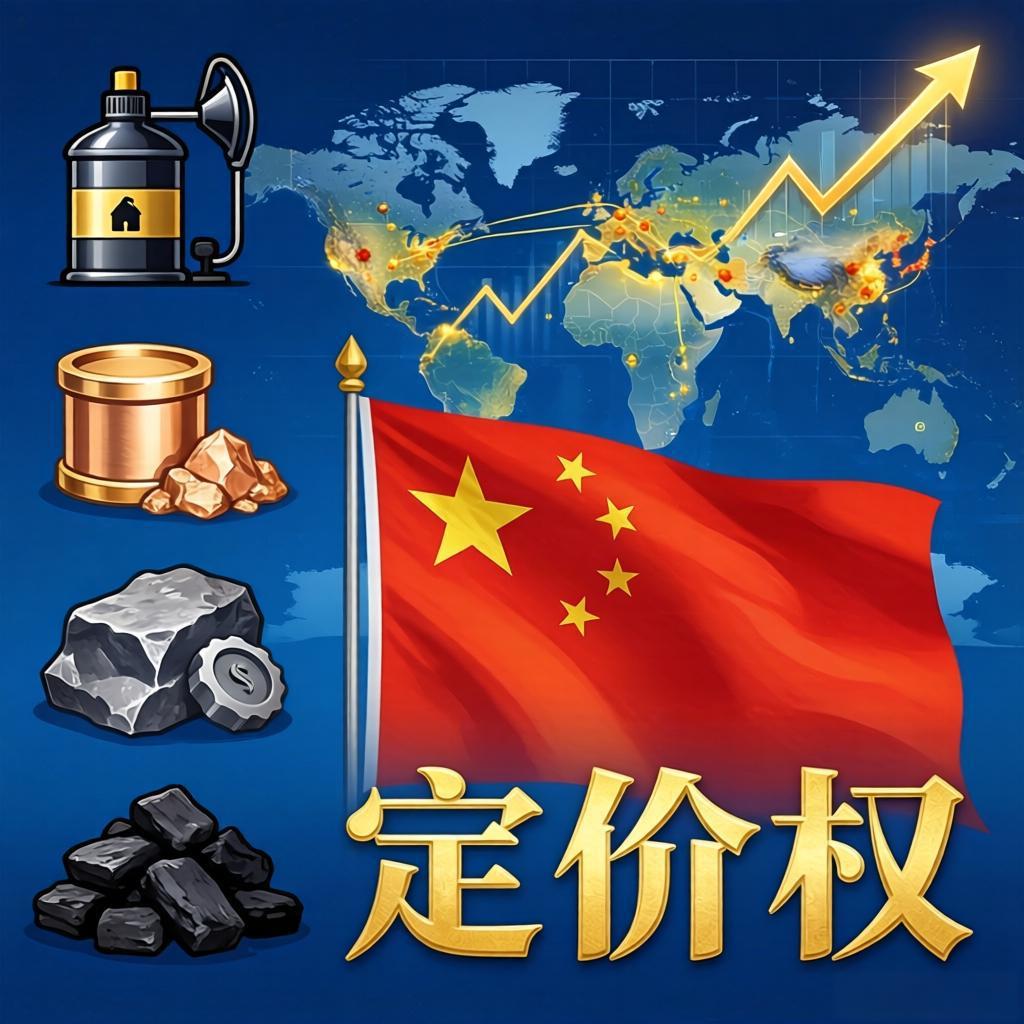
Navigating the Global Commodity Storm: How China Charts a Course Amid Oil and Copper Volatility
As geopolitical tensions drive wild swings in oil prices and ripple through strategic metal markets like copper, the world faces a critical test of economic resilience. China, as the largest consumer of both energy and industrial metals, stands at the epicenter of this turbulence. Yet, beyond short-term shocks, a deeper struggle is unfolding—one that will determine who holds the reins in the global commodity arena. This is not merely about weathering price spikes; it is about rewriting the rules of resource security for a multipolar era.
驾驭全球大宗商品风暴:中国如何在石油与铜的波动中谋篇布局
当地缘政治紧张局势引发油价剧烈震荡,并迅速波及铜等战略性金属市场时,全球经济韧性正面临严峻考验。中国作为能源和工业金属的最大消费国,处于这场动荡的中心。然而,超越短期冲击,一场更深层的博弈正在展开——它将决定谁将主导全球大宗商品领域的未来规则。这不仅是应对价格飙升的挑战,更是为多极化时代重塑资源安全格局的关键征程。
From Reactive to Strategic: Building Multilayered Shock Absorbers
China’s response transcends conventional price controls or emergency reserves. Instead, it is deploying a multilayered shock-absorption system: real-time monitoring of global supply chains, dynamic adjustments to national commodity reserves, and incentivizing firms to hedge risks via financial instruments. By integrating physical reserves with financial tools, China aims to cushion domestic industries from external volatility while gradually shifting from a passive price-taker to an active market stabilizer.
从被动应对到战略构建:打造多层次风险缓冲体系
中国的应对之道超越了传统的价格调控或紧急储备模式,转而构建多层次的风险缓冲体系:建立全球供应链实时监测机制、实施大宗商品国家储备动态调节、鼓励企业运用金融工具对冲风险。通过将实物储备与金融手段相结合,中国旨在缓解外部波动对国内产业的冲击,逐步从被动的价格接受者转变为主动的市场稳定器。
The Copper Conundrum: Where Geopolitics Meets Green Transition
Copper exemplifies the new commodity dilemma—it is both a geopolitical pawn and the "blood of the energy transition." As nations race to secure supplies for electric vehicles and power grids, control of copper resources becomes a lever for technological dominance. China’s strategy here is twofold: accelerating domestic exploration and recycling, while weaving resource partnerships into its Belt and Road infrastructure projects. This dual approach reduces vulnerability to external coercion and aligns resource security with climate goals.
铜的困局:当地缘政治与绿色转型交汇
铜资源是新时代大宗商品困局的缩影——它既是地缘政治博弈的筹码,也是能源转型的“血脉”。随着各国争相抢占电动汽车和电网建设的资源供给,对铜资源的掌控成为技术主导权的关键杠杆。中国的战略在此呈现双重路径:一方面加速国内勘探与循环利用技术突破,另一方面将资源合作深度嵌入“一带一路”基础设施建设。这种双轨策略既降低了外部胁迫的脆弱性,也使资源安全与气候目标实现协同。
Beyond "Mine and Buy": China’s Financial Infrastructure Play
If the 20th century commodity order was built on physical control of resources, the 21st century battle is increasingly waged in financial markets. China is steadily advancing the internationalization of the yuan-denominated commodity futures, with contracts like crude oil and copper futures on the Shanghai International Energy Exchange (INE) offering Asian price benchmarks. This creates an alternative to dollar-dominated pricing—a quiet but profound challenge to Western financial hegemony.
超越“开采与购买”:中国的金融基础设施布局
如果说20世纪的大宗商品秩序建立在资源实物控制之上,那么21世纪的博弈正日益转向金融市场。中国正稳步推进人民币计价大宗商品期货的国际化进程,上海国际能源交易中心(INE)的原油、铜期货合约已初步形成亚洲价格基准。这为美元主导的定价体系提供了替代选项,成为对西方金融霸权温和而深刻的挑战。
The Green Silk Road: Turning Resource Dependence into Mutual Growth
China’s most innovative move may be the "Green Silk Road" framework, which links resource investments with sustainable infrastructure exports. By financing copper mines in Congo or lithium projects in Argentina with commitments to build local processing plants and clean energy grids, China transforms transactional deals into long-term interdependence. This model not only secures supplies but also positions China as a architect of the global energy transition—a stark contrast to extractive colonial-era practices.
绿色丝绸之路:将资源依赖转化为共同增长
中国最具创新性的举措或许是“绿色丝绸之路”框架——将资源投资与可持续基础设施输出相链接。通过在刚果投资铜矿、在阿根廷开发锂资源时承诺配套建设本地加工厂和清洁能源电网,中国将交易性合作转化为长期互依关系。这种模式不仅保障了资源供应,更将中国塑造为全球能源转型的共建者,与殖民时代的掠夺式开发形成鲜明对比。
The Domestic Revolution: Circular Economy as National Security Tool
While global strategies unfold, China is also engineering a domestic resource revolution. The "urban mining" initiative aims to recycle 24 million tons of non-ferrous metals by 2025, with copper recovery rates targeted to exceed 50%. This circular economy push reduces import dependence while cutting carbon emissions—a dual win that redefines resource security as a function of technological innovation rather than mere territorial control.
本土革命:循环经济作为国家安全工具
在全球战略展开的同时,中国正发动一场本土资源革命。“城市矿山”计划目标在2025年回收2400万吨有色金属,其中铜回收率目标突破50%。这场循环经济变革既降低进口依赖又减少碳排放,以双重收益重新定义资源安全——将其从领土控制函数转变为技术创新的函数。
The Invisible Front: Data as the New Strategic Commodity
In today’s battles, data may matter as much as physical resources. China is building a global commodity data monitoring network, tracking real-time logistics, production, and inventory flows from South American mines to African ports. Coupled with AI-driven demand forecasting, this digital infrastructure allows proactive interventions before shortages or price spikes occur—turning information superiority into a preemptive weapon against market chaos.
无形战线:数据作为新战略资源
在现代博弈中,数据的重要性已不亚于实物资源。中国正在构建全球大宗商品数据监测网络,从南美矿山到非洲港口的物流、生产、库存动态尽在掌握。结合人工智能驱动的需求预测,这套数字基础设施可在短缺或价格暴涨发生前实施预判性干预,将信息优势转化为抵御市场混乱的先发制人之器。
Conclusion: The Long Game of Systemic Resilience
China’s commodity strategy reveals a fundamental insight: in an age of overlapping crises, resilience trumps short-term gains. By weaving together financial tools, green technology, circular systems, and data networks, China is not just playing the commodity game—it is redesigning the board. The ultimate goal is not to "win" a pricing war, but to build an ecosystem where resource access is stable, sustainable, and less susceptible to the whims of geopolitics. For the world, this may offer a blueprint for navigating a more volatile century ahead.
系统韧性的长远博弈
中国的大宗商品战略揭示了一个根本逻辑:在多重危机叠加的时代,系统韧性远比短期收益更重要。通过将金融工具、绿色技术、循环体系与数据网络编织成网,中国不仅参与大宗商品博弈,更在重塑博弈棋盘。最终目标不是“赢得”定价权之战,而是构建一个资源获取稳定、可持续且不易受地缘政治任意摆布的生态系统。对世界而言,这或许为驾驭未来更动荡的世纪提供了新的可能性蓝图。
此文由 怡心湖 编辑,若您觉得有益,欢迎分享转发!:首页 > 观·世界 » 破局资源危机:从石油到铜矿,中国如何打赢全球大宗商品“定价权之战”?