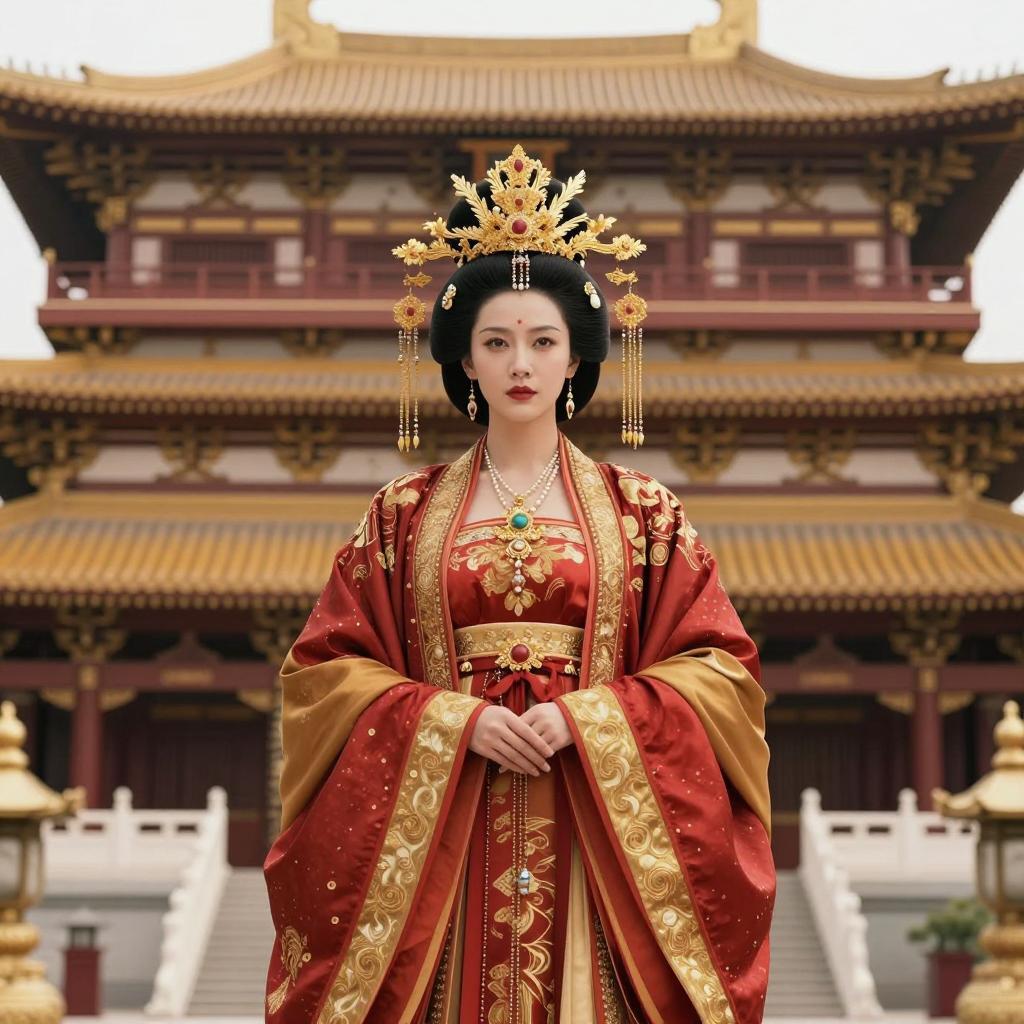

纵观人类文明史,女性统治者始终是突破政治性别壁垒的先行者。从古埃及法老哈特谢普苏特(公元前1479-1458年执政)以男性化形象巩固王权,到拜占庭帝国伊琳娜女皇(797-802年在位)成为欧洲首位加冕的“女皇帝”,她们都在男性主导的权力结构中开辟了特殊路径。中国历史上唯一的正统女皇帝武则天(690-705年在位)更构建了完整的女性君主统治体系,其开创殿试、发展经济的政策展现了超越性别的治国能力。这些古代女性统治者往往需要通过宗教符号、男性化装扮或血缘继承的“双重合法性”来获取统治资格,她们的成败不仅关乎个人能力,更深刻反映了时代对性别角色的容限阈值。
English Paragraph:
Across the spectrum of global history, female rulers have consistently served as pioneers in challenging gendered political barriers. From Hatshepsut of ancient Egypt (r. 1479–1458 BCE) consolidating power through masculinized imagery, to Empress Irene of Byzantium (r. 797–802 CE) becoming Europe’s first crowned "empress regnant," these women carved unique paths within male-dominated power structures. Wu Zetian (r. 690–705 CE), the only orthodox female emperor in Chinese history, constructed a comprehensive governance system under female sovereignty. Her policies, such as inaugurating palace examinations and advancing economic development, demonstrated statecraft that transcended gender. These ancient female rulers often relied on "dual legitimacy" through religious symbolism, masculine presentation, or bloodline inheritance. Their successes and failures were shaped not only by personal capability but also by the era’s tolerance for redefined gender roles.

中世纪至近代早期,女性统治者的权威常与婚姻、血缘紧密捆绑。英格兰女王伊丽莎白一世(1558-1603年在位)以“童贞女王”的政治身份将独身转化为外交筹码,通过宗教改革与海军建设奠定英国崛起基石;其对手苏格兰的玛丽女王则因婚姻政治失利而倾覆。印度莫卧儿帝国的努尔·贾汉(1611-1627年摄政)以皇后身份实际掌控帝国贸易与艺术赞助,西班牙伊莎贝拉一世(1474-1504年在位)则通过联姻统一半岛并资助哥伦布远航。这一时期女性统治往往被视为“例外状态”,其权力边界始终笼罩在父权阴影之下。
English Paragraph:
From the Middle Ages to the early modern period, the authority of female rulers was often intertwined with marriage and lineage. England’s Queen Elizabeth I (r. 1558–1603) transformed her "Virgin Queen" persona into diplomatic capital, laying the foundation for British ascendancy through religious reformation and naval expansion. Her rival Mary, Queen of Scots, saw her reign collapse due to marital political failures. In the Mughal Empire, Nur Jahan (de facto regent 1611–1627) controlled imperial trade and artistic patronage as empress consort, while Spain’s Isabella I (r. 1474–1504) unified the Iberian Peninsula through marriage and funded Columbus’ voyages. Female rule during this era was often viewed as an "exceptional state," with its power boundaries perpetually cast under the shadow of patriarchy.
启蒙时代催生了女性统治的新范式。俄罗斯帝国叶卡捷琳娜大帝(1762-1796年在位)以政变上位,却以开明专制推动法律改革与领土扩张,其与伏尔泰等哲人的通信彰显“哲学家君主”的理想。奥地利女大公玛丽亚·特蕾莎(1740-1780年在位)在继承战争危机中巩固哈布斯堡王朝,推行义务教育与行政现代化。她们一方面运用启蒙话语塑造权威,另一方面仍维护贵族特权体制,揭示出女性君主在进步与保守间的矛盾定位。同时期东南亚却存在更宽松的传统,如琉球王国闻得大君作为最高神女持续参政,越南后黎朝女皇掌握实权等,展现不同于欧洲的性别权力范式。
English Paragraph:
The Enlightenment fostered new paradigms for female sovereignty. Catherine the Great of Russia (r. 1762–1796) seized power through a coup yet advanced legal reforms and territorial expansion under enlightened absolutism. Her correspondence with philosophers like Voltaire embodied the ideal of the "philosopher monarch." Austria’s Archduchess Maria Theresa (r. 1740–1780) consolidated the Habsburg monarchy amidst succession wars, implementing compulsory education and administrative modernization. While utilizing Enlightenment discourse to legitimize their rule, they maintained aristocratic privilege systems, revealing the contradictory positioning of female monarchs between progress and conservatism. Simultaneously, Southeast Asia exhibited more flexible traditions, such as the political involvement of the Kikoe-ōkimi (high priestess) in the Ryukyu Kingdom and the substantive power of empresses in Later Lê dynasty Vietnam, showcasing distinct gender-power models from Europe.
殖民主义与革命时代重塑了女性统治的语境。夏威夷王国最后一任君主利留卡拉尼女王(1891-1893年在位)在殖民压迫中试图通过宪法维系统治,最终王朝被美国推翻。非洲达荷美王国的母亲军(Ahosi)作为女子军事组织直接参与政权捍卫,而埃塞俄比亚女皇佐迪图(1916-1930年在位)则在现代化改革与保守势力间艰难平衡。此阶段女性统治者常面临双重挑战:对外抵抗殖民主义,对内应对传统性别规范的反弹,她们的困境映射了全球权力重组中边缘化政治体的命运。
English Paragraph:
Colonialism and revolutionary eras reshaped the context of female rule. Queen Liliʻuokalani (r. 1891–1893), the last sovereign of the Kingdom of Hawaii, attempted to preserve sovereignty through constitutional amendments amid colonial pressure before her overthrow by the United States. In Africa, the Ahosi (female military regiment) of the Kingdom of Dahomey actively defended the regime, while Empress Zewditu of Ethiopia (r. 1916–1930) navigated modernization reforms amidst conservative backlash. Female rulers in this period often faced dual challenges: resisting colonialism externally and confronting patriarchal norms internally. Their struggles reflected the fate of marginalized polities during global power restructuring.
20世纪以来,女性领导人逐渐突破君主制框架。斯里兰卡西里马沃·班达拉奈克(1960-1994年间三度出任总理)成为现代民选国家首位女政府首脑,印度英迪拉·甘地(1966-1984年间执政)在绿色革命与核试验中展现强势领导,却也在紧急状态时期引发争议。英国撒切尔夫人(1979-1990年任首相)以新自由主义改革重塑全球政治经济格局。她们不再依赖血统或婚姻,而是通过选举政治、政党机器与媒体形象获取权力,但“铁娘子”等标签仍暴露性别刻板印象的持续影响。
English Paragraph:
Since the 20th century, female leaders have gradually transcended monarchical frameworks. Sri Lanka’s Sirimavo Bandaranaike (served as prime minister 1960–1994) became the world’s first democratically elected female head of government. India’s Indira Gandhi (in power 1966–1984) demonstrated strong leadership through the Green Revolution and nuclear tests, though her declaration of emergency remained controversial. Britain’s Margaret Thatcher (Prime Minister 1979–1990) reshaped global political economy through neoliberal reforms. These women attained power not through lineage or marriage, but via electoral politics, party machinery, and media image crafting. Yet labels like "Iron Lady" revealed persistent gender stereotypes.
21世纪的女性领导呈现去中心化趋势。德国总理安格拉·默克尔(2005-2021年在任)以务实主义应对欧债与难民危机,新西兰总理杰辛达·阿德恩(2017-2023年在任)以“同理心领导”重塑政治话语,坦桑尼亚总统萨米亚·苏卢胡(2021年上任)在男性主导政党内实现突破。她们在气候变化、疫情应对等全球议题中凸显协作治理风格,但社交媒体时代的性别暴力与双重标准依然构成挑战,如巴西总统迪尔玛·罗塞夫(2011-2016年在任)弹劾案中的性别化攻击。
English Paragraph:
The 21st century witnesses a decentralization of female leadership. German Chancellor Angela Merkel (in office 2005–2021) addressed the Eurozone crisis and refugee situations with pragmatism. New Zealand Prime Minister Jacinda Ardern (2017–2023) reshaped political discourse with "empathetic leadership," while Tanzanian President Samia Suluhu Hassan (2021–present) broke barriers within male-dominated parties. Their collaborative governance style shines in addressing global issues like climate change and pandemics. However, gender-based violence and double standards in the social media era persist as challenges, exemplified by the gendered attacks during the impeachment of Brazilian President Dilma Rousseff (2011–2016).
从文明初兴到数字时代,女性统治者的权力来源经历了“神权→血缘→选举→绩效”的演化轨迹。尽管统治场域从宫廷扩展至议会,其核心困境始终围绕“权威的性别化建构”——她们既被迫承担“男性化”的强硬期待,又需发挥“女性化”的共情优势以获取认同。值得注意的是,非西方世界的女性领导传统(如非洲母系氏族的“女王母亲”、东南亚贸易城邦的女酋长)为全球政治史提供了多元注脚,打破了线性进步叙事。
English Paragraph:
From the dawn of civilization to the digital age, the sources of power for female rulers have evolved along the trajectory of "divine right → lineage → election → performance." Although their arenas have expanded from courts to parliaments, the core dilemma remains the "gendered construction of authority"—they are pressured to meet "masculinized" expectations of toughness while harnessing "feminized" empathy for legitimacy. Notably, non-Western traditions of female leadership (e.g., the "Queen Mother" in African matrilineal societies, female chieftains in Southeast Asian trading city-states) provide pluralistic narratives to global political history, challenging linear progressive discourses.

回望历史,女性统治者既是所处时代的产物,也是规则的重塑者。武则天的大周王朝与叶卡捷琳娜的启蒙帝国虽相隔千年,却共同证明治理能力从未专属某一性别。在当代女性国家元首占比仍不足10%的现实中,这些跨越时空的统治实践持续叩问:当权力结构真正超越性别二元,人类将缔造怎样的政治文明?答案或许藏在每位女性领导者踏入权力禁区的足音中——那里既有枷锁的嗡鸣,也有新世界的回响。
English Paragraph:
Reflecting on history, female rulers are both products of their eras and重塑者 of norms. Though separated by millennia, Wu Zetian’s Zhou Dynasty and Catherine the Great’s enlightened empire collectively prove that governance capability has never been gender-exclusive. In an era where women still constitute less than 10% of global heads of state, these cross-temporal ruling practices persistently provoke reflection: What political civilization could humanity forge when power structures truly transcend gender binaries? The answer may lie in the footsteps of every female leader who stepped into forbidden realms of power—where the clang of shackles intertwines with echoes of new worlds.
此文由 怡心湖 编辑,若您觉得有益,欢迎分享转发!:首页 > 历史人文 » 权力与性别:三千年来女性统治者如何重塑世界版图