中年人身体包块与气滞有关吗?中医养生茶饮调理全攻略
Are Body Lumps in Middle-Aged People Related to Qi Stagnation? A Complete Guide to TCM Wellness Tea Remedies
引言
人到中年,身体仿佛进入了一个“多事之秋”。很多人在洗澡或穿衣时偶然摸到身上某个部位长了个包块——可能是脖子上的甲状腺结节,乳房里的乳腺结节,或是皮下那个滑来滑去的脂肪瘤。面对这些不请自来的“小东西”,有人恐慌,有人忽视,还有人四处打听偏方。在中医门诊中,最常听到的问题就是:“医生,我这个包块是不是因为气滞?喝什么茶能消掉它?”
事实上,中医对“包块”的认识已有数千年历史,从《黄帝内经》的“积证”到后世的“瘰疬”“痰核”“癥瘕”,都指向一个核心病机——气血津液运行失常,停聚成块。而“气滞”确实是其中最常见、最关键的推手之一。但中医的智慧远不止“理气”二字,它讲究辨证论治,因人而异,因时因地制宜。
本文将从中医理论出发,结合现代中年人的体质特点,系统讲解包块与气滞的关系、不同证型的辨识方法,并重点介绍一系列经过临床验证的中医养生茶饮配方——包括经典的山楂红糖水及其衍生搭配,以及麦冬、西洋参等药材的合理使用时机。无论你是想自我调理,还是单纯想了解中医养生智慧,这篇文章都将为你提供一份科学、实用、可操作的指南。
一、中年人长包块,跟“气滞”到底有什么关系?
1. 中医视角:气滞是包块形成的重要推手
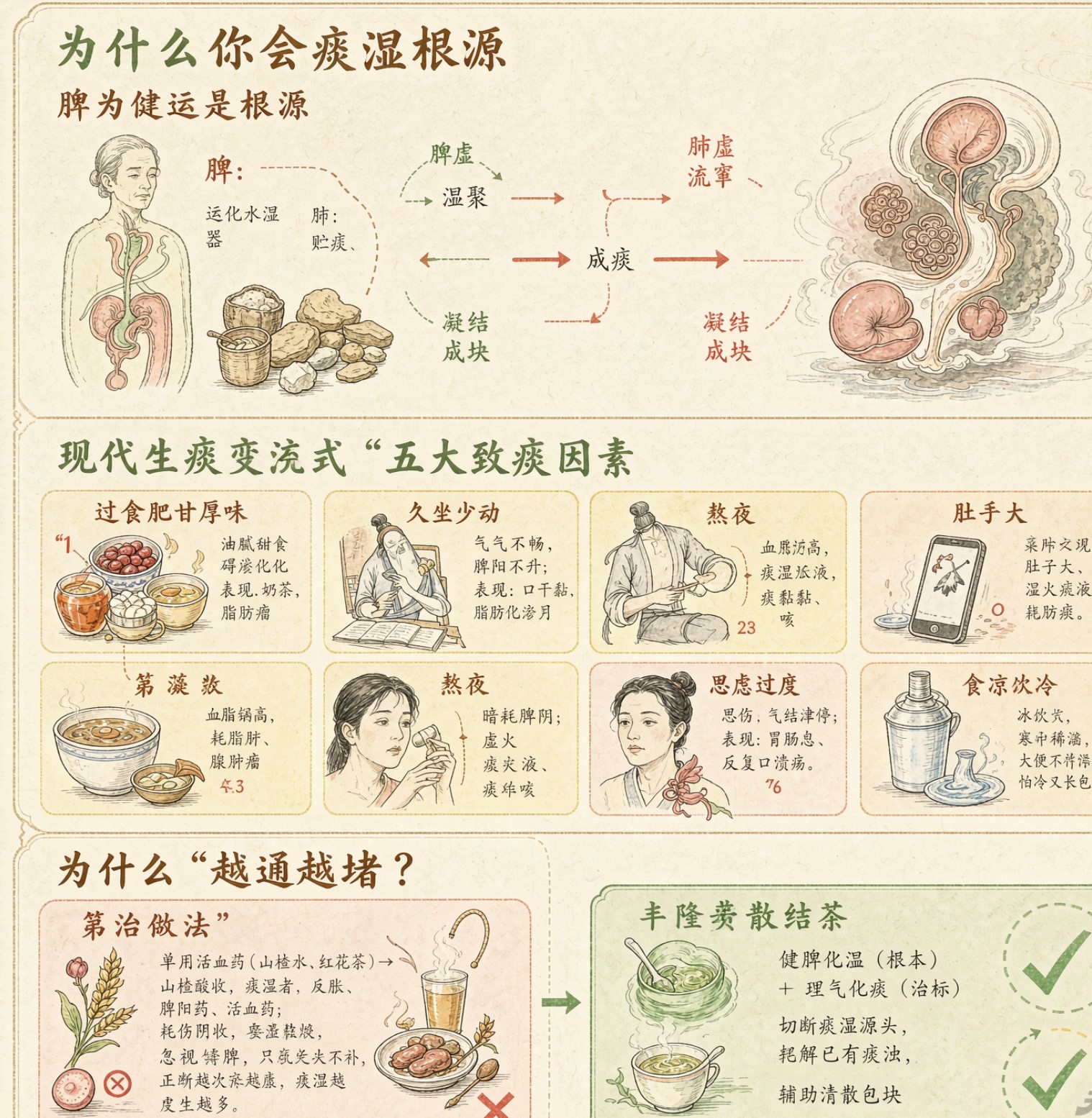
中医认为,人体健康依赖于气、血、津液的正常运行与输布。气为血之帅,气行则血行,气滞则血瘀;同时,气还能推动津液的输布,一旦气机郁滞,津液停聚就会化为痰浊。当气滞、血瘀、痰浊三者交织在一起,互结于皮下、经络或脏腑,就形成了我们肉眼可见或可触及的“包块”。
核心病机链条可以概括为:
情绪不畅 → 肝气郁结 → 气机阻滞(气滞)
气滞 → 津液停聚 → 化为痰浊
气滞 + 痰浊 + 血瘀 → 互结于局部 → 形成包块
典型“气滞型包块”的特征:
- 位置:多在肝经循行区域,如颈部、腋下、腹股沟、乳房周围、胁肋部。
- 触感:质地偏软或中等,边界清晰,按压有轻度胀痛或窜痛感,且包块往往可以活动。
- 变化规律:情绪差、压力大、熬夜后明显变大变硬;心情好转、休息充分时又缩小变软。
- 伴随症状:胸闷喜叹息、胁肋胀痛、烦躁易怒或抑郁寡欢、女性月经不调(经前乳房胀痛、经期紊乱)、咽喉部异物感(梅核气)等。
中医对应疾病举例:
- 甲状腺结节、乳腺结节、肺结节
- 皮下脂肪瘤、皮脂腺囊肿、淋巴结肿大(功能性)
- 部分疝气、胃肠息肉
2. 但注意:包块≠全是气滞
临床中,很多中年人的包块并非单纯由气滞引起,而是多种病机交织。以下表格帮你快速辨识不同证型:
|
证型 |
包块特点 |
全身症状 |
与气滞的关系 |
|---|---|---|---|
|
肝气郁结型 |
质软、可活动、胀痛、随情绪波动 |
胸闷、叹气、胁痛、情绪不稳 |
直接由气滞引起,是最常见类型 |
|
痰湿蕴结型 |
质软、边界清、生长缓慢、多伴肥胖 |
舌苔厚腻、口黏、大便黏滞、困重乏力 |
气滞生痰,常合并存在 |
|
血瘀阻络型 |
质硬、固定不移、按压刺痛、面色晦暗 |
舌暗有瘀斑、肌肤甲错、月经色暗有块 |
气滞日久导致血瘀,或外伤致瘀 |
|
阳虚寒凝型 |
遇冷加重、得温稍减、局部发凉 |
怕冷、四肢不温、腰膝酸软、小便清长 |
阳气不足,推动无力,加重气滞 |
|
正虚邪恋型 |
包块反复不愈、术后易复发、体质虚弱 |
乏力、气短、自汗、食欲差、易感冒 |
气虚无力推动,气滞更难化开 |
结论: 中年人包块,气滞是常见诱因和加重因素,尤其是情绪压力大、久坐少动的人群。但多数情况下是“气滞+痰湿+血瘀”混合体质,调理需多管齐下。
二、西医视角:哪些包块必须立即就医?
中医讲“气滞”是功能层面的解释,但西医必须排除器质性病变。中年人是肿瘤高发年龄段,以下危险信号出现时,请立即前往医院检查,切勿自行调理:
危险信号清单:
- 包块在几周内快速增大
- 质地极硬如石,或固定不活动
- 表面不光滑、边界不清,与皮肤或深部组织粘连
- 伴随无痛性淋巴结肿大(尤其颈部、锁骨上、腋窝)
- 全身症状:不明原因体重下降(半年内减重超过5%)、夜间盗汗、长期低热、持续疲劳
- 特殊部位:甲状腺、乳腺、腹腔内包块,或任何影响功能的包块
常见西医对应疾病:
- 良性:脂肪瘤、皮脂腺囊肿、淋巴结炎、甲状腺结节(良性)、乳腺纤维瘤、疝气
- 需警惕:恶性肿瘤淋巴结转移、淋巴瘤、甲状腺癌、乳腺癌、软组织肉瘤
建议: 中年人首次发现包块,先做B超或CT,必要时穿刺活检,明确性质再谈调理。即使选择中医调理,也要定期复查,观察包块大小、形态、血流信号等变化。
三、中医养生茶饮调理方案
明确包块性质后,若属功能性或良性病变,可在医生指导下配合养生茶饮辅助调理。茶饮的优势在于药食同源、口感易接受、可长期小剂量服用,适合中年人日常保健。
1. 核心茶饮:山楂红糖水——活血化瘀的基础方
配方: 山楂10克(干品),红糖适量(约15-20克)
做法: 山楂洗净,放入砂锅或不锈钢锅,加500毫升水,大火煮沸后转小火煮15分钟,加入红糖搅拌至溶解,滤渣取汁,温热饮用。每日1次,饭后服用为佳。
功效解析:
- 山楂:酸甘微温,入脾、胃、肝经。核心功效是消食化积、活血化瘀。《本草纲目》记载其“化饮食,消肉积,癥瘕,痰饮”。现代药理研究证实,山楂含有黄酮类、三萜类物质,能扩张血管、改善微循环、降低血脂,对血瘀型包块有辅助消散作用。
- 红糖:甘温,入脾、胃、肝经。能补中缓肝、活血化瘀,其温性可佐制山楂的微寒(生山楂偏微寒,炒山楂温性增),同时调和口感。
适用人群: 血瘀体质者,表现为舌质暗紫或有瘀斑、包块质硬固定、按压刺痛、面色晦暗。也适合气滞兼轻度血瘀者。
禁忌: 胃酸过多、胃溃疡、反流性食管炎患者慎用;糖尿病患者去红糖;孕妇禁用(山楂活血可能刺激子宫收缩)。
2. 衍生搭配:山楂红糖水的加减变化
(1)气滞明显者:加陈皮、玫瑰花
配方: 山楂10克 + 红糖适量 + 陈皮5克 + 玫瑰花3克
功效: 陈皮理气健脾、燥湿化痰;玫瑰花疏肝解郁、活血止痛。此搭配针对“气滞+血瘀+痰湿”混合体质,尤其适合中年女性乳腺结节、甲状腺结节伴情绪不畅者。
饮用方法: 山楂、陈皮先煮10分钟,最后3分钟加入玫瑰花(避免久煮挥发有效成分),取汁加红糖。
(2)血瘀重症者:加丹参或三七粉
配方: 山楂10克 + 红糖适量 + 丹参6克(或三七粉1-2克,冲服)
功效: 丹参活血调经、凉血消痈,有“一味丹参,功同四物”之说;三七粉散瘀止血、消肿定痛,对实质性包块(如脂肪瘤、纤维瘤)有辅助软化作用。
注意: 三七粉需用温水冲服,不可高温煎煮;孕妇及经期女性禁用;有出血倾向者慎用。
(3)痰湿偏重者:加陈皮、薏米
配方: 山楂10克 + 红糖少量 + 陈皮5克 + 薏米30克(提前浸泡2小时)
功效: 薏米健脾渗湿、除痹止泻,与陈皮协同增强化痰祛湿之力。红糖减量以免助湿。
3. 进阶搭配:山楂红糖水可以加麦冬和西洋参吗?
这是很多人关心的问题。从药性理论看,四味药各有特点:
|
药材 |
性味 |
核心作用 |
适合体质 |
不适合体质 |
|---|---|---|---|---|
|
山楂 |
酸甘微温 |
消食化积、活血化瘀 |
食积、血瘀 |
胃酸过多、孕妇 |
|
红糖 |
甘温 |
补中缓肝、活血化瘀 |
虚寒、血瘀 |
湿热、糖尿病 |
|
麦冬 |
甘微苦微寒 |
养阴润肺、益胃生津、清心 |
阴虚、口干、心烦 |
脾胃虚寒、便溏 |
|
西洋参 |
甘微苦凉 |
益气养阴、清热生津 |
气阴两虚、虚热 |
阳虚怕冷、寒湿重 |
搭配分析:
- 山楂+红糖:偏温通、活血、散瘀,适合寒凝血瘀、气滞血瘀。
- 麦冬+西洋参:偏凉润、益气养阴、清虚热,适合气阴两虚、有虚火。
两者方向存在一定冲突:温散 vs 凉润。如果体质纯属气滞血瘀、痰湿重,加麦冬西洋参反而可能碍胃、助湿,削弱活血力度。
✅ 适合加的情况(对症才加):
- 同时具备气阴两虚+血瘀表现:容易口干咽燥、手心发热、心烦失眠、舌红少苔,又伴有血瘀症状(舌暗瘀斑、包块质硬)。
- 长期熬夜、工作劳累导致气阴耗伤,又因压力大出现气滞血瘀。
推荐配方: 山楂10克 + 红糖少量(5克) + 麦冬10克 + 西洋参3克(另炖兑入) + 陈皮3克
方解: 西洋参、麦冬益气养阴清热;山楂活血;红糖少量温中以防寒凉太过;陈皮理气护胃,防滋腻碍脾。
❌ 不建议加的情况:
- 舌苔白厚腻(痰湿重)
- 怕冷、手脚凉、大便稀溏(阳虚寒凝)
- 胃口差、容易腹胀(脾虚)
- 单纯气滞型包块(质软、随情绪波动)
实用建议: 大多数中年人“气滞/包块”体质,不建议常规加麦冬、西洋参。若确实阴虚火旺,可先单用西洋参3克泡水,观察反应后再决定是否加入复方。
4. 其他经典养生茶饮推荐
(1)玫瑰陈皮茶——疏肝理气第一饮
配方: 玫瑰花3克 + 陈皮3克
做法: 沸水冲泡,加盖焖5分钟,代茶饮。
适用: 肝气郁结型,情绪不畅、胸闷胁痛、包块随情绪波动。
(2)佛手柑茶——轻清疏肝
配方: 佛手5克
做法: 沸水冲泡,代茶饮。佛手气味清香,能疏肝和胃、理气止痛,适合长期饮用。
(3)绿萼梅茶——解郁神品
配方: 绿萼梅3克
做法: 沸水冲泡。绿萼梅是梅花的一种,功擅疏肝解郁、和中化痰,药力平和,适合女性及体质敏感者。
(4)二陈化痰茶——痰湿体质专方
配方: 陈皮5克 + 半夏3克(法半夏,需煎) + 茯苓5克 + 甘草2克
做法: 半夏先煎15分钟,再加入其他药材煮10分钟。此为二陈汤简化版,适合痰湿型包块伴肥胖、舌苔厚腻者。
(5)夏枯草清肝茶——甲状腺结节适用
配方: 夏枯草10克 + 菊花3克
做法: 夏枯草煮10分钟,加入菊花焖3分钟。夏枯草清肝泻火、散结消肿,对肝郁化火型甲状腺结节、淋巴结肿大有效。
四、穴位按摩:茶饮之外的辅助疗法
茶饮内调,穴位外治,双管齐下效果更佳。以下穴位每天按摩5分钟,可疏肝理气、化痰散结:
- 太冲穴(足背第1、2跖骨间凹陷处):消气穴,按揉3分钟,酸胀为度。
- 膻中穴(两乳头连线中点):宽胸理气,用拇指按揉或手掌擦热。
- 期门穴(乳头直下第6肋间隙):疏肝要穴,按揉2分钟。
- 丰隆穴(外膝眼与外踝尖连线中点,胫骨前肌上):化痰要穴,按揉3分钟,有酸痛感最佳。
- 三阴交(内踝尖上3寸,胫骨后缘):调和肝脾肾,适合女性。
五、预防:中年人远离包块的生活方式
1. 情绪管理——核心中的核心
中年是压力最大的阶段,肝气郁结是包块第一推手。每天给自己10分钟“放空时间”:冥想、深呼吸、听轻音乐。培养一个“不追求结果”的爱好:养花、钓鱼、书法、散步。遇到烦心事,找信任的人倾诉,别憋着。
2. 饮食有节
- 少吃:生冷、油腻、甜食、辛辣(伤脾生痰)
- 多吃:蔬菜、粗粮、理气食物(萝卜、陈皮、佛手、玫瑰花)
- 控制体重:肥胖是痰湿体质的温床
- 戒烟限酒:烟酒助湿生热,加重气血凝滞
3. 运动有度
每周至少150分钟中等强度运动(快走、慢跑、游泳)。推荐八段锦、太极拳,尤其“调理脾胃须单举”“五劳七伤往后瞧”,能疏肝理气。避免久坐:每坐1小时起身活动5分钟。
4. 睡眠充足
晚上11点前入睡:肝胆经循行时间,熬夜最伤肝。保证7-8小时睡眠:睡眠不足→肝火旺→气滞加重。
5. 定期自查与体检
每月自查:颈部、腋窝、乳房、腹部,摸有无新发包块。每年体检:甲状腺B超、乳腺B超、腹部B超、肿瘤标志物(根据年龄和风险)。已有包块者:每3-6个月复查B超。
六、总结
中年人身体包块,中医视角下与“气滞”密切相关,但绝非唯一原因。调理需分证型:肝气郁结者疏肝理气,痰湿蕴结者化痰祛湿,血瘀阻络者活血化瘀,阳虚寒凝者温阳散寒。山楂红糖水作为基础活血茶饮,可根据体质加减:气滞加陈皮玫瑰花,血瘀加丹参三七,痰湿加薏米陈皮。至于麦冬、西洋参,仅适合气阴两虚兼血瘀者,且需配伍陈皮护胃,不可盲目乱加。
最重要的是:先西医明确性质,再中医辨证调理;预防大于治疗,情绪、饮食、运动、睡眠四管齐下。 养生茶饮是辅助,不是万能药。愿每位中年朋友都能气机通畅,身心安康,远离包块困扰。
英文翻译 / English Translation
Are Body Lumps in Middle-Aged People Related to Qi Stagnation? A Complete Guide to TCM Wellness Tea Remedies
Introduction
Reaching middle age, the body seems to enter a "troublesome autumn." Many people accidentally discover a lump on their body while bathing or dressing—it could be a thyroid nodule on the neck, a breast lump, or a lipoma rolling under the skin. Faced with these uninvited "guests," some panic, some ignore them, and others ask around for folk remedies. The most common question in TCM clinics is: "Doctor, is this lump caused by qi stagnation? What tea can I drink to dissolve it?"
In fact, TCM has studied "lumps" for thousands of years. From the "accumulation syndrome" in the Huangdi Neijing to later "scrofula," "phlegm nodules," and "abdominal masses," all point to one core pathogenesis: abnormal circulation of qi, blood, and body fluids, leading to stagnation and accumulation. "Qi stagnation" is indeed one of the most common and critical drivers. But TCM wisdom goes far beyond simply "regulating qi"—it emphasizes syndrome differentiation and treatment, tailored to the individual, season, and environment.
This article systematically explains the relationship between lumps and qi stagnation, how to identify different syndromes based on modern middle-aged constitution characteristics, and focuses on a series of clinically validated TCM wellness tea recipes—including the classic hawthorn brown sugar water and its derivative combinations, as well as the proper use of Ophiopogon (Mai Dong) and American ginseng. Whether you want self-care or simply understand TCM wellness wisdom, this article provides a scientific, practical, and actionable guide.
I. What Is the Relationship Between Lumps in Middle-Aged People and "Qi Stagnation"?
1. TCM Perspective: Qi Stagnation Is a Key Driver of Lump Formation
TCM believes that human health depends on the normal circulation and distribution of qi, blood, and body fluids. Qi is the commander of blood; when qi moves, blood moves, and when qi stagnates, blood stasis occurs. At the same time, qi promotes fluid distribution. Once qi flow is blocked, fluids stagnate and turn into phlegm. When qi stagnation, blood stasis, and phlegm turbidity intertwine and accumulate under the skin, in meridians, or in organs, they form visible or palpable "lumps."
The core pathogenesis chain can be summarized as:
Emotional distress → Liver qi stagnation → Qi flow blockage (qi stagnation)
Qi stagnation → Fluid stagnation → Transforms into phlegm turbidity
Qi stagnation + Phlegm turbidity + Blood stasis → Accumulate locally → Form lumps
Characteristics of typical "qi stagnation type lumps":
- Location: Mostly along the liver meridian, such as the neck, armpits, groin, breast area, and hypochondriac region.
- Texture: Relatively soft to moderate, clear boundaries, mild tenderness or migratory pain on pressure, and often movable.
- Change pattern: Significantly enlarges and hardens when mood is poor, stress is high, or after staying up late; shrinks and softens when mood improves and rest is sufficient.
- Associated symptoms: Chest tightness with frequent sighing, hypochondriac pain, irritability or depression, menstrual irregularities in women (premenstrual breast distension, irregular cycles), sensation of a foreign body in the throat (plum-pit qi), etc.
Examples of TCM corresponding diseases:
- Thyroid nodules, breast nodules, lung nodules
- Subcutaneous lipomas, sebaceous cysts, lymph node enlargement (functional)
- Some hernias, gastrointestinal polyps
2. Important Note: Lumps ≠ Purely Qi Stagnation
In clinical practice, many middle-aged people's lumps are not caused solely by qi stagnation but by a mix of pathogenic mechanisms. The following table helps you quickly identify different syndromes:
|
Syndrome Type |
Lump Characteristics |
Systemic Symptoms |
Relationship with Qi Stagnation |
|---|---|---|---|
|
Liver Qi Stagnation |
Soft, movable, distending pain, fluctuates with mood |
Chest tightness, sighing, hypochondriac pain, emotional instability |
Directly caused by qi stagnation; most common type |
|
Phlegm-Dampness Accumulation |
Soft, clear boundaries, slow growth, often with obesity |
Thick greasy tongue coating, sticky mouth, sticky stools, heavy fatigue |
Qi stagnation produces phlegm; often coexists |
|
Blood Stasis Obstruction |
Hard, fixed, stabbing pain on pressure, dull complexion |
Dark tongue with petechiae, dry skin, dark menstrual blood with clots |
Qi stagnation over time leads to blood stasis, or trauma causes stasis |
|
Yang Deficiency Cold Congealment |
Worsens with cold, slightly relieved by warmth, local coldness |
Fear of cold, cold limbs, soreness in waist and knees, clear long urination |
Insufficient yang qi fails to propel, worsening qi stagnation |
|
Healthy Qi Deficiency with Pathogen Lingering |
Lumps recur repeatedly, easy relapse after surgery, weak constitution |
Fatigue, shortness of breath, spontaneous sweating, poor appetite, easy colds |
Qi deficiency fails to propel, making qi stagnation harder to resolve |
Conclusion: For middle-aged people, qi stagnation is a common trigger and aggravating factor, especially for those with high stress and sedentary lifestyles. However, most cases involve a mixed constitution of "qi stagnation + phlegm dampness + blood stasis," requiring a multi-pronged approach.
II. Western Medicine Perspective: Which Lumps Require Immediate Medical Attention?
While TCM discusses "qi stagnation" at a functional level, Western medicine must rule out organic lesions. Middle-aged people are at high risk for tumors. If any of the following danger signals appear, go to the hospital immediately; do not self-treat:
Danger Signal Checklist:
- Lump grows rapidly within weeks
- Extremely hard as stone or fixed and immovable
- Irregular surface, unclear boundaries, adhering to skin or deep tissue
- Accompanied by painless lymph node enlargement (especially in the neck, supraclavicular, axilla)
- Systemic symptoms: unexplained weight loss (>5% in 6 months), night sweats, prolonged low-grade fever, persistent fatigue
- Special locations: thyroid, breast, intra-abdominal lumps, or any lump affecting function
Common Western medicine corresponding diseases:
- Benign: lipoma, sebaceous cyst, lymphadenitis, thyroid nodule (benign), breast fibroadenoma, hernia
- Need vigilance: malignant lymph node metastasis, lymphoma, thyroid cancer, breast cancer, soft tissue sarcoma
Recommendation: For first-time discovery of a lump in middle age, first undergo ultrasound or CT, and biopsy if necessary to determine its nature before considering regulation. Even if choosing TCM regulation, regular follow-up is necessary to monitor changes in size, shape, and blood flow signals.
III. TCM Wellness Tea Regulation Plans
After confirming the nature of the lump, if it is functional or benign, wellness teas can be used as an adjunct under medical guidance. The advantage of tea drinks lies in their medicinal and food homology, acceptable taste, and ability to be taken long-term in small doses, making them suitable for daily health care for middle-aged people.
1. Core Tea: Hawthorn Brown Sugar Water — A Basic Formula for Activating Blood and Resolving Stasis
Recipe: Hawthorn 10g (dried), Brown sugar appropriate amount (about 15-20g)
Preparation: Wash hawthorn, put in a clay pot or stainless steel pot, add 500ml water, bring to a boil over high heat, then simmer for 15 minutes. Add brown sugar and stir until dissolved. Filter out the residue, drink warm. Once daily, best taken after meals.
Efficacy Analysis:
- Hawthorn: Sour, sweet, slightly warm; enters spleen, stomach, liver meridians. Core effects: digesting food and resolving accumulation, activating blood and resolving stasis. The Compendium of Materia Medica records it as "transforming food and drink, dissolving meat accumulation, abdominal masses, and phlegm rheum." Modern pharmacological studies confirm that hawthorn contains flavonoids and triterpenes, which can dilate blood vessels, improve microcirculation, and lower blood lipids, assisting in dissipating blood stasis-type lumps.
- Brown sugar: Sweet, warm; enters spleen, stomach, liver meridians. It tonifies the middle, soothes the liver, and activates blood to resolve stasis. Its warm nature counteracts the slight coldness of hawthorn (raw hawthorn is slightly cold; fried hawthorn increases warmth) while improving taste.
Suitable for: Blood stasis constitution, manifested as dark purple tongue or petechiae, hard fixed lumps, stabbing pain on pressure, dull complexion. Also suitable for those with qi stagnation and mild blood stasis.
Contraindications: Use with caution in excessive stomach acid, gastric ulcer, reflux esophagitis; remove brown sugar for diabetics; contraindicated in pregnancy (hawthorn's blood-activating effect may stimulate uterine contractions).
2. Derivative Combinations: Modifications of Hawthorn Brown Sugar Water
(1) For obvious qi stagnation: Add tangerine peel and rose
Recipe: Hawthorn 10g + Brown sugar appropriate amount + Tangerine peel 5g + Rose 3g
Efficacy: Tangerine peel regulates qi, strengthens spleen, dries dampness, and resolves phlegm; rose soothes liver, relieves depression, activates blood, and stops pain. This combination targets mixed constitution of "qi stagnation + blood stasis + phlegm dampness," especially suitable for middle-aged women with breast nodules or thyroid nodules accompanied by emotional distress.
How to drink: Boil tangerine peel and hawthorn for 10 minutes, add rose in the last 3 minutes (avoid prolonged boiling to prevent volatilization of active ingredients), then add brown sugar.
(2) For severe blood stasis: Add Salvia (Danshen) or Notoginseng (Sanqi) powder
Recipe: Hawthorn 10g + Brown sugar appropriate amount + Salvia 6g (or Notoginseng powder 1-2g, taken after mixing)
Efficacy: Salvia activates blood, regulates menstruation, cools blood, and reduces abscesses; it is said that "one herb Salvia equals the Four-Substance Decoction in effect." Notoginseng powder disperses stasis, stops bleeding, reduces swelling, and relieves pain, assisting in softening solid lumps (e.g., lipomas, fibromas).
Note: Notoginseng powder should be taken with warm water, not boiled at high temperature; contraindicated in pregnancy and menstruation; use with caution in those with bleeding tendencies.
(3) For predominant phlegm dampness: Add tangerine peel and coix seed
Recipe: Hawthorn 10g + Small amount of brown sugar + Tangerine peel 5g + Coix seed 30g (soaked for 2 hours in advance)
Efficacy: Coix seed strengthens spleen, drains dampness, and relieves numbness. Combined with tangerine peel, it enhances phlegm-dispelling and dampness-removing power. Reduce brown sugar to avoid promoting dampness.
3. Advanced Combination: Can Hawthorn Brown Sugar Water Be Added with Ophiopogon (Mai Dong) and American Ginseng?
This is a common question. From the perspective of herb properties:
|
Herb |
Nature & Taste |
Core Effect |
Suitable Constitution |
Unsuitable Constitution |
|---|---|---|---|---|
|
Hawthorn |
Sour, sweet, slightly warm |
Digests accumulation, activates blood |
Food stagnation, blood stasis |
Excessive stomach acid, pregnancy |
|
Brown Sugar |
Sweet, warm |
Tonifies middle, soothes liver, activates blood |
Cold deficiency, blood stasis |
Damp-heat, diabetes |
|
Ophiopogon |
Sweet, slightly bitter, slightly cold |
Nourishes yin, moistens lung, promotes fluid, clears heart |
Yin deficiency, dry mouth, irritability |
Spleen-stomach cold deficiency, loose stools |
|
American Ginseng |
Sweet, slightly bitter, cool |
Tonifies qi, nourishes yin, clears heat, promotes fluid |
Qi-yin deficiency, deficient heat |
Yang deficiency cold, heavy cold-dampness |
Combination Analysis:
- Hawthorn + Brown sugar: Tend to warm, unblock, activate blood, and disperse stasis; suitable for cold congealment blood stasis, qi stagnation blood stasis.
- Ophiopogon + American Ginseng: Tend to cool, moisten, tonify qi and nourish yin, clear deficient heat; suitable for qi-yin deficiency with deficient fire.
The two directions conflict to some extent: warming-dispersing vs. cooling-moistening. If the constitution is purely qi stagnation blood stasis with heavy phlegm dampness, adding Ophiopogon and American ginseng may instead obstruct the stomach, promote dampness, and weaken the blood-activating effect.
✅ Suitable situations (only if symptomatic):
- Simultaneously presenting qi-yin deficiency + blood stasis: prone to dry mouth and throat, hot palms, irritability, insomnia, red tongue with little coating, along with blood stasis symptoms (dark tongue with petechiae, hard lumps).
- Long-term staying up late, work fatigue leading to qi-yin consumption, coupled with qi stagnation blood stasis from high pressure.
Recommended recipe: Hawthorn 10g + Small amount of brown sugar (5g) + Ophiopogon 10g + American Ginseng 3g (stewed separately and mixed in) + Tangerine peel 3g
Formula explanation: American ginseng and Ophiopogon tonify qi, nourish yin, clear heat; hawthorn activates blood; small amount of brown sugar warms the middle to prevent excessive coldness; tangerine peel regulates qi and protects the stomach, preventing greasiness from obstructing the spleen.
❌ Not recommended situations:
- Thick white greasy tongue coating (heavy phlegm dampness)
- Fear of cold, cold limbs, loose stools (yang deficiency cold congealment)
- Poor appetite, easy abdominal distension (spleen deficiency)
- Pure qi stagnation type lumps (soft, fluctuates with mood)
Practical advice: Most middle-aged people with "qi stagnation/lumps" do not need to routinely add Ophiopogon and American ginseng. If yin deficiency with deficient fire is confirmed, start with American ginseng 3g alone soaked in water, observe the reaction before deciding whether to add to compound recipes.
4. Other Classic Wellness Tea Recommendations
(1) Rose Tangerine Peel Tea — The No.1 Drink for Soothing Liver and Regulating Qi
Recipe: Rose 3g + Tangerine peel 3g
Preparation: Brew with boiling water, cover and steep for 5 minutes, drink as tea.
Suitable for: Liver qi stagnation type, emotional distress, chest tightness, hypochondriac pain, lumps fluctuating with mood.
(2) Bergamot Tea — Light and Clear Liver Soother
Recipe: Bergamot 5g
Preparation: Brew with boiling water, drink as tea. Bergamot has a fresh aroma, soothes liver, harmonizes stomach, regulates qi, and relieves pain, suitable for long-term drinking.
(3) Green Calyx Plum Tea — A Premium for Relieving Depression
Recipe: Green calyx plum 3g
Preparation: Brew with boiling water. Green calyx plum is a type of plum blossom, specializing in soothing liver, relieving depression, harmonizing middle, and resolving phlegm. Its medicinal effect is mild, suitable for women and constitutionally sensitive individuals.
(4) Erchen Phlegm-Resolving Tea — Special Formula for Phlegm-Dampness Constitution
Recipe: Tangerine peel 5g + Pinellia 3g (prepared, needs boiling) + Poria 5g + Licorice 2g
Preparation: Boil Pinellia first for 15 minutes, then add other herbs and boil for 10 minutes. This is a simplified version of the Erchen Decoction, suitable for phlegm-dampness type lumps with obesity and thick greasy tongue coating.
(5) Prunella Clear Liver Tea — Suitable for Thyroid Nodules
Recipe: Prunella 10g + Chrysanthemum 3g
Preparation: Boil Prunella for 10 minutes, add chrysanthemum and steep for 3 minutes. Prunella clears liver fire, disperses stagnation, and reduces swelling, effective for liver fire type thyroid nodules and lymph node enlargement.
IV. Acupressure: Auxiliary Therapy Beyond Tea Drinks
Internal regulation with tea, external treatment with acupoints—combining both yields better results. Massage the following acupoints for 5 minutes daily to soothe liver, regulate qi, resolve phlegm, and disperse stagnation:
- Taichong (LR3) (depression between 1st and 2nd metatarsal bones on dorsum of foot): "Anger-relief point," massage for 3 minutes until soreness.
- Danzhong (RN17) (midpoint between two nipples): Broadens chest and regulates qi; use thumb to massage or palm to rub until warm.
- Qimen (LR14) (6th intercostal space directly below nipple): Key point for soothing liver; massage for 2 minutes.
- Fenglong (ST40) (midpoint between outer knee eye and outer ankle tip, on tibialis anterior muscle): Key point for resolving phlegm; massage for 3 minutes until soreness.
- Sanyinjiao (SP6) (3 cun above inner ankle tip, posterior border of tibia): Harmonizes liver, spleen, kidney; suitable for women.
V. Prevention: Lifestyle to Keep Lumps Away for Middle-Aged People
1. Emotional Management — The Core of the Core
Middle age is the most stressful stage; liver qi stagnation is the number one driver of lumps. Give yourself 10 minutes of "empty time" daily: meditation, deep breathing, light music. Cultivate a hobby that "doesn't pursue results": gardening, fishing, calligraphy, walking. When troubled, talk to a trusted person; don't bottle it up.
2. Diet in Moderation
- Eat less: raw cold, greasy, sweet, spicy (damage spleen and generate phlegm)
- Eat more: vegetables, coarse grains, qi-regulating foods (radish, tangerine peel, bergamot, rose)
- Control weight: obesity is a hotbed for phlegm-dampness constitution
- Quit smoking and limit alcohol: tobacco and alcohol promote dampness and heat, worsening qi-blood stagnation
3. Moderate Exercise
At least 150 minutes of moderate-intensity exercise per week (brisk walking, jogging, swimming). Recommended: Baduanjin, Tai Chi, especially the movements "Regulating Spleen and Stomach Requires Single Lift" and "Looking Back to Cure Five Strains and Seven Injuries," which soothe liver and regulate qi. Avoid prolonged sitting: stand up and move for 5 minutes every hour.
4. Adequate Sleep
Fall asleep before 11 p.m.: the circulation time of liver and gallbladder meridians; staying up late most damages the liver. Ensure 7-8 hours of sleep: insufficient sleep → excessive liver fire → worsened qi stagnation.
5. Regular Self-Examination and Check-ups
Monthly self-examination: neck, armpits, breasts, abdomen for new lumps. Annual check-ups: thyroid ultrasound, breast ultrasound, abdominal ultrasound, tumor markers (based on age and risk). Those with existing lumps: ultrasound review every 3-6 months.
VI. Summary
Body lumps in middle-aged people are closely related to "qi stagnation" from the TCM perspective, but it is by no means the only cause. Regulation requires syndrome differentiation: soothe liver and regulate qi for liver qi stagnation, resolve phlegm and drain dampness for phlegm-dampness accumulation, activate blood and resolve stasis for blood stasis obstruction, warm yang and dispel cold for yang deficiency cold congealment. Hawthorn brown sugar water serves as a basic blood-activating tea, modifiable by constitution: add tangerine peel and rose for qi stagnation, add Salvia or Notoginseng for blood stasis, add coix seed and tangerine peel for phlegm dampness. As for Ophiopogon and American ginseng, they are only suitable for those with qi-yin deficiency and concurrent blood stasis, and must be combined with tangerine peel to protect the stomach; do not add blindly.
Most importantly: first determine the nature with Western medicine, then regulate with TCM syndrome differentiation; prevention is greater than treatment—emotion, diet, exercise, and sleep must be addressed simultaneously. Wellness tea is an adjunct, not a panacea. May every middle-aged friend enjoy smooth qi flow, physical and mental well-being, and freedom from lump troubles.
此文由 怡心湖 编辑,若您觉得有益,欢迎分享转发!:首页 > 会·生活 » 中年人身体包块与气滞有关吗?中医养生茶饮调理全攻略 Are Body Lumps in Middle-Aged People Related to Qi Stagnation? A Complete
 中医养生三境界:补而不滞,通补兼施,标
 纵横捭阖守中道:离火运中年人的生存
 神藏穴与心神能量:中医养生中的“内
 九紫离火:当“神”被烧穿时——从类
 AI时代叠加经济萧条,中年人如何就业