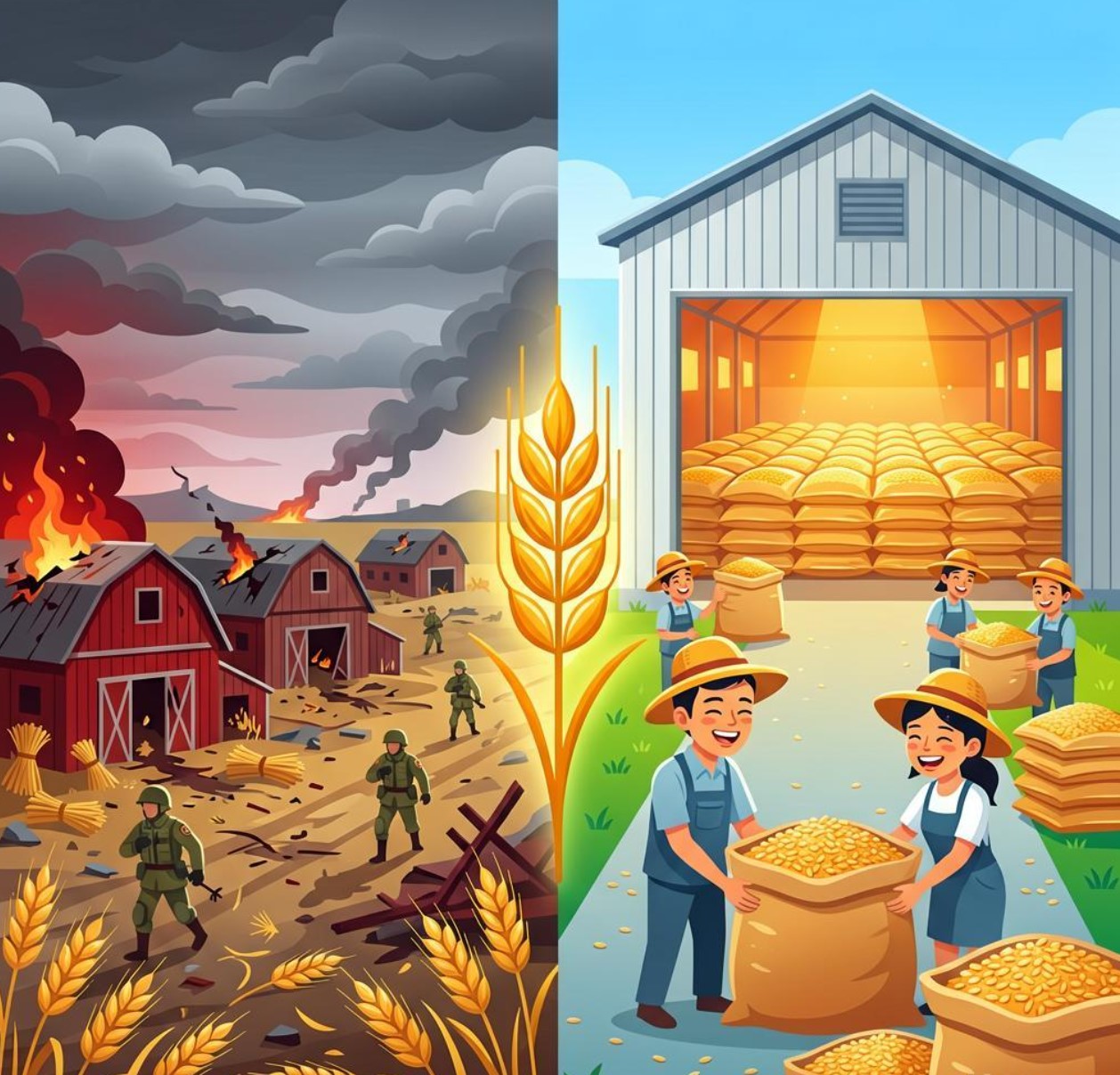
战火下的粮仓:俄乌战争中的俄罗斯粮食安全辩证
Granary Amidst the Flames: The Dialectic of Russian Food Security During the Russo-Ukrainian War
【引言】悖论中的巨人
[Introduction] The Paradoxical Giant
2022年2月,当俄乌战争的硝烟弥漫在东欧平原时,全球市场的第一反应是恐慌——小麦价格飙升,人们担心被称为“欧洲粮仓”的地区将陷入饥荒。然而,三年多过去了,一个极具讽刺意味的现实摆在面前:在这场残酷的消耗战中,俄罗斯不仅没有饿死,反而巩固了其作为全球头号小麦出口国的地位。
In February 2022, as the fog of war enveloped the Eastern European plains, global markets reacted with immediate panic—wheat prices surged, and fears mounted that the region known as the "Breadbasket of Europe" would plunge into famine. Yet, three years later, an ironic reality has emerged: Amidst this brutal war of attrition, Russia has not starved; instead, it has consolidated its position as the world's top wheat exporter.
这种反直觉的现象背后,隐藏着关于现代粮食安全本质的深刻启示:真正的粮食安全,并非仅仅取决于战场上的胜负,而是取决于农业工业化的深度与地缘政治博弈的韧性。
This counterintuitive phenomenon reveals a profound insight into the nature of modern food security: true food security does not solely depend on battlefield victories, but rather on the depth of agricultural industrialization and the resilience of geopolitical maneuvering.
【第一部分】绝对安全:俄罗斯的“战略纵深”
[Part 1] Absolute Security: Russia's "Strategic Depth"
对于俄罗斯而言,粮食安全的定义极其简单且暴力:拥有远超国内需求的巨大产能冗余。 这种结构性优势使其在战争面前拥有了无与伦比的免疫力。
For Russia, food security is defined simply and robustly: possessing massive production capacity far exceeding domestic demand. This structural advantage grants it unparalleled immunity in the face of war.
1. 自给率的压倒性优势
1. Overwhelming Self-Sufficiency Rates
|
品类 |
俄罗斯自给率 |
安全线参考 |
状态 |
|---|---|---|---|
|
谷物(小麦为主) |
~160% |
>95% |
✅ 极度安全 |
|
肉类/禽肉 |
~98% |
>85% |
✅ 极度安全 |
|
马铃薯/鸡蛋 |
~100% |
>90% |
✅ 极度安全 |
|
糖/植物油 |
>90% |
>80% |
✅ 安全 |
-
中文解析:俄罗斯每年生产约1.3亿吨粮食,而其1.44亿人口的国内消费仅为3500万至4000万吨。这意味着,即使战争导致部分产区减产,或者出口通道受阻,俄罗斯国内的面包供应依然坚如磐石。这种巨大的产出/消费剪刀差,构成了俄罗斯粮食安全的物理基石。
-
English Analysis: Russia produces approximately 130 million tons of grain annually, while domestic consumption for its 144 million people stands at only 35-40 million tons. This implies that even if the war causes production declines in certain regions or export channels are blocked, Russia's bread supply remains rock-solid. This massive output/consumption gap constitutes the physical bedrock of Russian food security.
2. 国家干预基金:最后的防火墙

2. State Intervention Fund: The Final Firewall
不同于自由市场经济,俄罗斯保留了苏联时期的国家粮食储备制度。通过“国家干预基金”,政府在丰年收购粮食,在歉年抛售平抑物价。在战争引发通胀的背景下,这套机制有效防止了粮价失控,确保了底层民众的基本生存需求不被战争开支挤压。
Unlike free-market economies, Russia retains the Soviet-era state grain reserve system. Through the "State Intervention Fund," the government purchases grain in bumper harvest years and releases it in lean years to stabilize prices. Against the backdrop of war-induced inflation, this mechanism effectively prevents runaway grain prices, ensuring that the basic survival needs of the lower classes are not squeezed by wartime expenditures.
【第二部分】阿喀琉斯之踵:生产端的隐形危机
[Part 2] The Achilles' Heel: The Hidden Crisis in Production
尽管俄罗斯人吃得饱,但俄罗斯农业的现代化根基却在这场战争中遭受了致命的“去工业化”打击。这才是真正值得警惕的长期隐患。
Although Russians are well-fed, the modernization foundation of Russian agriculture has suffered a fatal "de-industrialization" blow during this war. This is the truly alarming long-term hidden danger.
1. 种子的“卡脖子”困境
1. The "Chokepoint" Dilemma of Seeds
俄罗斯是农业大国,但不是种业强国。战争爆发前,俄罗斯对西方种业的依赖令人咋舌:
-
甜菜:97%依赖进口(主要为拜耳、先正达)。
-
玉米:60%以上依赖进口。
-
向日葵(俄罗斯重要油料):70%依赖进口。
Russia is an agricultural giant but not a seed powerhouse. Before the war, Russia's dependence on Western seed industries was staggering:
-
Sugar Beet: 97% reliant on imports (primarily Bayer, Syngenta).
-
Corn: Over 60% reliant on imports.
-
Sunflower (a key Russian oilseed): 70% reliant on imports.
西方制裁切断了这些优质种子的供应。虽然俄罗斯紧急启动了国产替代计划,但育种是一个长周期的科技积累过程。目前的现实是:主粮(小麦/大麦)种子基本自主,但经济作物种子面临退化风险,这将直接影响农民的收入和出口农产品的品质。
Western sanctions cut off the supply of these high-quality seeds. Although Russia urgently launched domestic substitution programs, breeding is a long-cycle process of scientific accumulation. The current reality is: seeds for staple grains (wheat/barley) are largely self-sufficient, but cash crop seeds face degradation risks, which will directly impact farmers' incomes and the quality of exported agricultural products.
2. 农机的“器官移植排斥”
2. Agricultural Machinery: "Organ Transplant Rejection"
俄罗斯广袤的土地依赖于高度机械化的作业。战前,俄罗斯田间奔跑着大量约翰迪尔(John Deere)、克拉斯(Claas)等欧美高端农机。制裁实施后:
-
欧美厂商撤出俄罗斯,停止提供零配件和技术服务。
-
拖拉机和联合收割机的核心部件(如高压共轨系统、精密传感器)无法获得。
Russia's vast lands rely on highly mechanized operations. Before the war, Russian fields were filled with high-end Western agricultural machinery from John Deere, Claas, etc. After sanctions:
-
Western manufacturers withdrew from Russia, ceasing the provision of spare parts and technical services.
-
Core components of tractors and combine harvesters (such as high-pressure common rail systems and precision sensors) became unavailable.
俄罗斯目前的应对策略是“拆东墙补西墙”( cannibalization,即从一台机器拆零件修另一台)和依赖中亚、土耳其的灰色渠道进口。这种饮鸩止渴的方式导致农业效率下降,维修成本飙升。2025年的数据显示,俄罗斯拖拉机需求较前几年暴跌超过80%,反映出农业生产的严重萎缩。
Russia's current coping strategy is "cannibalization" (stripping parts from one machine to repair another) and relying on gray channels via Central Asia and Turkey for imports. This short-sighted approach has led to declining agricultural efficiency and soaring maintenance costs. Data from 2025 shows that Russian tractor demand plummeted by over 80% compared to previous years, reflecting a severe contraction in agricultural production.
【第三部分】武器化的粮食:出口与制裁的博弈
[Part 3] Weaponized Grain: The Game of Exports and Sanctions
既然国内不缺粮,粮食就成了俄罗斯打破西方围堵的金融武器和外交筹码。
Since there is no domestic grain shortage, grain has become a financial weapon and a diplomatic bargaining chip for Russia to break the Western blockade.
1. 卢布结算与黑海走廊
1. Ruble Settlement and the Black Sea Corridor
为了规避SWIFT制裁,俄罗斯强制要求“不友好国家”用卢布支付粮食款项,这不仅支撑了卢布汇率,也将粮食与能源(天然气)绑定,形成了独特的“资源-粮食”结算体系。同时,通过退出黑海粮食协议并对乌克兰港口实施封锁,俄罗斯实质上垄断了黑海地区的粮食外运通道,迫使全球买家不得不向俄罗斯低头。
To circumvent SWIFT sanctions, Russia forced "unfriendly countries" to pay for grain in Rubles. This not only supported the Ruble exchange rate but also bound grain to energy (natural gas), forming a unique "Resource-Grain" settlement system. Simultaneously, by withdrawing from the Black Sea Grain Initiative and blockading Ukrainian ports, Russia effectively monopolized the Black Sea grain export corridor, forcing global buyers to capitulate.
2. 浮动出口税与国内稳定
2. Floating Export Tariffs and Domestic Stability
为了保护国内消费者免受全球粮价波动影响,俄罗斯实施了“浮动出口关税”机制:国际粮价越高,出口税越重,从而迫使粮商将更多粮食留在国内低价销售。这是一种典型的“内顾型”粮食安全策略——宁可牺牲一部分外汇收入,也要确保国内政治稳定。
To protect domestic consumers from global price volatility, Russia implemented a "floating export tariff" mechanism: the higher the international grain price, the heavier the export tax, forcing traders to leave more grain for domestic sale at lower prices. This is a typical "inward-looking" food security strategy—preferring to sacrifice some foreign exchange earnings to ensure domestic political stability.
【结语】对世界的警示
[Conclusion] A Warning to the World
俄乌战争中的俄罗斯案例,彻底颠覆了传统认知。它告诉我们:
The case of Russia in the Russo-Ukrainian War completely overturns traditional perceptions. It tells us:
-
产能即正义:只要拥有绝对的产量过剩,战争无法摧毁一个国家的饭碗。
-
科技有软肋:即便你是产粮大户,如果在种子和农机芯片上受制于人,你的农业命脉依然脆弱。
-
粮食即权力:在分裂的世界里,粮食不仅是商品,更是地缘战略的投射。
回到中国视角,俄罗斯的困境恰恰印证了你之前关注的逻辑:中国大力推行“种业振兴”、强调“粮油储备”、扶持“中粮科工”等企业进行粮仓智能化改造,正是为了避免在极端情况下重蹈俄罗斯在高端农业装备上的覆辙。
Returning to the Chinese perspective, Russia's predicament precisely confirms the logic you previously focused on: China's vigorous promotion of "Seed Industry Revitalization," emphasis on "Grain and Oil Reserves," and support for enterprises like "COFCO Engineering" to carry out intelligent grain storage transformations are precisely to avoid repeating Russia's mistakes in high-end agricultural equipment under extreme circumstances.
真正的粮食安全,永远掌握在自己手中,藏在深埋地下的种子里,和那些看似枯燥的机电工程系统之中。
True food security always rests in one's own hands, hidden within the seeds buried deep in the soil, and within those seemingly mundane electromechanical engineering systems.
此文由 怡心湖 编辑,若您觉得有益,欢迎分享转发!:首页 > 观·世界 » 战火下的粮仓:俄乌战争中的俄罗斯粮食安全辩证
 从“保命仓”到“智慧库”:机电工程
 筑梦未来:中国基建模式对发展中国家