The Crabapple Spares No Rouge Hue, Standing Alone in the Misty Rain
一、诗句溯源:一个王朝的审美隐喻
I. Tracing the Verse: An Aesthetic Metaphor of a Dynasty
这两句诗,出自北宋诗人陈与义的《春寒》。创作于南宋初年,时值金兵南侵,王朝南渡,风雨飘摇之际。诗人笔下的海棠,已非盛唐时沉醉春风的富贵花,而成为了一种精神人格的投射——在料峭春寒与潇潇细雨中,它不借胭脂之色媚俗,亦不惧清冷孤寂,傲然独立。这恰恰隐喻了当时一批士大夫的内心坚守:在时代的凄风苦雨中,保持文化气节与内在丰盈,比外在的繁华更为珍贵。
These two lines are from the poem "Spring Chill" by the Northern Song poet Chen Yuyi, written in the early Southern Song period. This was a time when the Jin army had invaded south, the court had fled across the river, and the situation was precarious. The crabapple in the poet's brush was no longer the flower of wealth and nobility, intoxicated by the spring breeze of the High Tang, but had become a projection of a spiritual persona—in the biting spring chill and the drizzling rain, it did not borrow the allure of rouge to court favor, nor did it fear the desolate loneliness, standing proud and alone. This precisely metaphorized the inner fortitude of a group of scholar-officials of that time: amidst the bitter winds and harsh rains of the era, preserving cultural integrity and inner richness was more precious than external splendor.
二、“不惜胭脂色”:褪去浮华的本真之美
II. "Sparing No Rouge Hue": The Authentic Beauty Stripped of Ostentation
“胭脂色”,代表的是人工的、取悦性的、流于表面的娇艳。而海棠的“不惜”,是一种主动的舍弃与超越。宋人赏花,尤重“格韵”。他们爱其初绽时的“淡极始知花更艳”,更敬其将谢时的“褪尽东风满面妆”。这种美,不依赖浓丽的色彩堆砌,而源于其内在的生命气韵——在含蓄与清雅中,展现一种自信自足的风骨。这反映了宋代美学从唐代富丽外向,转向内省、尚意的深刻变革。
"Rouge hue" represents an artificial, pleasing, superficial delicacy. The crabapple's "sparing no" signifies an active renunciation and transcendence. The Song people, in their appreciation of flowers, especially valued "elegant charm" (geyun). They loved its initial blooming, described as "only when the hue is faintest does one realize the flower is more radiant," and even more revered its state as it faded, "the east wind recedes, washing the full face of its adornment." This beauty did not rely on the piling of rich colors but stemmed from its inner vitality—revealing a confident, self-sufficient character through subtlety and refined elegance. This reflected the profound shift in Song aesthetics from the Tang's extravagant outwardness to introspection and the esteem for conceptual resonance (shang yi).
三、“独立蒙蒙细雨”:困境中的精神姿态
III. "Standing Alone in the Misty Rain": A Spiritual Posture in Adversity
“蒙蒙细雨”,是迷蒙、清寒、浸润的复杂环境。它不同于狂风暴雨的猛烈摧毁,而是一种持久、弥漫性的压力与孤寂感。海棠的“独立”,并非与环境对抗,而是在其中保持静定与清醒。细雨沾湿花瓣,却更显其晶莹与韧性。这种意象,完美契合了宋代文人在党争频仍、国势渐微的“细雨”中,追求“穷则独善其身”的人格理想。他们于困境中愈发向内寻求力量,在艺术与哲学中构建独立的精神世界,如同雨中海棠,柔弱外表下是坚韧不拔的生命力。
"Misty rain" is a complex environment of obscurity, chill, and permeating dampness. Unlike the violent destruction of a storm, it represents a persistent, pervasive pressure and sense of loneliness. The crabapple's "standing alone" is not a confrontation with the environment but a maintaining of stillness and clarity within it. The fine rain moistens the petals, making them appear even more crystalline and resilient. This imagery perfectly aligned with the Song literati's ideal personality of "when poor, attend to one's own virtue in solitude" amidst the frequent factional strife and the nation's gradual decline—the "misty rain" of their times. In adversity, they turned increasingly inward for strength, constructing independent spiritual worlds within art and philosophy, much like the rain-drenched crabapple, whose delicate exterior concealed an indomitable vitality.
四、庭院中的哲学:有限空间里的无限寄托
IV. The Philosophy in the Courtyard: Infinite Sentiment within a Limited Space
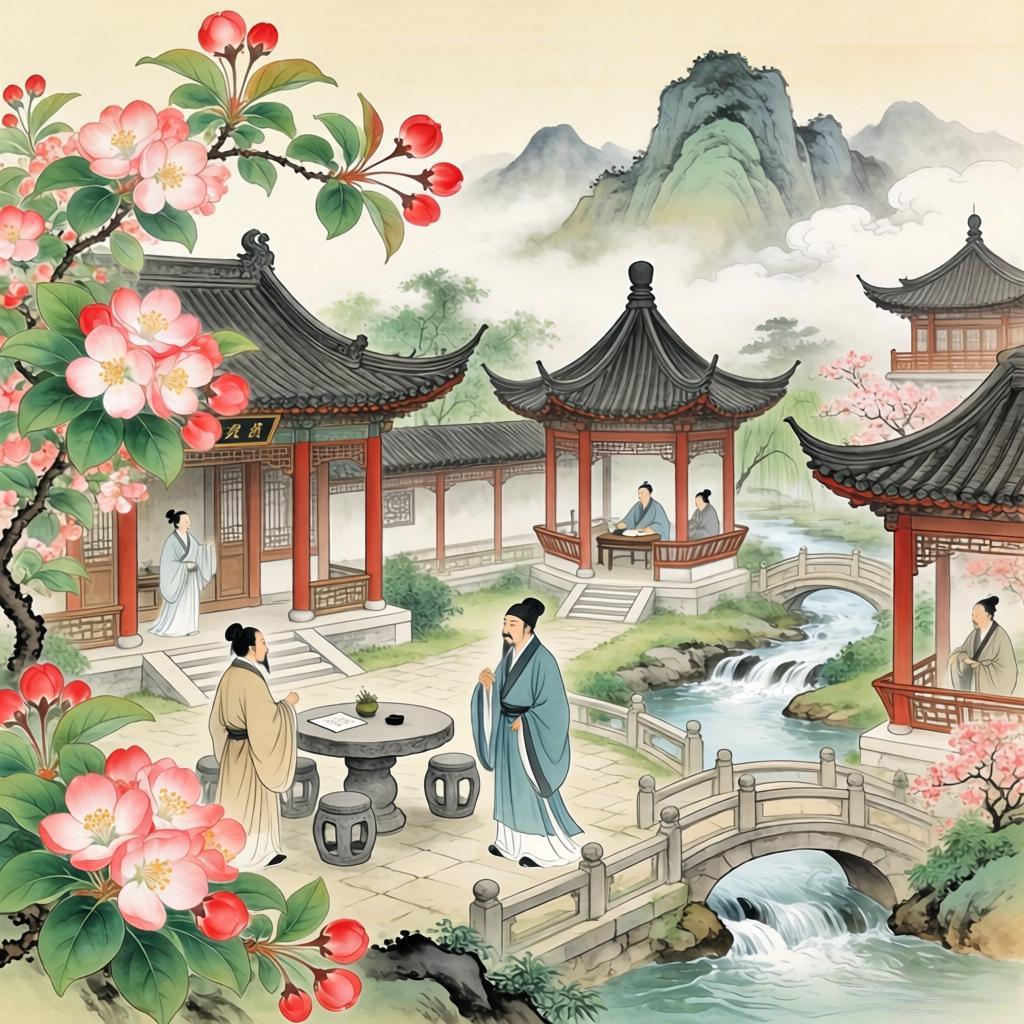
宋代园林趋向“壶中天地”的写意与微型化。海棠,因其树姿疏朗、宜孤植亦可从植的特性,成为点景的绝佳选择。在“蒙蒙细雨”的氤氲氛围里,于书房窗前、庭院一角,置一株海棠。其花姿在雨雾中若隐若现,与太湖石、白墙、漏窗共同构成一幅流动的水墨画。士大夫在其中体会的,不仅是视觉享受,更是“观物悟道”的哲学体验。独立细雨的海棠,成为他们关照自身命运的镜像:在有限而充满不确定的世间(庭院/王朝)中,如何保持心灵的独立与高洁。
Song Dynasty gardens tended towards the evocative and miniature concept of "a universe within a pot." The crabapple, with its sparse, graceful form suitable for both solitary and grouped planting, became an excellent choice for focal points. In the misty atmosphere of "drizzling rain," a crabapple placed outside a study window or in a courtyard corner, its blossoms faintly discernible through the mist and rain, together with Taihu rocks, white walls, and lattice windows, composed a flowing ink painting. Within this, the scholar-officials experienced not merely visual enjoyment but the philosophical practice of "observing things to comprehend the Dao." The crabapple standing alone in the rain became a mirror in which they contemplated their own fate: how to maintain spiritual independence and nobility within a limited and uncertain world (the courtyard/the dynasty).
五、对后世的影响:一种审美原型的形成
V. Influence on Later Generations: The Formation of an Aesthetic Archetype
陈与义这两句诗,以其极高的意境和人格化力量,将雨中海棠塑造成一个经典的文学与艺术母题。后世无数画家,如明代的陈淳、清代的恽寿平,都曾以此诗意入画,着力表现那份清冷、孤傲与自持。它超越了季节与花卉本身,成为中华文化中一个重要的审美原型:在逆境中保持内在丰盈与独立品格的象征。每当民族或个人面临挑战时,这种“海棠精神”便被反复追忆与咏叹,注入新的时代内涵。
With their profound artistic conception and personifying power, Chen Yuyi's two lines molded the rain-drenched crabapple into a classic literary and artistic motif. Countless later painters, such as Chen Chun of the Ming Dynasty and Yun Shouping of the Qing Dynasty, incorporated this poetic imagery into their works, striving to capture that sense of pure chill, aloof pride, and self-possession. It transcended the season and the flower itself, becoming a significant aesthetic archetype in Chinese culture: a symbol of maintaining inner richness and independent character in adversity. Whenever the nation or individuals faced challenges, this "crabapple spirit" was recalled and extolled anew, infused with contemporary significance.
结语:穿越千年的细雨与傲骨
Epilogue: The Timeless Drizzle and Unbending Spirit
“海棠不惜胭脂色,独立蒙蒙细雨中。” 今天,我们依然能在江南的园林,或北方的庭院里,看到这样的景象。诗句的力量,在于它将一种植物瞬间提升为精神的图腾。那细雨,是历史的烟雨,也是人生的风雨;那独立的海棠,是无数在不确定世界中试图安顿心灵的中国人。它提醒我们,真正的美与力量,往往不在于绚烂夺目,而在于在寂静与寒凉中,那份清醒的、不妥协的自我持守。这或许,就是这朵穿越了千年时光的海棠,给予我们最珍贵的馈赠。
Today, we can still witness such a scene in the gardens of Jiangnan or the courtyards of the north. The power of the verse lies in its elevation of a plant into an instant spiritual totem. That drizzle is the misty rain of history and the storms of life; that solitary crabapple represents countless Chinese people seeking to settle their souls in an uncertain world. It reminds us that true beauty and strength often lie not in dazzling brilliance, but in that clear-eyed, uncompromising self-possession within silence and chill. This, perhaps, is the most precious gift this crabapple, traversing a millennium, offers us.
此文由 怡心湖 编辑,若您觉得有益,欢迎分享转发!:首页 > 花·烟火 » 海棠不惜胭脂色,独立蒙蒙细雨中
 “国艳”海棠史:一朵花如何征服了唐
 海棠花适合白天浇水还是晚上?
 海棠花的花语?风水中有何妙用?