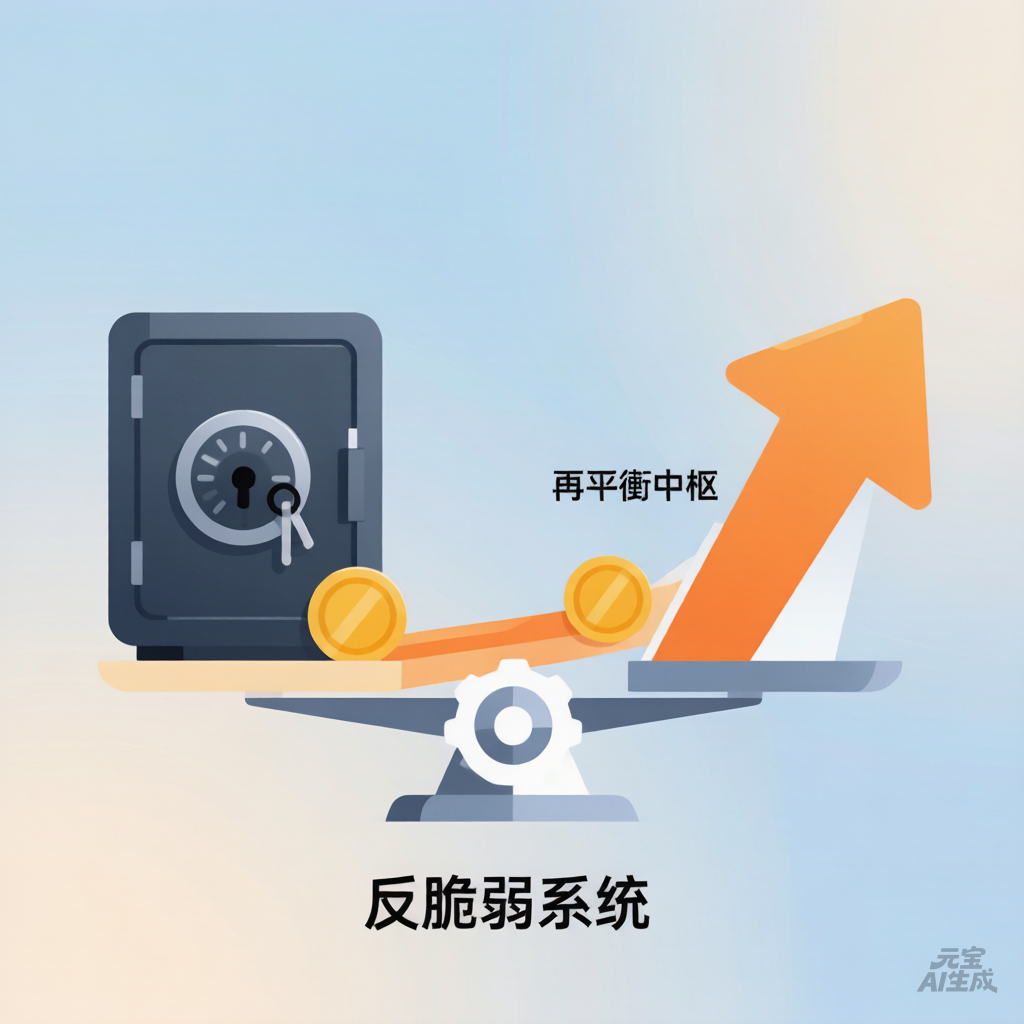

如何在投资中构建“反脆弱系统”
How to Build an "Anti-Fragile System" in Investing
核心隐喻: 最稳固的大厦,不是钢筋铁骨永不裂缝,而是允许局部墙体在非结构性位置开裂,通过微小的耗散来释放整体的应力。
Core Metaphor: The most stable building is not one with steel and concrete that never cracks, but one that allows non-structural walls to fissure locally, dissipating overall stress through minor dissipation.
引言:从“求稳”到“韧性”的范式转移
Introduction: The Paradigm Shift from "Stability" to "Resilience"
在传统金融学中,我们被教导要追求“稳定性”(Stability)。投资者穷尽一生试图预测市场走向,寻找那个永远不会下跌的“圣杯”。然而,现实往往残酷:黑天鹅频发,曾经的巨头一夜倒塌。纳西姆·塔勒布(Nassim Taleb)提出了“反脆弱”(Anti-Fragility)的概念——有些事物不仅能在混乱中存活,还能从中受益。
In traditional finance, we are taught to pursue "stability." Investors spend their lives trying to predict market trends, searching for the "holy grail" that will never decline. However, reality is often brutal: black swan events are frequent, and once-mighty giants collapse overnight. Nassim Taleb introduced the concept of "Anti-Fragility"—the property of some things to not only survive chaos but actually benefit from it.
但这不仅仅是数学上的非线性收益,更是一种权力的艺术。最稳定的权力在于允许部分坍塌而不影响系统的安全性。 在投资中,这意味着你必须放弃对“完美账户”的执念,主动构建一套允许局部亏损、甚至允许局部“坍塌”的系统,只要核心资产安然无恙。
But this is more than just non-linear mathematical returns; it is an art of power. The most stable power lies in allowing partial collapse without compromising systemic security. In investing, this means you must abandon the obsession with a "perfect account," and proactively build a system that permits local losses, or even local "collapses," as long as the core assets remain safe.
第一部分:德本财末——反脆弱的道德底座
Part 1: Virtue as the Root, Wealth as the Branch — The Moral Foundation of Anti-Fragility
曾仕强先生在《财神文化》中反复强调:“德者本也,财者末也。”很多人将此视为道德说教,但在系统论眼中,这是构建反脆弱系统的第一性原理。
Mr. Zeng Shiqiang repeatedly emphasized in The Culture of the God of Wealth: "Virtue is the root; wealth is the branch." Many dismiss this as mere moralizing, but from a systems theory perspective, this is the first principle of building an anti-fragile system.
为什么德行是反脆弱的底座?
Why is virtue the foundation of anti-fragility?
因为财富是流动的,而德行是容器。一个贪婪、投机取巧的人,即便通过运气获得了巨额财富(魔财),他的系统是极度脆弱的。一旦环境变化,由于缺乏对财富的敬畏与驾驭能力,系统会瞬间崩塌。反之,一个有德之人(诚信、忠义、懂得散财),他的信用和口碑构成了系统的“冗余备份”。当他遭遇投资失败时,这部分社会资本会自动介入,帮助系统重建。
Wealth is fluid, while virtue is the container. A greedy, opportunistic person may acquire huge wealth (demonic wealth) through luck, but their system is extremely fragile. Once the environment changes, due to a lack of reverence and capacity to manage wealth, the system collapses instantly. Conversely, a virtuous person (honest, loyal, knows how to distribute wealth) has credit and reputation that serve as redundant backups for the system. When they encounter investment failure, this social capital automatically intervenes to help rebuild the system.
|
脆弱系统 (Fragile System) |
反脆弱系统 (Anti-Fragile System) |
|---|---|
|
追求横财 (Pursuit of Windfall) |
赚取神财 (Earning Divine Wealth) |
|
德不配位 (Virtue-wealth Mismatch) |
厚德载物 (Virtue Sustains Wealth) |
|
唯利是图 (Profit at All Costs) |
散财聚人 (Distributing Wealth Gathers People) |
践行之道: 在你的投资系统中,设立一条不可逾越的道德红线。不投你看不懂且违背良知的行业,不赚让你睡不着觉的钱。这看似限制了收益,实则是给系统装上了“熔断器”,防止毁灭性的坍塌。
Practice: Establish an ethical red line in your investment system. Do not invest in industries you do not understand or which violate your conscience. Do not make money that keeps you up at night. This may seem to limit returns, but it actually installs a "fuse" in your system to prevent catastrophic collapse.
第二部分:允许部分坍塌——仓位管理的艺术
Part 2: Allowing Partial Collapse — The Art of Position Management
“最稳定的权力在于允许部分坍塌。” 这句话在投资中最直接的映射就是:永远不要把所有筹码押在一张牌上,并且坦然接受某些筹码的消失。
"The most stable power lies in allowing partial collapse." The most direct application of this sentence in investing is: Never put all your chips on one bet, and accept with equanimity the disappearance of some of those chips.
大多数散户的脆弱性来源于“全仓赌一把”的心态。他们无法忍受账户里有闲置资金(现金被视为低效资产),也无法忍受任何一笔交易亏损离场。这种心态导致系统没有任何缓冲带,一次失误便是满盘皆输。
The fragility of most retail investors stems from the mentality of "going all-in." They cannot tolerate idle funds in their accounts (cash is viewed as an inefficient asset), nor can they stand to exit any trade at a loss. This mindset leaves no buffer zone in the system; one mistake leads to total defeat.
构建反脆弱系统的关键在于非对称配置(Asymmetric Allocation):
The key to building an anti-fragile system lies in Asymmetric Allocation:
-
核心-卫星策略 (Core-Satellite Strategy): 将80%-90%的资金(核心)配置在极低波动、高流动性的资产(如国债、现金、宽基指数)上。这部分是“地基”,允许它们跑输通胀(允许部分购买力轻微坍塌),目的是确保生存。剩下的10%-20%(卫星)用于高风险博弈。
-
主动止损即“主动坍塌” (Active Stop-Loss as "Active Collapse"): 不要等待系统被外力摧毁,主动拆除有风险的部件。当一笔投资触及止损线,果断砍仓。这不是失败,而是为了保全主系统的安全性而进行的有序爆破。
-
Core-Satellite Strategy: Allocate 80%-90% of funds (the core) to ultra-low volatility, high liquidity assets (such as government bonds, cash, broad market indices). This part is the "foundation," and we allow them to underperform inflation (allowing a slight collapse in purchasing power) for the purpose of ensuring survival. The remaining 10%-20% (satellites) is used for high-risk speculation.
-
Active Stop-Loss is "Active Collapse": Do not wait for the system to be destroyed by external forces; proactively dismantle risky components. When an investment hits the stop-loss line, cut your position decisively. This is not failure, but an orderly demolition conducted to preserve the security of the main system.
顿悟时刻: 亏损不是错误,死扛才是。允许本金的一部分“战略性牺牲”,是获得长期生机的代价。
Moment of Insight: Losses are not mistakes; holding on to them is. Allowing a portion of your principal to be "strategically sacrificed" is the price of long-term viability.
第三部分:五指连心——多元化与相关性控制
Part 3: Five Fingers Connected — Diversification and Correlation Control
曾仕强解读“五路财神”时提到,五路财神代表你的五个手指头。大拇指(中路财神赵公明)代表原则,其余四指代表不同的生财渠道。手指如果并得太紧(高度相关),就抓不住东西;如果断了(孤注一掷),手就废了。
When Mr. Zeng Shiqiang interpreted the "Five Directions of the God of Wealth," he mentioned that they represent your five fingers. The thumb (Zhao Gongming, the Central God of Wealth) represents principles, while the other four fingers represent different channels of wealth creation. If the fingers are held too tightly together (highly correlated), they cannot grasp anything; if one breaks (putting all your eggs in one basket), the hand is crippled.
现代投资组合理论(MPT)的核心不是“买很多种股票”,而是降低资产之间的相关性(Correlation)。
The core of Modern Portfolio Theory (MPT) is not "buying many kinds of stocks," but reducing the correlation between assets.
-
脆弱系统: 持有10只不同名字但同属科技板块的股票。当科技股崩盘,全军覆没。
-
反脆弱系统: 持有股票、债券、黄金、大宗商品、甚至艺术品。这些资产在经济周期的不同阶段表现各异。当股市坍塌时,债市或黄金可能上涨,抵消损失。
-
Fragile System: Holding 10 different stocks, all in the tech sector. When tech stocks crash, everything is wiped out.
-
Anti-Fragile System: Holding stocks, bonds, gold, commodities, and even art. These assets perform differently across various stages of the economic cycle. When the stock market collapses, bonds or gold may rise, offsetting the losses.
这种配置的逻辑正是“允许部分坍塌”:我允许我的股票账户今年亏20%,因为这保障了我在债券和现金部分的流动性安全,使我能在低位抄底。 你不追求每一个部分都永远向上,你追求的是整体功能的存续与进化。
The logic of this allocation is precisely "allowing partial collapse": I allow my stock portfolio to lose 20% this year because it secures the liquidity safety of my bond and cash portions, enabling me to buy the dip at low levels. You do not pursue every single part going up forever; you pursue the continuation and evolution of the overall function.
第四部分:非线性收益——拥抱波动与压力
Part 4: Non-Linear Returns — Embracing Volatility and Stress
反脆弱系统有一个显著特征:凸性效应(Convexity Effect)。也就是在波动中获益的能力。
An anti-fragile system has a distinct characteristic: the Convexity Effect. That is, the ability to benefit from volatility.
传统的“脆弱者”是厌恶波动的,他们像瓷器一样,一摔就碎。而反脆弱的投资者像九头蛇(Hydra),砍掉一个头,长出两个新的。
Traditional "fragile" entities hate volatility; they break like porcelain at the slightest drop. Anti-fragile investors are like the Hydra; cut off one head, and two new ones grow back.
如何在投资中实现这一点?
How can this be achieved in investing?
-
期权策略 (Options Strategies): 买入看跌期权(Put Options)就像买保险。平时保费(小额坍塌)是成本,但一旦发生黑天鹅(系统性风险),这笔小小的投入能换来巨大的保护,甚至收益。
-
杠铃策略 (Barbell Strategy): 塔勒布提出的这一策略极度符合“允许部分坍塌”。一端是极度安全的资产(90%现金/国债),另一端是极度投机的资产(10%高杠杆或风投)。中间不做任何中等风险的投资。这样,你大部分时间是“无聊”且安全的,但那10%的冒险一旦成功,收益足以覆盖90%部分的低收益甚至通胀损耗,且这10%亏光了也无所谓(允许坍塌)。
-
Options Strategies: Buying put options is like buying insurance. The premium (small collapse) is a cost during normal times, but once a black swan event (systemic risk) occurs, this small investment yields massive protection, or even profit.
-
Barbell Strategy: This strategy proposed by Taleb fits perfectly with "allowing partial collapse." One end holds extremely safe assets (90% cash/T-bills), the other end holds extremely speculative assets (10% high leverage or venture capital). Nothing is invested in medium-risk assets in the middle. Thus, you are mostly "bored" and safe, but if that 10% gamble succeeds, the returns are enough to cover the low returns or inflation erosion of the 90% portion, and it doesn't matter if that 10% is completely lost (allowing collapse).
结语:做自己账户的“财神”
Conclusion: Be the "God of Wealth" of Your Own Account
曾仕强说:“财神是人造神。” 同理,反脆弱系统也是人造系统。
Zeng Shiqiang said, "The God of Wealth is a man-made deity." Similarly, an anti-fragile system is a man-made system.
最稳定的权力在于允许部分坍塌而不影响系统的安全性。 当你不再执着于每一笔交易都正确,当你不再恐惧账户的数字暂时回撤,当你把德行置于财富之上时,你就构建了一个无法被击垮的内在世界。
The most stable power lies in allowing partial collapse without compromising systemic security. When you are no longer obsessed with being right on every trade, when you no longer fear temporary drawdowns in your account, and when you place virtue above wealth, you have built an inner world that cannot be defeated.
投资的终极境界,不是预测风雨,而是修建一艘无论风浪多大都能浮在水面,甚至在风暴中捕获更多鱼儿的船。这就是投资的财神文化,也是反脆弱的最高奥义。
The ultimate state of investing is not predicting the storm, but building a ship that stays afloat no matter how big the waves, and can even catch more fish during the storm. This is the culture of the God of Wealth in investing, and the highest mystery of anti-fragility.
此文由 怡心湖 编辑,若您觉得有益,欢迎分享转发!:首页 > 马·春风 » 如何在投资中构建“反脆弱系统”