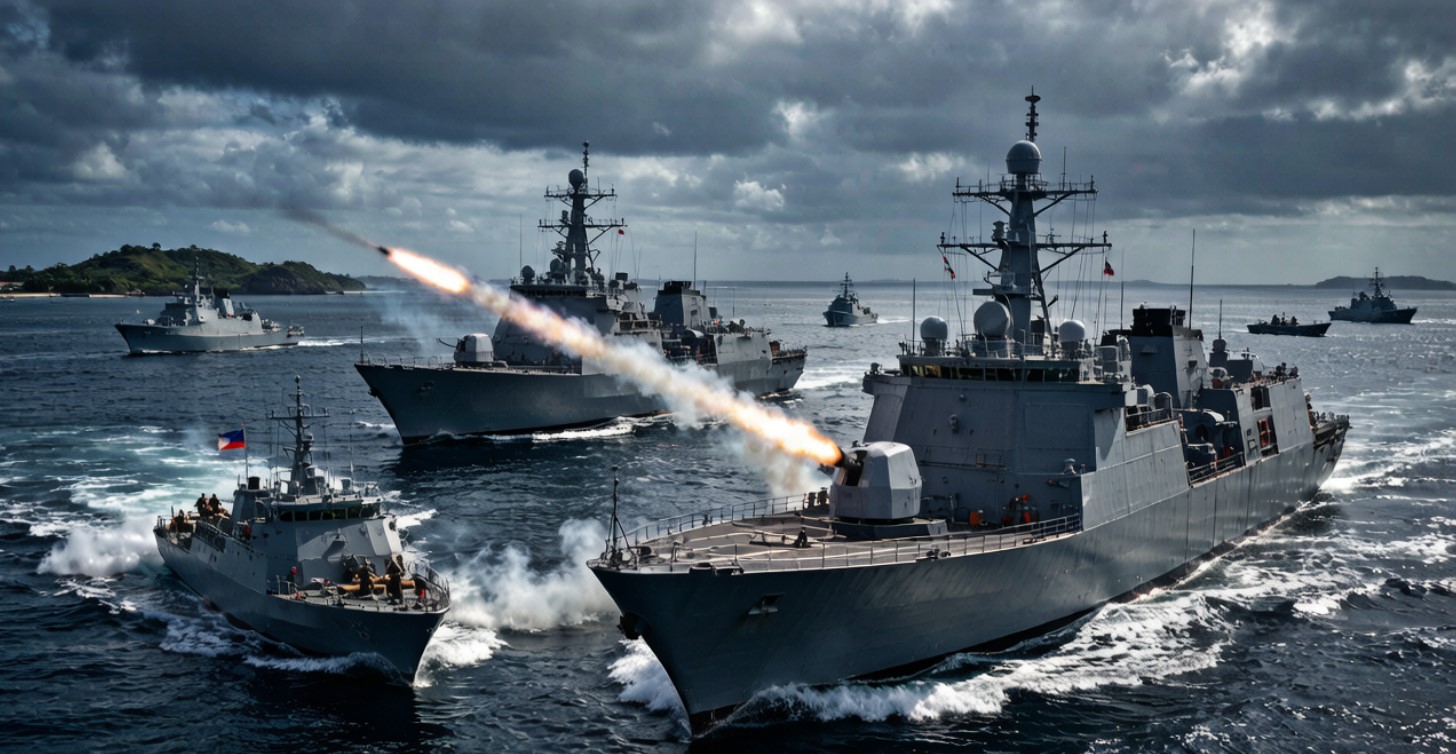
东亚军事观察|韩国军力:世界第五名的成色与边界
East Asian Military Watch|ROK Military Power: The Substance and Limits of the "World No.5" Ranking
一、榜单上的第五,与榜单外的现实
1. The Fifth on the List, and the Reality Beyond It
2026年1月,美国民间防务机构「全球火力」(GFP)更新榜单:韩国以 PwrIndx 0.1642 位列全球第5,连续三年稳居美、俄、中、印之后,压过法国、日本、英国。 李在明总统据此在国会称「能打赢韩国的只有四个国家」。
In January 2026, the U.S.-based think tank Global Firepower (GFP) updated its index: South Korea ranked 5th globally with a PwrIndx of 0.1642, holding the spot behind the U.S., Russia, China and India for the third straight year, ahead of France, Japan and the UK. President Lee Jae-myung accordingly told the National Assembly that "only four countries can defeat us."
但 GFP 的算法本身限定了这句话的份量:它统计60余项常规指标——兵力、装备数、军费、动员力、后勤、地缘——核武器与同盟延伸威慑均不计入。于是「第五」是常规军力第五,不是综合战略能力第五;是无核国家常规天花板,而非对等体量大国。
But the GFP methodology bounds the weight of that claim: it scores more than 60 conventional indicators—troop strength, equipment counts, defense spending, mobilization, logistics, geography—while excluding nuclear weapons and allied extended deterrence. Thus "No.5" means fifth in conventional force, not in overall strategic capability; it is the ceiling among non-nuclear conventional powers, not a peer of full-spectrum great powers.
一句话:韩国是「东亚怪物房里最像现代军队的无核中等强国」,不是东亚的第二个中国,也不是缩水版美国。
In one line: South Korea is the most modern-looking non-nuclear middle power in the East Asian "monster house", not a second China in East Asia nor a shrink-wrapped America.
二、底盘:兵力、军费与军工自给
2. The Base: Manpower, Budget and Indigenous Defense Industry
兵力:现役约 45万(2019年56万,6年减员约20%),预备役 310万,义务兵役18–21个月。师级以上单位由59个精简至42个。 兵员曲线向下,源于生育率崩塌;转型方向是「少人、智能、无人」。
Manpower: about 450,000 active (down from 560,000 in 2019, a 20% cut in six years), 3.1 million reservists, conscription 18–21 months. Formations above division level shrank from 59 to 42. The manpower curve falls because of the fertility collapse; the pivot is "fewer people, smarter, unmanned."
军费:2026财年 65.8万亿韩元(约448亿美元),同比+7.5%,近7年最大增幅;其中三轴体系 8.84万亿韩元(+21.3%),指挥权移交配套 5万亿韩元,AI/无人机约 10万亿韩元。 驻韩美军分摊费1.6万亿韩元。
Budget: FY2026 65.8 trillion won (~$44.8B), +7.5% YoY, the steepest rise in seven years; of this the three-axis system gets 8.84 trillion won (+21.3%), OPCON-transfer readiness 5 trillion won, AI/drones roughly 10 trillion won. Host-nation support for U.S. Forces Korea is 1.6 trillion won.
军工:K2坦克、K9自行榴弹炮(全球同型市占约半数)、KDX-Ⅲ宙斯盾驱逐舰、KSS-Ⅲ潜艇、KF-21战机、玄武系列弹道导弹均可自产并出口。韩国军工出口居世界前四——这是它区别于日本、德国的关键:不仅买得起,还能卖得动。
Industry: K2 tank, K9 self-propelled howitzer (~half the world market in its class), KDX-III Aegis destroyer, KSS-III submarine, KF-21 fighter, Hyunmoo ballistic missiles—all indigenous and exported. ROK defense exports rank top-four globally; this is what separates it from Japan or Germany—it not only buys, it sells.
三、三轴体系:自主国防的骨架
3. The Three-Axis System: The Skeleton of "Self-Reliant Defense"
韩国型三轴体系是李在明「自主国防」的能力支柱:
- 杀伤链(Kill Chain):探测—决策—先制打击,核心为玄武-5(重型钻地弹道导弹,2024年公开,弹头约8吨)。
- 韩型导弹防御(KAMD):爱国者-3 + 天弓-2 + L-SAM远程地空导弹,目标2030年前关键要地防护覆盖率 95%+、核心防空国产化。
- 大规模惩戒报复(KMPR):对朝核发射迹象确认后,对领导层与核心设施进行报复性精确打击。
The ROK Three-Axis System is the capability backbone of Lee Jae-myung's "self-reliant defense":
- Kill Chain: detect-decide-preempt, centered on Hyunmoo-5 (heavy earth-penetrating ballistic missile, unveiled 2024, ~8-ton warhead).
- KAMD: Patriot-3 + Cheongung-2 + L-SAM, aiming for 95%+ coverage of key sites by 2030 and domestic control of core air-defense code.
- KMPR: retaliatory precision strikes on leadership and core facilities once nuclear launch signs are confirmed.
叠加项目:核潜艇(2030年代中后期下水)、国产C4I(1.2万亿韩元,2026年10月全面作战能力验证)、5年内部署低轨军事卫星与「星盾」项目。
Stacked programs: nuclear-powered submarine (sea trials late 2030s), indigenous C4I (1.2 trillion won, full-operational-capability test Oct 2026), low-orbit military satellites and a "Star Shield" layer within five years.
四、装备画像:精锐化,但带 asterisks
4. Force Portrait: Elite, but With Asterisks
- 陆军:2600辆级主战坦克(K1/K2),K2配55倍径120炮+自动装弹,近豹2A7;火炮数量与K9出口量是真实优势。短板:重型平台向无人系统转型中,82亿美元传统采购被砍。
- 海军:170+艘舰,2艘独岛级两栖攻击舰、4艘宙斯盾驱(世宗大王级+正祖大王级)、岛山安昌浩级常规潜艇带潜射巡航弹;无航母、无核潜艇(在建)。
- 空军:40+架F-35A、60架F-15K、169架F-16、KF-21量产机2026年3月亮相(4.9代,发动机F414来自美国,非完全隐身)。
- Army: ~2,600 MBTs (K1/K2); K2 carries 55-cal 120mm + autoloader, near Leopard 2A7; artillery count and K9 exports are real edges. Weak point: pivoting from heavy platforms to unmanned, $8.2B in legacy buys cancelled.
- Navy: 170+ ships, 2 Dokdo-class LHDs, 4 Aegis destroyers (Sejong + Jeongjo), Dosan Ahn Chang-ho-class SSK with SLCM; no carrier, no SSN (building one).
- Air Force: 40+ F-35A, 60 F-15K, 169 F-16, KF-21 mass-production rollout Mar 2026 (4.9-gen, U.S. F414 engine, not full stealth).
自主率的硬伤在底层:K2早期批次发动机/变速箱依赖德国 MTU/伦克,KF-21航电雷达自研但动力与部分弹药链仍走美制标准。战时若供应链被掐,产能会打折。
The autonomy scar is at the base: early K2 batches relied on German MTU/Renk transmission, KF-21 has indigenous radar but U.S.-standard engine and parts of the ordnance chain. In wartime, cut the supply line and output discounts itself.
五、三道天花板:指挥权、核盾、地理
5. Three Ceilings: Command, Nuclear Umbrella, Geography
① 战时指挥权(OPCON)不在首尔
1994年收回平时指挥权,战时仍由韩美联合司令部(美军将任司令)掌握。韩方目标2028年、美方提及2029财年二季度;2026年底完成「基础能力+全面指挥」两段验证,2030年前转「韩军主导、美军支援」。 主动权不在自己手里。
① Wartime OPCON is not in Seoul
Peacetime command returned in 1994; wartime OPCON still sits with ROK-U.S. Combined Forces Command (U.S. general as commander). Seoul targets 2028, Washington mentions Q2 FY2029; by end-2026 Seoul runs two validation phases ("baseline capability + full command"), and before 2030 moves to "ROK-led, U.S.-supported" ops. The initiative is not its own.
② 无核,靠延伸威慑
GFP前五中唯一无核国。面对朝鲜核导,韩国以「多层反导+玄武-5+美方核保护伞」对冲,但扣扳机权在华盛顿。
② Non-nuclear, leaning on extended deterrence
The only non-nuclear state in GFP's top five. Against DPRK nukes, Seoul hedges with "multi-layer BMD + Hyunmoo-5 + U.S. umbrella," but the trigger pull belongs to Washington.
③ 首尔距军事分界线约40公里
国土狭长、人口产业高度集聚、无战略纵深。这是韩国军力数学永远减不掉的一项——装备再先进,也换不来后方空间。
③ Seoul is ~40 km from the MDL
Long narrow territory, population and industry clustered, no strategic depth. This is the term Korean force math can never subtract—no matter how advanced the kit, it buys no rear space.
六、放在东亚坐标系里看
6. Placing It in the East Asian Coordinate System
|
维度 |
中国 |
韩国 |
日本(参照) |
|---|---|---|---|
|
定位 |
全域大国+核三位一体 |
无核常规强国(半岛指向) |
同盟型海空强国(西南转向) |
|
军费(2026) |
约2660亿美元级 |
448亿美元 |
9.04万亿日元(约615亿美元) |
|
兵力 |
约200万 |
45万现役/310万预备 |
不到30万 |
|
航母/核潜 |
有/有 |
无/在建 |
准航母/无核潜 |
|
自主短板 |
极少 |
动力/部分航电/指挥权 |
宪法约束/进攻性打击立法中 |
数据综合 GFP 2026、IISS、SIPRI 与各国白皮书。
韩国军力的正确读法:在半岛场景内、有美军背书时,它是压倒性常规优势方;脱离韩美同盟体系、面对中国全域作战体系时,量级差约一个维度。日本海空精细化与反潜更强、预算更高;韩国陆军火力、动员密度、军工出口力更强——两者是「同盟双锚」,不是同一类力量。
The correct reading of ROK power: within the peninsula scenario and under the U.S. umbrella, it holds overwhelming conventional edge; strip the alliance and face China's full-domain system, the gap is roughly one order of magnitude. Japan has finer sea/air and ASW plus a bigger budget; Korea has heavier land fire, denser mobilization, stronger arms exports—they are "twin alliance anchors," not the same species of force.
朝鲜变量必须单列:平壤有核、有中远程弹道导弹、有俄乌战场观察经验。韩国「世界第五」在纯常规兑换表里成立,在「核对常规」的非对称博弈里立即失真。
The DPRK variable must sit alone: Pyongyang has nukes, MRBMs/IRBMs, and observers from the Ukraine war. Korea's "world No.5" holds on the pure conventional exchange table, but distorts at once in asymmetric "nuclear vs. conventional" play.
七、观察员判断
7. Observer's Judgment
韩国军力不是泡沫,但也远非李在明台词那般硬挺。
ROK military power is not a bubble, but also far softer than Lee Jae-myung's one-liner suggests.
- 「第五名」的价值,是倒逼华盛顿把指挥权交还一张牌——政治效用大于战场效用。
The value of "No.5" is a card to force Washington to hand back command—political utility exceeds battlefield utility. - 真正可畏的是军工底盘+三轴体系+AI无人化转型,这条线若走完,韩国会成为无核国家里第一个接近「准自主威慑」的案例。
What is truly formidable is the defense-industrial base + three-axis + AI-unmanned shift; if finished, Korea becomes the first non-nuclear state near "quasi-autonomous deterrence." - 但指挥权、核伞、首尔地理三件事二十年都未必翻篇——它们决定了「世界第五」永远带着括号:
(韩美同盟内常规第五 / 脱离同盟则重新计价)。
But OPCON, the nuclear umbrella, Seoul's geography may not turn over in twenty years—they bracket "world No.5" forever:
(fifth in convention inside the alliance / repriced once outside it).
东亚军力观察的第一戒律:别把榜单指数当战略等式。韩国证明了一件事——中等强国可以把常规军力卷到极致,却卷不出战略自主。
The first rule of East Asian military watch: never mistake a list index for a strategic equation. Korea proves one thing—a middle power can max out conventional force, yet still cannot grind out strategic autonomy.
此文由 怡心湖 编辑,若您觉得有益,欢迎分享转发!:首页 > 常识论 » 东亚军事观察|韩国军力:世界第五名的成色与边界 East Asian Military Watch|ROK Military Power: The Substance and Limits of t
 当时间成为空间:块宇宙、平行世界与
 鳩山由紀夫——日本政界の「異端」
 AI大概率会怎样改变世界?
 当"硅岛"震颤:熊本地震与世界半导体
 菲律宾军力底色与"反华急先锋"生