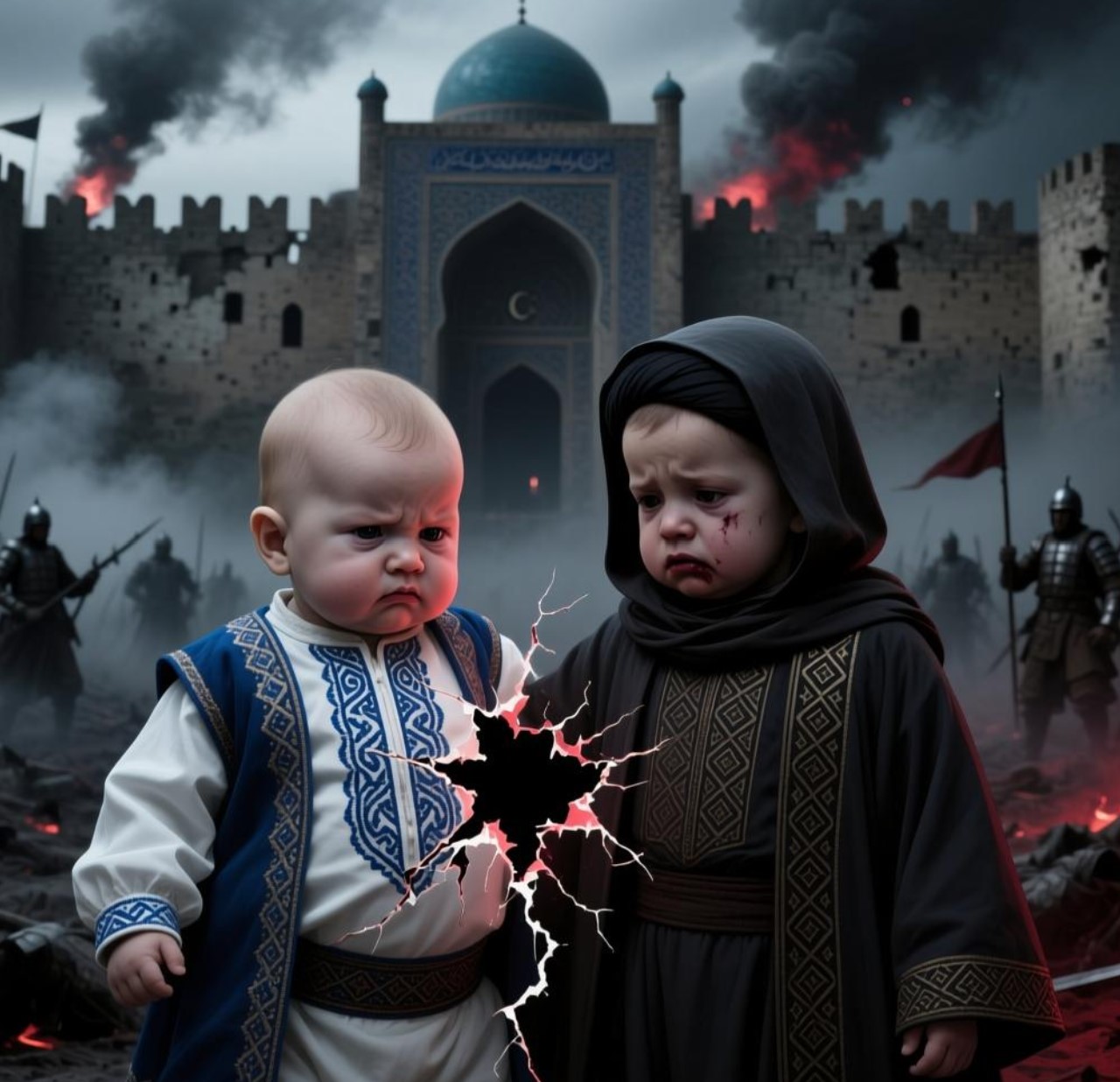

在欧亚大陆的十字路口,高加索的雪峰与伊朗高原的荒漠之间,横亘着一道看不见的伤口。阿塞拜疆与伊朗,这两个名字承载着同一民族的千年记忆,却被近代政治的刀锋划为两半。1828年的《土库曼恰伊条约》,如同一场粗暴的外科手术,将完整的“阿塞拜疆”躯体一分为二——北方归于沙俄的铁幕,南方留在波斯的穹顶之下。从此,连体婴儿般的孪生兄弟,开始在截然不同的文明轨道上挣扎生长:一个在苏维埃实验室中被改造成“突厥式”世俗国家,另一个则在伊斯兰革命的熔炉中淬炼为神权政体的基石。血缘的呼唤与地缘的撕扯,让他们每一次心跳都伴随着共生之痛与分离之殇。
At the crossroads of Eurasia, between the snow-capped peaks of the Caucasus and the deserts of the Iranian plateau, lies an invisible wound. Azerbaijan and Iran—two names bearing the millennial memory of a single people—were severed in half by the blade of modern politics. The 1828 Treaty of Turkmenchay was like a crude surgical procedure, splitting the unified body of "Azerbaijan" into two: the north relegated behind the iron curtain of Tsarist Russia, the south remaining under the dome of Persia. Since then, the conjoined twins have struggled to grow on starkly divergent civilizational tracks: one transformed in the Soviet laboratory into a "Turkic-style" secular state, the other tempered in the crucible of the Islamic Revolution into a cornerstone of a theocratic polity. The call of blood and the pull of geopolitics make each heartbeat echo with the pain of symbiosis and the agony of separation.
这道裂痕深处,流淌着身份的困惑。北方的阿塞拜疆共和国,在脱离苏联后急切地擦拭波斯文明的痕迹,用拉丁字母取代西里尔文,将巴库的火焰塔指向突厥世界,试图在“突厥语国家组织”中寻找归属。而在南方,超过1500万阿塞拜疆族人生活在伊朗西北的群山中,他们绝大多数虔信什叶派,许多人身居伊朗权力高层——包括最高领袖哈梅内伊本人,却在官方叙事中被淡化为“说突厥语的伊朗人”。语言在私下传承,历史在暗处吟唱。一边是巴库街头飘扬的蓝红绿三色旗,呐喊着“突厥复兴”;另一边是大不里士集市里低语的诗句,混合着哈菲兹的波斯玫瑰与尼扎米的突厥史诗。统一的民族灵魂,被囚禁在两个对立的国族叙事之中。
Within this rift flows a deep confusion of identity. The Republic of Azerbaijan in the north, after breaking free from the USSR, eagerly erased traces of Persian civilization, replacing the Cyrillic script with Latin letters, orienting Baku’s Flame Towers toward the Turkic world, seeking belonging in the "Organization of Turkic States." Meanwhile, in the south, over 15 million ethnic Azerbaijanis live in the mountains of northwestern Iran. While most devoutly Shiite, many occupy high echelons of Iranian power—including Supreme Leader Khamenei himself—they are often rhetorically minimized as "Turkish-speaking Iranians" in official narratives. Language is preserved in private, history whispered in the shadows. On one side, the blue-red-green tricolor fluttering in Baku’s streets proclaims a "Turkic revival"; on the other, the murmured verses in Tabriz’s bazaars blend Hafez’s Persian roses with Nizami’s Turkic epics. A unified national soul is imprisoned within two opposing national narratives.
宗教本应是桥梁,却成了更高的墙。伊朗以什叶派盟主自居,视信仰为穿透国界的利剑,却惊愕地发现北方的同胞筑起了世俗主义的高墙。阿塞拜疆政府严格将伊斯兰教限制在私人领域,关闭被怀疑受德黑兰影响的宗教学校,甚至立法限制清真寺外的祷告声。在德黑兰看来,这是对神圣的背叛;在巴库眼中,这是防止“宗教渗透”的护城河。更深的讽刺在于,伊朗政权倚仗阿塞拜疆族精英维持统治,却压制他们的语言文化;阿塞拜疆国家拥抱突厥世俗身份,却不得不面对多数国民灵魂中深植的什叶派根基。信仰与民族,在此处发生了痛苦的错位。
Religion, which could have been a bridge, has become a higher wall. Iran, styling itself as the standard-bearer of Shiism, views faith as a sword piercing national borders, yet it is dismayed to find its northern kin have built a bulwark of secularism. The Azerbaijani government strictly confines Islam to the private sphere, shutting down madrasas suspected of Tehran’s influence, even legislating restrictions on the call to prayer outside mosques. To Tehran, this is a betrayal of the sacred; to Baku, it is a necessary moat against "religious infiltration." The deeper irony lies in this: the Iranian regime relies on Azerbaijani elites to maintain power while suppressing their language and culture; the Azerbaijani state embraces a Turkic secular identity, yet must confront the deep-rooted Shiite foundations in the souls of most of its citizens. Here, faith and nationhood are painfully misaligned.
当代地缘棋局将这场百年暗战推向新高。阿塞拜疆凭借“石油美元”和与以色列的军事联盟(超过60%的武器来自以色列),在2020年的纳卡战争中碾压式获胜,震动德黑兰。伊朗惊恐地看到,一个由土耳其-以色列武装的、充满民族自信的阿塞拜疆,可能引爆其境内阿塞拜疆族的分离情绪。作为反制,伊朗加强与亚美尼亚的战略合作,保持通往亚美尼亚的走廊,甚至在边境集结军队演习。而阿塞拜疆则联手土耳其推动“赞格祖尔走廊”,意图切断伊朗与亚美尼亚的陆路联系。能源合作与经济往来在表层继续——里海下的油气管道、国际南北运输走廊仍将两国捆绑——但底层的地壳已在挪移。每一次握手,手指间都藏着匕首。
The modern geopolitical chessboard has elevated this century-old shadow war to new heights. Fueled by "petrodollars" and a military alliance with Israel (over 60% of its weapons sourced therefrom), Azerbaijan achieved a crushing victory in the 2020 Nagorno-Karabakh war, sending shockwaves through Tehran. Iran watches with alarm as a nationally confident Azerbaijan, armed by Turkey and Israel, could ignite secessionist sentiments among its own Azerbaijani population. In response, Iran has strengthened strategic cooperation with Armenia, preserving its corridor to the country, and even amassed troops for military exercises along the border. Meanwhile, Azerbaijan, in tandem with Turkey, promotes the "Zangezur Corridor," aiming to cut Iran’s land link to Armenia. Energy cooperation and economic ties continue on the surface—oil and gas pipelines beneath the Caspian, the International North-South Transport Corridor still bind the two nations—but the tectonic plates beneath are shifting. Every handshake now conceals a dagger between the fingers.
未来悬挂于一根发丝之上。两国的命运陷入一个无解的悖论:完全和解意味着某一方必须放弃核心叙事——伊朗无法容忍“大阿塞拜疆主义”解构其多民族国家,阿塞拜疆不能接受神权政治侵蚀其世俗根基;而彻底决裂则会让双方失血而亡,地理与经济的血脉纠缠早已深入骨髓。或许,他们将长久维持这种“对抗性共生”:在边境两侧陈兵,却共享同一片油田;在媒体上攻讦,却无法切断家族纽带;一边否认共同的过去,一边被同一首古老民歌刺痛泪腺。如同被分割的连体婴,他们学会了背对背站立,却共用同一套血液循环系统——每一次试图挣脱,都只会让连接处的伤疤渗出新的血液,证明分离从未真正完成。
The future hangs by a thread. The destinies of the two nations are caught in an irresolvable paradox: full reconciliation would require one side to abandon its core narrative—Iran cannot tolerate "Greater Azerbaijanism" dismantling its multi-ethnic state, nor can Azerbaijan accept theocratic politics eroding its secular foundation; yet a complete rupture would be mutually fatal, as the veins of geography and economy are already deeply entwined. Perhaps they will long maintain this "antagonistic symbiosis": deploying troops along the border while sharing the same oil field; trading media barrages yet unable to sever familial bonds; denying a shared past while being moved to tears by the same ancient folk song. Like separated conjoined twins, they have learned to stand back-to-back, yet share the same circulatory system—every attempt to break free only makes the scar at their juncture seep fresh blood, proving the separation was never truly complete.
此文由 怡心湖 编辑,若您觉得有益,欢迎分享转发!:首页 > 观·世界 » 撕裂的连体婴:阿塞拜疆与伊朗的千年血缘与百年暗战