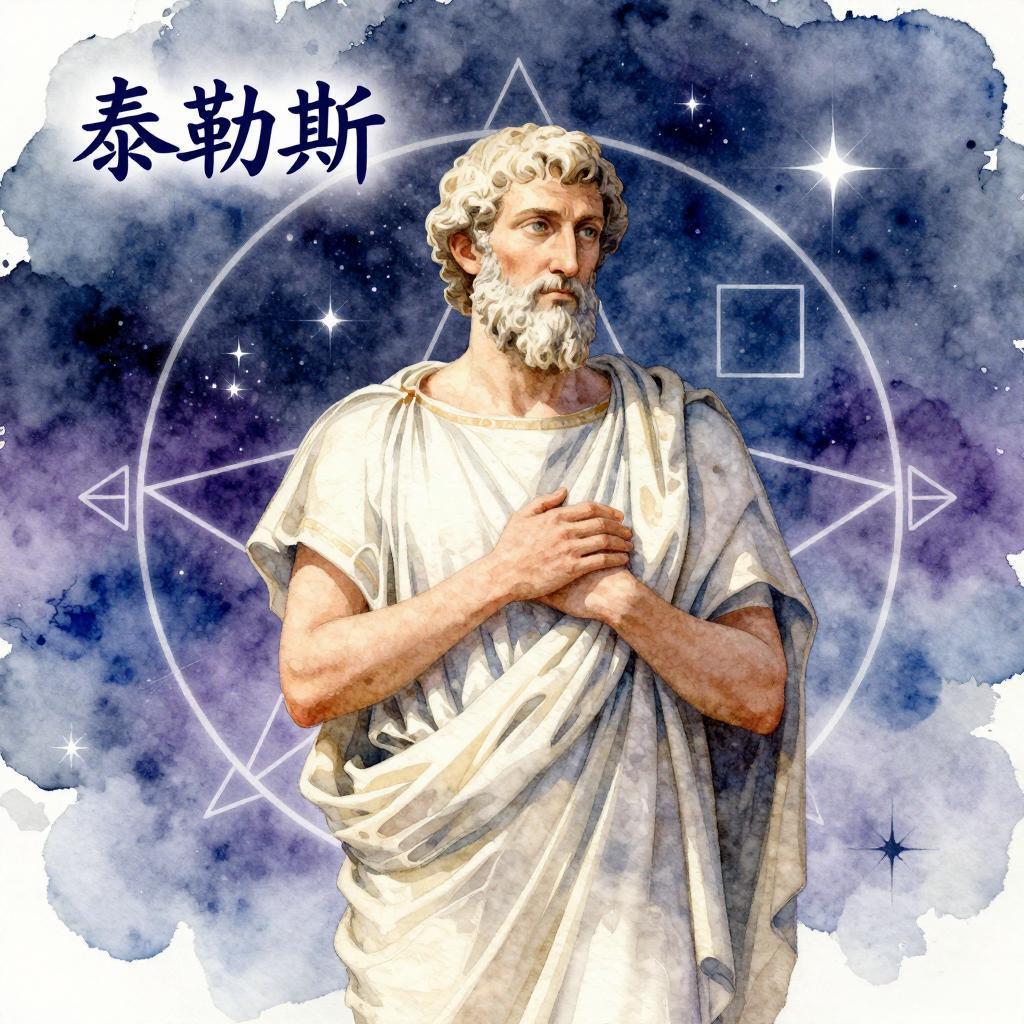
迷雾(The Fog)、锚点(The Anchor)、航迹(The Course)与精进(The Excellence)。
寻得“泰勒斯”:在理性与德性中安顿此生
Finding "Telos": Settling This Life Through Reason and Virtue
引言:现代人的漂泊感
Introduction: The Modern Sense of Drift
我们生活在一个物质丰裕但精神焦灼的时代。我们拥有前所未有的自由,却比历史上任何时候都更感到迷茫。我们忙于追逐目标,却很少停下来问:这些目标是谁设定的?它们真的属于我吗?
We live in an era of material abundance yet spiritual anxiety. We possess unprecedented freedom, yet we feel more lost than at any point in history. We are busy chasing goals, but rarely pause to ask: Who set these goals? Do they truly belong to me?
两千多年前,亚里士多德给出了一个极其有力的概念来回应这种迷茫——泰勒斯(Telos)。在古希腊语中,它意味着“目的”、“终点”或“为何存在”。对他而言,万物皆有目的,橡果的目的就是成为橡树,而人的目的,就是通过理性(Logos)与德性(Arete),找到那个独属于你的“泰勒斯”,并以此安顿此生。
More than two thousand years ago, Aristotle offered a powerful concept to address this confusion—Telos. In ancient Greek, it means "purpose," "end," or "that for which something exists." For him, everything has a purpose: the purpose of an acorn is to become an oak tree. And the purpose of a human being is to find that unique "Telos" through Reason (Logos) and Virtue (Arete), thereby settling this life.
第一乐章:知命 —— 寻找你的“泰勒斯”
Movement I: Knowing Your Mandate — Finding Your "Telos"
“知道此生为何而来。”
"To know why you are here."
亚里士多德认为,要理解一件事物,必须理解它的功能(Ergon)。人的独特功能不是吃饭睡觉,也不是生长衰老,因为这些植物也有。人的独特功能是“合乎理性的灵魂活动”。
Aristotle argued that to understand a thing, one must understand its function (Ergon). The unique function of man is not eating or sleeping, nor growing old—for plants do that too. The unique function of man is "the activity of the soul in accordance with reason."
这就是你的“泰勒斯”。它不是外界强加给你的KPI,而是你内心深处对“我是谁”的确认。
This is your Telos. It is not a KPI imposed by the outside world, but a confirmation deep in your heart of "who I am."
当你不知道为何而来时,你会像无头苍蝇一样,把手段当成目的:把赚钱当成目的,把升职当成目的,把别人的羡慕当成目的。但当你寻得“泰勒斯”,你就有了北极星。你开始明白,工作只是载体,关系只是道场,财富只是燃料。你存在的意义,在于发挥你特有的潜能。
When you don't know why you are here, you treat means as ends: making money becomes the end, getting promoted becomes the end, gaining others' envy becomes the end. But when you find your Telos, you have a North Star. You begin to realize that work is just a vehicle, relationships are the training ground, and wealth is merely fuel. Your meaning lies in realizing your specific potential.
中道智慧(The Golden Mean): 不要走向虚无主义的极端(认为一切皆无意义),也不要走向狂热主义的极端(为了所谓“大义”牺牲一切)。你的“泰勒斯”应当是你理性思考后,最真诚的选择。
The Golden Mean: Avoid the extreme of nihilism (believing nothing matters) and the extreme of fanaticism (sacrificing everything for a so-called "cause"). Your Telos should be the most sincere choice after rational deliberation.
第二乐章:知行 —— 实践智慧(Phronesis)
Movement II: Knowing Execution — Practical Wisdom (Phronesis)
“知道如何完成。”
"To know how to accomplish it."
找到了目的,接下来就是行动。但亚里士多德警告我们:光有理论知识(Episteme)是不够的,你需要实践智慧(Phronesis)。
Once you find the purpose, the next step is action. But Aristotle warned us: mere theoretical knowledge (Episteme) is insufficient; you need Practical Wisdom (Phronesis).
很多人之所以痛苦,是因为他们拥有宏大的愿景(Telos),却缺乏落地的智慧。实践智慧是一种在具体情境中做出正确判断的能力。它告诉你:
Many people suffer because they have grand visions (Telos) but lack the wisdom to execute. Practical wisdom is the ability to make correct judgments in specific situations. It tells you:
-
何时该坚持,何时该放弃?(避免过度与不及)
When to persist and when to give up? (Avoiding excess and deficiency)
-
如何用合适的方式对待合适的人?
How to treat the right person in the right way?
-
如何将大目标拆解为每日的习惯?
How to break down big goals into daily habits?
知道如何完成,就是把“理性”注入时间的缝隙里。 不是等待风暴过去,而是在雨中跳舞。亚里士多德说:“我们通过做公正的事成为公正的人。” 同样,我们通过完成目标的具体动作,来完成我们的使命。
Knowing how to accomplish is injecting "reason" into the cracks of time. It is not waiting for the storm to pass, but dancing in the rain. Aristotle said, "We become just by doing just acts." Likewise, we fulfill our mission by taking the concrete actions required to achieve our goals.
第三乐章:知进 —— 德性是种习惯
Movement III: Knowing Improvement — Virtue is a Habit
“知道如何做得更好。”
"To know how to do it better."
这是“知进”的阶段。亚里士多德有一个著名的论断:“卓越(德性)不是一种行为,而是一种习惯。”
This is the stage of "knowing improvement." Aristotle had a famous dictum: "Excellence (Virtue) is not an act, but a habit."
你无法一次性“完成”人生。生命是一个动态的过程,就像射箭。箭一旦离弦,风向变了,你就得微调姿势。“知道如何做得更好”就是持续的自我修正。
You cannot "finish" life in one go. Life is a dynamic process, like archery. Once the arrow leaves the bow, if the wind shifts, you must adjust your posture. "Knowing how to do it better" is continuous self-correction.
这要求我们具备自省(Sophrosyne)的能力。我们要时刻审视:
This requires the capacity for Self-reflection (Sophrosyne). We must constantly examine:
-
我在退步吗? 还是仅仅在重复舒适区?
Am I regressing? Or merely repeating what is comfortable?
-
我的德性是否增长? 我是否比昨天更有勇气、更节制、更慷慨?
Has my virtue increased? Am I braver, more temperate, and more generous than yesterday?
-
我是否在趋近那个“中道”? 既不放纵,也不压抑;既不傲慢,也不自卑。
Am I approaching the "Mean"? Neither indulgent nor repressed; neither arrogant nor self-deprecating.
知进,就是在理性的光辉下,不断打磨自己的灵魂。
Knowing improvement is continuously polishing one's soul under the light of reason.
安顿此生
Conclusion: Settling This Life
寻得“泰勒斯”,是一场漫长的回归。
Finding "Telos" is a long journey home.
当你知道为何而来(知命),你就不再随波逐流;
When you know why you are here (Mandate), you no longer drift with the tide;
当你知道如何完成(知行),你就不再焦虑内耗;
When you know how to accomplish it (Execution), you no longer suffer from anxiety;
当你知道如何做得更好(知进),你就不再恐惧衰老与终结。
When you know how to do it better (Improvement), you no longer fear aging and endings.
亚里士多德告诉我们,最高的幸福(Eudaimonia)不是一阵阵的快乐,而是“合乎德性的灵魂活动”。当你用尽一生的理性与德性,去完成那个独属于你的“泰勒斯”时,你会发现,你早已在喧嚣的尘世中,深深地安顿了下来。
Aristotle tells us that the highest happiness (Eudaimonia) is not fleeting pleasure, but "the activity of the soul in accordance with virtue." When you spend a lifetime using reason and virtue to complete your unique "Telos," you will find that you have long since settled deeply amidst the noise of the world.
此刻,不妨问问自己:
At this moment, ask yourself:
-
我的“泰勒斯”是什么? (What is my Telos?)
-
今天,我做了哪一件符合理性的小事? (What small, rational act did I do today?)
-
最近,我在哪方面变得比以往更好了? (In what way have I recently become better than before?)
此文由 怡心湖 编辑,若您觉得有益,欢迎分享转发!:首页 > 历史人文 » 寻得“泰勒斯”:在理性与德性中安顿此生