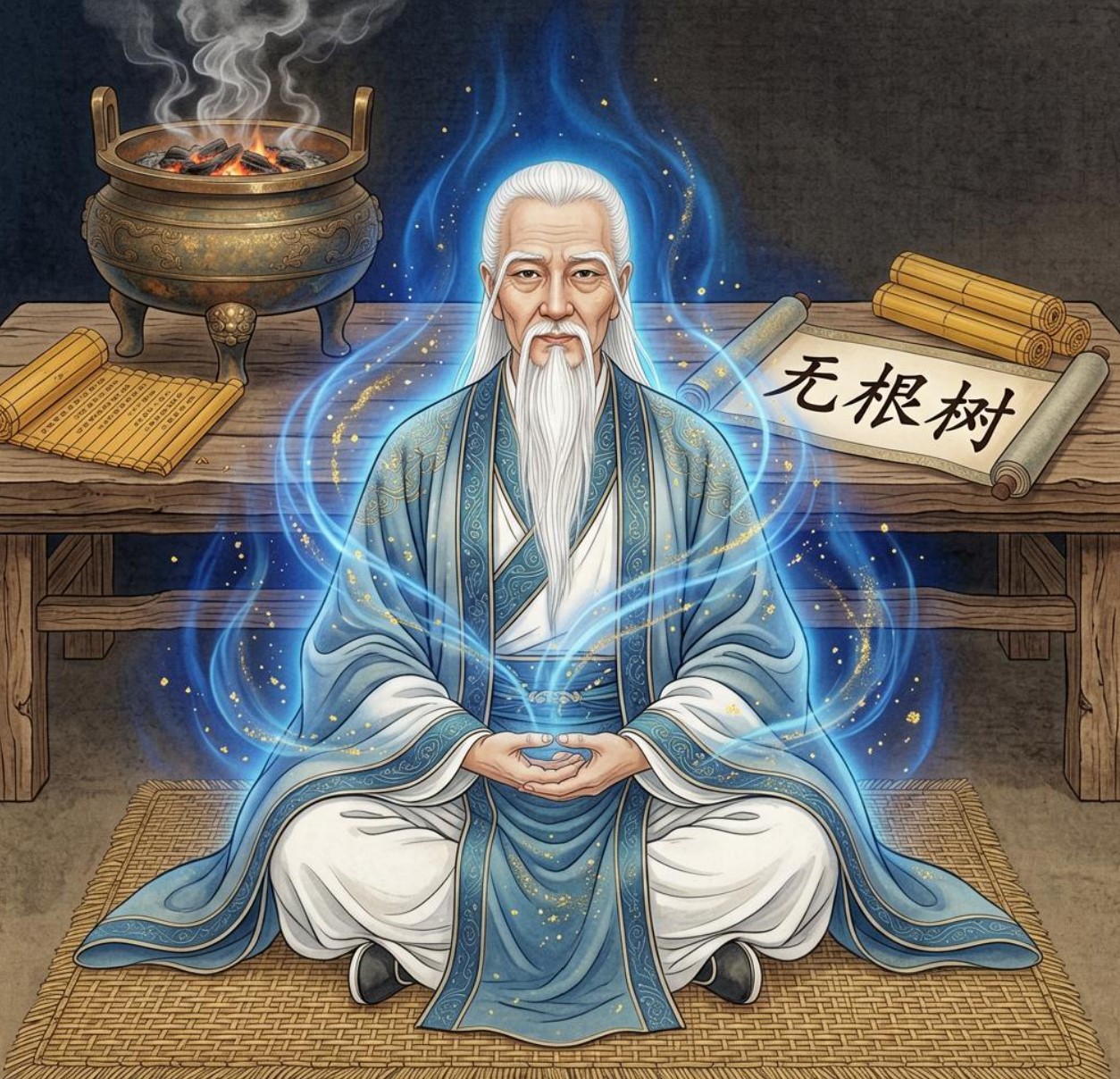
复调的文明:超越儒法二元叙事,重审中华治理智慧的“四维底色”
The Polyphonic Civilization: Beyond the Confucian-Legalist Dichotomy, Re-examining the "Four-Dimensional Base" of Chinese Governance Wisdom
摘要
长期以来,西方汉学界与中国近现代思潮中,常将中华文明的内核简化为“儒表法里”的二元结构——即儒家提供伦理面具,法家提供专制内核。这种叙事忽略了中华文明的“复调性”与“系统性”。本文主张,中华文明的深层治理智慧,是由儒家(伦理秩序)、法家(制度刚性)、道家(战略弹性)与墨家(底层逻辑)共同编织的四维结构,并经由阴阳家(系统思维)进行整合。重审这一底色,不仅是对历史的纠偏,更是为当代中国乃至全球治理危机提供超越“威权-自由”二元对立的中国方案。
Abstract
For a long time, both Western Sinology and modern Chinese intellectual trends have tended to reduce the essence of Chinese civilization to a Confucian-Legalist dichotomy—where Confucianism provides the ethical facade and Legalism the autocratic core. This narrative overlooks the "polyphonic" and "systemic" nature of Chinese civilization. This paper argues that the deep governance wisdom of China rests on a four-dimensional structure woven together by Confucianism (ethical order), Legalism (institutional rigidity), Daoism (strategic flexibility), and Mohism (grassroots logic), integrated through the Yin-Yang School (systems thinking). Re-examining this foundation is not merely a historical correction, but offers a distinct "Chinese solution" to contemporary governance crises, moving beyond the binary opposition of "authoritarianism vs. liberalism."
一、 被遮蔽的复杂性:为何“儒法叙事”不够用?
I. The Obscured Complexity: Why the "Confucian-Legalist Narrative" Falls Short
将中国历史简单归结为“外儒内法”,源于对法家“术势”的恐惧和对儒家“礼教”的批判。然而,这种视角无法解释诸多历史现象:为什么汉朝在尊崇儒术后,还要推崇黄老之术?为什么历代水利、天文、历法的宏大工程背后,有着严密的数理逻辑和阴阳五行推演?为什么基层社会在皇权不下县的情况下,依然能维持高度的自治与秩序?
答案在于,真实的中华文明是一个多层蛋糕。法家构建了国家的骨骼(官僚体制与刑法),儒家填充了血肉(伦理纲常与教育);但如果缺乏道家提供的呼吸调节(休养生息与战略退守),机体便会硬化坏死;若缺乏墨家提供的毛细血管(技术工匠与侠义精神),机体便会供血不足;而阴阳家则是神经系统,将这一切连接为一个有机整体。
The tendency to reduce Chinese history to "Confucianism on the surface, Legalism underneath" stems from a fear of Legalist "techniques and power" (shuand shi) and a critique of Confucian "ritualism." However, this perspective fails to explain numerous historical phenomena: Why did the Han dynasty promote Huanglao Daoism even while venerating Confucianism? Why did massive state projects in hydraulics, astronomy, and calendrical science rely on rigorous mathematical logic and the cosmology of Yin-Yang and the Five Phases? Why did grassroots society maintain high levels of autonomy and order even when imperial power did not reach below the county level?
The answer lies in the fact that authentic Chinese civilization is a multi-layered cake. Legalism constructed the skeleton (the bureaucratic system and penal codes), while Confucianism provided the flesh (ethical norms and education). But without Daoism supplying the respiratory rhythm (periods of recuperation and strategic withdrawal), the organism would harden and necrotize. Without Mohism providing the capillary network (technical craftsmanship and the spirit of chivalry), the organism would suffer from ischemia. The Yin-Yang School acts as the nervous system, integrating all these elements into an organic whole.
二、 四维底色:中华治理智慧的完整拼图
II. The Four-Dimensional Base: The Complete Mosaic of Chinese Governance Wisdom
1. 法家之骨:制度刚性与绩效合法性
The Skeleton of Legalism: Institutional Rigidity and Performance Legitimacy
法家不仅仅是“严刑峻法”。其核心贡献在于建立了科层制(Bureaucracy)与功绩制(Meritocracy)。从商鞅的“废井田”到李斯的“郡县制”,法家打破了血缘宗法制,确立了“宰相必起于州部,猛将必发于卒伍”的选拔逻辑。这种对制度理性的追求,保证了中华帝国在庞大疆域下的动员能力。直到今天,中国治理体系中对“集中力量办大事”的制度优势的追求,依然流淌着法家的血液。
Legalism is far more than just "harsh punishments and strict laws." Its core contribution lies in establishing Bureaucracy and Meritocracy. From Shang Yang's abolition of the well-field system to Li Si's implementation of the commandery-county system, Legalism dismantled the hereditary clan system, establishing the logic that "Chancellors must rise from local posts, and fierce generals from the ranks of soldiers." This pursuit of institutional rationality ensured the mobilization capacity of the Chinese empire across vast territories. To this day, the pursuit of the institutional advantage of "pooling resources to accomplish great tasks" in China's governance system still carries the DNA of Legalism.
2. 儒家之肉:伦理秩序与社会资本
The Flesh of Confucianism: Ethical Order and Social Capital
儒家解决了“人心”的问题。它通过“仁、义、礼、智、信”构建了一张庞大的社会关系网。这种“礼治”并非仅仅是束缚,更是一种社会资本(Social Capital)。在正式法律制度成本过高或覆盖不到的地方,儒家伦理降低了交易成本,维系了人际信任。更重要的是,儒家“修齐治平”的理念,为士大夫阶层提供了“道统”对抗“政统”的道德勇气,这是中国历史上批判精神的重要来源。
Confucianism addresses the issue of the "human heart." It constructs a vast web of social relations through "benevolence, righteousness, ritual, wisdom, and faithfulness." This "rule of ritual" (li zhi) is not merely restrictive; it constitutes a form of Social Capital. Where formal legal systems are too costly or inaccessible, Confucian ethics lower transaction costs and sustain interpersonal trust. More importantly, the Confucian ideal of "cultivating oneself, regulating the family, governing the state, and bringing peace to the world" provided the scholar-official class with the moral courage to resist political power in the name of the "Way" (Dao), serving as a vital source of critical spirit throughout Chinese history.
3. 道家之气:战略弹性与生态智慧
The Breath of Daoism: Strategic Flexibility and Ecological Wisdom
道家常被误解为消极避世,实则它是中华文明最深邃的战略备份。每当王朝因过度扩张(法家过亢)或礼仪僵化(儒家过繁)而濒临崩溃时,道家思想便提供“休养生息”的喘息之机。汉初的“文景之治”、唐初的“贞观之治”,无不渗透着“无为而治”的智慧。此外,道家“道法自然”的生态观,早于现代环保主义两千年,提醒人类在征服自然的同时,必须保持谦卑与顺应。
Daoism is often misunderstood as passive escapism; in reality, it serves as the deepest strategic backup of Chinese civilization. Whenever a dynasty teetered on the brink of collapse due to overexpansion (Legalist excess) or ritual ossification (Confucian complexity), Daoist thought provided the respite needed for "recuperation." The "Rule of Wen and Jing" in the early Han and the "Zhenguan Era" in the early Tang were both steeped in the wisdom of "governing by non-action." Furthermore, the Daoist ecological view of "the Dao models itself after nature" (dao fa zi ran) predates modern environmentalism by two millennia, reminding humanity to remain humble and compliant even as it seeks to conquer nature.
4. 墨家之血:技术理性与平民精神
The Blood of Mohism: Technological Rationality and Egalitarian Spirit
墨家在秦汉后逐渐隐入幕后,但其基因从未消失。墨家的“兼爱”与“非攻”塑造了底层民众对平等与和平的渴望;其“尚贤”与“节用”影响了中国的节俭美德与实用主义倾向。尤为重要的是,墨家代表了中国的技术官僚(Technocracy)传统。《墨经》中包含的大量物理学、几何学与逻辑学知识,证明了中国古代并非只有人文思考,更有严密的实证精神。这种精神在后世的工匠、医生、农学家身上得到了传承。
Mohism receded from the mainstream after the Qin and Han dynasties, but its genetic code never vanished. Mohist concepts of "universal love" (jian ai) and "anti-aggression" (fei gong) shaped the grassroots longing for equality and peace. Its doctrines of "exalting the worthy" (shang xian) and "frugality" (jie yong) influenced Chinese virtues of thrift and pragmatic tendencies. Crucially, Mohism represents China's tradition of Technocracy. The Mozicanon contains substantial knowledge of physics, geometry, and logic, proving that ancient China possessed not only humanistic contemplation but also rigorous empirical spirit. This ethos was inherited by subsequent generations of artisans, physicians, and agronomists.
5. 阴阳家之脉:系统论与动态平衡
The Pulse of the Yin-Yang School: Systems Theory and Dynamic Equilibrium
阴阳家往往被视为方士迷信,实则是中国古代的系统论专家。邹衍的“五德终始说”不仅解释了王朝更替,更提供了一种宏观的历史哲学。它将政治、经济、气候、农业视为一个超循环系统。中医的经络学说、农历的二十四节气,都是阴阳家思维的体现。这种整体性思维(Holistic Thinking)使得中华文明在面对复杂问题时,习惯于寻找系统性解决方案,而非头痛医头、脚痛医脚。
The Yin-Yang School is often dismissed as the superstition of occultists, yet it functioned as the school of systems theory in ancient China. Zou Yan's theory of the "Five Virtues' Cyclical Succession" not only explained dynastic transitions but also provided a macroscopic philosophy of history. It viewed politics, economy, climate, and agriculture as a hyper-cycle system. The meridian theory of Traditional Chinese Medicine and the 24 Solar Terms of the lunar calendar are embodiments of Yin-Yang School thinking. This holistic mode of thought predisposes Chinese civilization to seek systemic solutions to complex problems, rather than merely treating symptoms in isolation.
三、 智库视角:复调文明对现代治理的启示III. A Think Tank Perspective: Implications of the Polyphonic Civilization for Modern Governance
此文由 怡心湖 编辑,若您觉得有益,欢迎分享转发!:首页 > 走·江湖 » 复调的文明:超越儒法二元叙事,重审中华治理智慧的“四维底色”
 法天则地,兼采百家:《吕氏春秋》中的