The Arleigh Burke-Class Destroyer: 35 Years of Iteration in Steel and Software
阿利·伯克级驱逐舰:钢与代码迭代三十五年的海上标杆
The most successful surface combatant of the post–Cold War era is not the most advanced on paper — it is the one that never stopped evolving.
冷战后最成功的水面战舰,未必是纸面参数最强的那一型;它只是从未停止进化。
0. Prologue|缘起:为什么是 Burke, Not Zumwalt
0. 序章|为何是"伯克",而非"朱姆沃尔特"
When the U.S. Navy retired the last Spruance and needed a radar-picket successor to the Ticonderoga cruisers, it had two roads: the radical DDG-1000 Zumwalt and the pragmatic DDG-51 Arleigh Burke. The Zumwalt promised stealth, gunpower and a tumblehome hull — and delivered only 3 ships at ruinous cost. The Burke promised something less glamorous: a survivable steel hull, four SPY-array faces, and a software bus that could outlive its own designers.
当美国海军送走最后的"斯普鲁恩斯"级、需要替补"提康德罗加"级巡洋舰的雷达哨位时,摆在桌上有两条路:激进的 DDG-1000 朱姆沃尔特,与务实的 DDG-51 阿利·伯克。朱姆沃尔特许诺隐身、电磁炮与内倾穿浪船体,最终只造 3 艘且单价失控;伯克许诺的东西没那么炫——一艘能扛揍的钢壳、四面 SPY 相控阵、以及一条比设计师寿命更长的软件总线。
Named after Admiral Arleigh A. Burke ("31-knot Burke"), the lead ship DDG-51 commissioned on 4 July 1991. As of 2026, 74+ ships are in commission, ~98 planned, with Flight III (DDG-125 Jack H. Lucas, DDG-128 Ted Stevens) now entering the fleet while DDG-137 John F. Lehman has started fabrication. No other destroyer class in history has been built at this scale with this longevity.
首舰 DDG-51 以二战海军上将阿利·A·伯克("31节伯克")命名,于 1991 年 7 月 4 日入列。至 2026 年,现役 74 艘以上,计划总数约 98 艘;Flight III 首舰 DDG-125"杰克·H·卢卡斯"、二号舰 DDG-128"泰德·史蒂文斯"已入列,DDG-137"约翰·F·莱曼"已于 2026 年 6 月切割首块钢板。人类海军史上,没有第二型驱逐舰以这种规模与寿命持续建造。
1. Hull & Propulsion|舰体与动力:保守外壳里的冗余哲学
1. 舰体与动力:保守船壳,激进留余量
|
Parameter |
Flight I/II |
Flight IIA |
Flight III |
|---|---|---|---|
|
Length / Beam |
153.8 m / 20.4 m |
155.3 m / 20.4 m |
155.3 m / 20.4 m |
|
Full load |
~8,300–9,000 t |
~9,200–9,600 t |
~9,600–10,000 t |
|
Propulsion |
4× GE LM2500 COGAG, ~100,000 shp |
same |
same, uprated 4 MW gensets (vs 3 MW) |
|
Speed / Range |
31 kn / 4,200 nm@20kn |
same |
same |
The hull is all-steel with Kevlar splinter protection, a flared bow, and a low-RCS aluminum superstructure — not true stealth, but survivability-first. The genius is not in the lines but in the margins: weight growth margin, electrical margin, cooling margin were baked in during the 1980s design so that a 1991 ship could absorb a 2020s radar without a redesign.
舰体为全钢+凯夫拉防破片衬层,外飘艏、低 RCS 铝合金上层建筑——不是真隐身,而是"生存优先"。其聪明之处不在线型,而在余量:1980 年代定稿时就埋入了排水量余量、供电余量、冷却余量,于是 1991 年的船体能吞下 2020 年代的雷达而不必重画船体。
COGAG with four LM2500s is mechanically boring — and that is the point. Boring means reliable. Two shafts, reversible, no magic. The real revolution is downstream: electrical generation jumped from 3 MW to 4 MW per alternator set on Flight III to feed SPY-6 and baseline 10 cooling loads.
四台 LM2500 的 COGAG 联合全燃动力在机械上很"无聊"——而这正是重点。无聊即可靠。双轴可逆,无黑科技。真正的革命在下游:Flight III 发电机由 3 MW 升至每机组 4 MW,只为喂饱 SPY-6 与基线 10 的散热胃口。
2. Aegis: Not a Radar, But an Operating System
2. 宙斯盾:不是雷达,是操作系统
The word Aegis is mistranslated as "shield." In practice it is a distributed C2 + sensor-fusion + weapons-bus OS that has gone through Baselines 0 → 9 → 10.
"宙斯盾"常被译作"盾"。实操中它是一套分布式指挥控制+传感器融合+武器总线操作系统,历经基线 0 → 9 → 10 的演进。
- SPY-1D (Flight I/II/IIA): passive phased array, 4 fixed faces, analog roots, patched for 30 years.
- SPY-6(V)1 (Flight III): GaN active phased array, ~15 dB gain over SPY-1D, ~31× sensitivity, double detection range on half-RCS targets, 2×2 RMAs scalable.
- ACB / TI cycle: Advanced Capability Build (software) + Technology Insertion (hardware) every ~4 yrs under IWS — meaning a Burke does not get one upgrade, it gets a subscription.
- NIFC-CA + CEC: ship launches, E-2D/F-35 sees — SM-6 killed a target at 400 km over-the-horizon in 2014 testing.
- IAMD: air-defense and BMD simultaneously since Baseline 9; BMD 5.0/5.1/6.0 track and engage MRBM/IRBM midcourse with SM-3 Block IB/IIA.
- SPY-1D(Flight I/II/IIA):无源相控阵,四面固定,模拟时代根脉,打补丁续命 30 年。
- SPY-6(V)1(Flight III):氮化镓有源相控阵,较 SPY-1D 增益约 15 dB、灵敏度约 31 倍,对半 RCS 目标探测距离翻倍,RMAs 可 2×2 拼接。
- ACB/TI 节奏:在 IWS 体系下每约 4 年一轮"先进能力构建(软件)+技术插入(硬件)"——伯克不是升级一次,而是买订阅。
- NIFC-CA + CEC 协同交战:本舰发射、E-2D/F-35 指示——2014 年 SM-6 完成 400 km 视距外拦截试验。
- IAMD 一体化空海导弹防御:自基线 9 起防空与反导并行;BMD 5.0/5.1/6.0 用 SM-3 Block IB/IIA 中段拦 MRBM/IRBM。
Software eats the warship. The Burke is the proof.
软件吞噬战舰。伯克即是证据。
3. Weapons: One Magazine, Every Mission
3. 武器:一个垂发,全谱任务
Mk 41 VLS is the mechanical heart:
- Flight I/II: 90 cells
- Flight IIA/III: 96 cells (fore 32 + aft 64)
Mk 41 VLS 是机械心脏:
- Flight I/II:90 单元
- Flight IIA/III:96 单元(前 32 + 后 64)
Loaded with:
- SM-2 Block IIIA/IV — zone air defense
- SM-6 — AAW + over-the-horizon via NIFC-CA + nascent anti-ship role
- SM-3 Block IB/IIA — exo-atmospheric BMD
- Tomahawk — land attack (TLAM-E Block V can do anti-ship too)
- RUM-139 VL-ASROC — stand-off ASW
- ESSM — 4 per cell ("one pit four missiles") on IIA/III
弹种覆盖:
- SM-2 Block IIIA/IV——区域防空
- SM-6——防空 + NIFC-CA 视距外 + 新兴反舰
- SM-3 Block IB/IIA——大气层外反导
- 战斧——对陆(Block V 具反舰能力)
- VL-ASROC——远程反潜
- ESSM——IIA/III 可"一坑四弹"
Secondary fit: 1× Mk 45 127 mm (Mod 4 on later ships), 2× Mk 32 triple 324 mm torpedo tubes, CIWS / SeaRAM, Harpoon (being phased out on recent builds). Flight IIA added dual hangars for 2× MH-60R, turning Burke from AAW picket into a real ASW platform.
辅武装:1 门 Mk 45 127 mm(后期 Mod 4)、2× Mk 32 三联 324 mm 鱼雷、CIWS/海拉姆、鱼叉(近期批次逐步拆)。Flight IIA 增设双机库容纳 2 架 MH-60R,把伯克从防空哨舰变成真正反潜平台。
4. Four Flights, One Spine
4. 四个批次,一条脊梁
Flight I / IA (DDG-51–71) — original 90-cell, no hangar, towed array, SPY-1D, Baseline 4/5. Now mid-life upgraded or slated for retirement as Ticonderoga leaves.
Flight I / IA(DDG-51–71)——原始 90 单元、无机库、拖曳阵列、SPY-1D、基线 4/5。现正中期延寿或随提康德罗加退役而计划退场。
Flight II (DDG-72–78) — minor EW/link upgrades, still 90 cells.
Flight II(DDG-72–78)——电子战/链路微调,仍 90 单元。
Flight IIA (DDG-79–124, DDG-127) — the workhorse: 96 cells, dual hangar, SPY-1D(V), Baseline 9, ACB 16 on late ships. DDG-127 Patrick Gallagher delivered 2026 as the last IIA. ~47 built.
Flight IIA(DDG-79–124、DDG-127)——中坚:96 单元、双机库、SPY-1D(V)、基线 9,后期舰上 ACB 16。DDG-127"帕特里克·加拉赫"2026 年交付,为最后一艘 IIA,共约 47 艘。
Flight III (DDG-125–126, 128, 131…) — the real refresh: SPY-6(V)1, Baseline 10, 4 MW gensets, reinforced bridge, BMD 6.0, full IAMD. DDG-125 commissioned 2023, DDG-128 in 2025, DDG-126/131 still in build.
Flight III(DDG-125–126、128、131…)——真换代:SPY-6(V)1、基线 10、4 MW 发电、加强舰桥、BMD 6.0,全谱 IAMD。DDG-125 于 2023 年服役,DDG-128 于 2025 年服役,DDG-126/131 在造。
Between IIA and III, the U.S. Navy also inserted "Tech Insertion" IIA ships (DDG-119–124) with SPY-1D(V)+SPQ-9B+X-band fire-control fusion — a half-step that bought time when DDG-1000 collapsed.
在 IIA 与 III 之间,美军还插建"技术插入型"IIA(DDG-119–124),用 SPY-1D(V)+SPQ-9B+X 波段火控融合——当 DDG-1000 崩盘时,这半步替美军买了时间。
5. Doctrine: From Aegis Picket to Distributed Lethality
5. doctrine:从宙斯盾哨舰到分布式杀伤
In the 1990s a Burke was a carrier-group air-defense node. In the 2010s it became a forward BMD sentry in Rota, Spain and Yokosuka. In the 2020s it is being rewritten as a distributed lethality / constellation node:
- launch SM-6 anti-ship beyond horizon under F-35/E-2D cueing;
- host cyber/EW payloads via SEWIP Block 3;
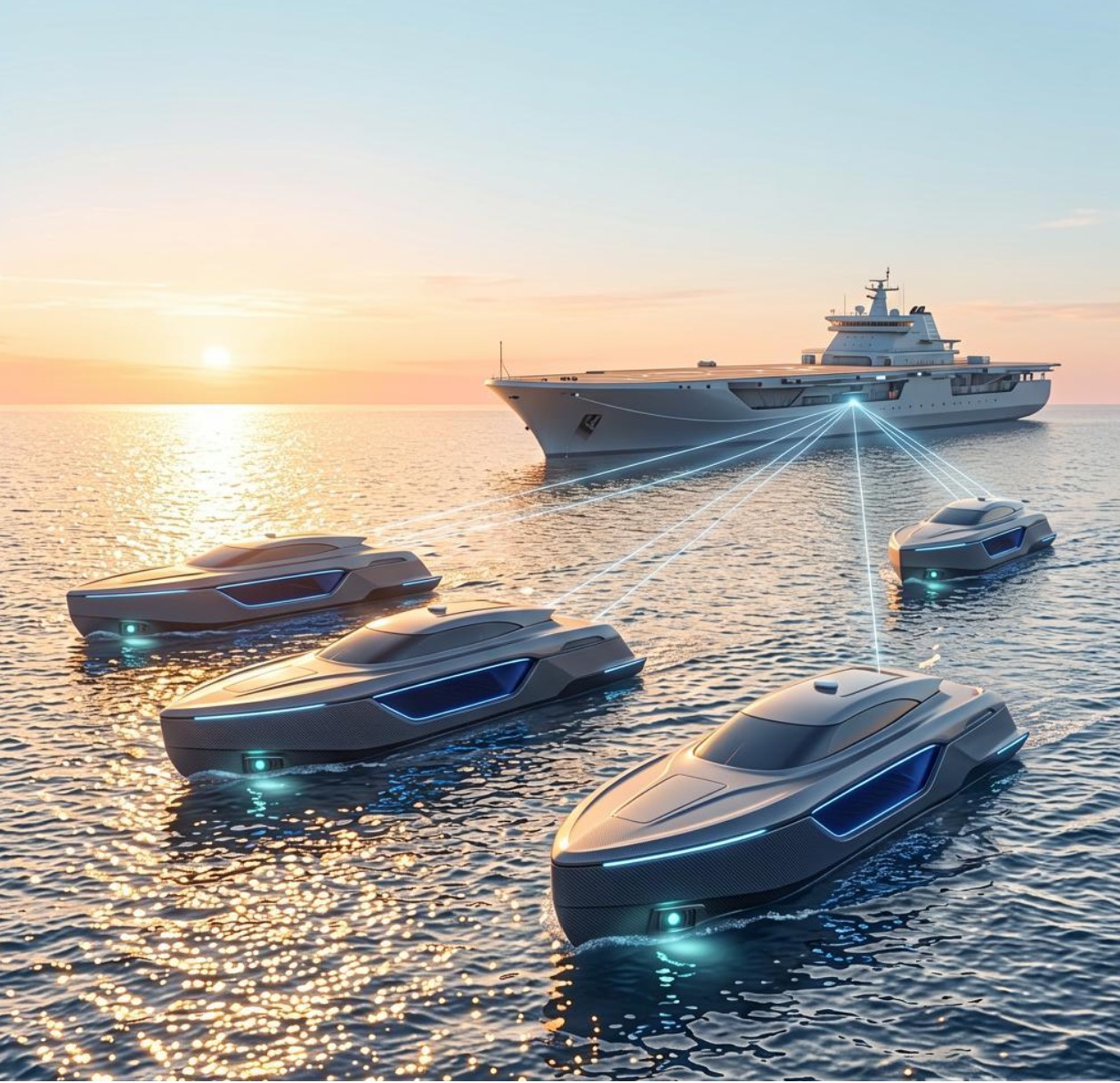
- pair with unmanned surface vessels as a manned-unmanned split-mother;
- absorb hypersonic-track data from space layers and hand off to SM-3/SM-6.
1990 年代伯克是航母群防空节点;2010 年代变成驻罗塔、横须贺的前沿反导哨;2020 年代被重写进分布式杀伤/星座节点:
- 在 F-35/E-2D 提示下发射 SM-6 视距外反舰;
- 通过 SEWIP Block 3 承载网络战/电子战载荷;
- 与无人艇组"有人-无人母舰";
- 吸收太空层高超音速跟踪数据,移交给 SM-3/SM-6。
The ship did not change shape much. The mission software did.
船形没大变。任务软件变了。
6. The Burke Trap|伯克陷阱:成功者的枷锁
Here is the uncomfortable part. The Burke's strength — evolutionary margins — became a strategic inertia. DDG(X) keeps slipping (optimistic first-cut ~2032+); the Ticonderoga cruisers are retiring faster than Flight III can replace them; Ingalls builds ~1/yr, Bath ~0.5/yr, so the fleet shrinks even while "98 ships planned" sounds big.
说点不舒服的。伯克的优势——进化余量——变成了战略惯性。DDG(X) 不断推迟(乐观首舰 2032+);提康德罗加退役速度快过 Flight III 补位;英格尔斯年产约 1 艘、巴斯约 0.5 艘,于是"计划 98 艘"听着响,舰队规模却在缩。
Against a peer adversary with 055-type large destroyers and mass-produced 052DM, the Burke is no longer clearly ahead in raw sensors or VLS count — it leads in allied datalink ubiquity, BMD certification, and 35 years of crew muscle memory. That lead is real but erodable.
面对装备 055 型大驱、量产 052DM 的同级对手,伯克在裸传感器与垂发数上已非明确领先——它领先的是盟友数据链泛在性、BMD 认证经验、35 年舰员肌肉记忆。这领先真实,但可侵蚀。
7. Verdict|结语
The Arleigh Burke class is not a masterpiece of any single technology. It is a masterpiece of keeping options open:
- a 1980s hull that still takes 2020s radars;
- a 1990s VLS that still fires 2030s missiles;
- a software bus that outlived the Cold War, the Global War on Terror, and the rise of great-power competition.
伯克级不是某项技术的杰作,而是"把选项留着"的杰作:
- 1980 年代的壳,仍装得下 2020 年代的雷达;
- 1990 年代的垂发,仍打得出来 2030 年代的导弹;
- 一条软件总线,熬过了冷战、反恐战争与大国竞争回潮。
Until DDG(X) arrives — if it arrives — the Burke remains the nearest thing the world has to a general-purpose, all-weather, software-defined destroyer. Its Chinese counterpart readers already know by heart; its European cousins (Horizon, Type 45, FREMM-FX) are siblings in radar but not in scale. The Burke's true rival is not another ship. It is time itself — and so far, it is winning.
在 DDG(X) 到来之前——如果它真能到来——伯克仍是世界上最接近"通用、全天候、软件定义驱逐舰"的东西。中国同行对此心知肚明;欧洲兄弟(地平线、45 型、FREMM-FX)雷达同源,规模不及。伯克真正的对手不是某艘船,而是时间本身——迄今,它赢着。
Spec box (Flight III, nominal): 155.3 m × 20.4 m, ~9,700 t full load, 4× LM2500 COGAG, 31 kn, 96-cell Mk 41, SPY-6(V)1 + Aegis Baseline 10, SM-2/6/3 + Tomahawk + VL-ASROC + ESSM, 2× MH-60R, ~320 crew.
以下详细与055、052D对比:
此文由 怡心湖 编辑,若您觉得有益,欢迎分享转发!:首页 > 常识论 » 阿利·伯克级驱逐舰:钢与代码迭代三十五年的海上标杆 The Arleigh Burke-Class Destroyer
 LRASM 弹载 AI 决策树(伪代码级)& B-
 巡飞弹在未来海空作战中的地位?
 PHL-191在台海冲突中的作用与任务?
 无源双站/多站雷达(Passive Bistati
 TITAN系统如何利用JACC提供的辐射
 日本陆自NEWS系统与美军陆基电子战