Oracle Bones: The Dawn of Chinese Civilization and Writing
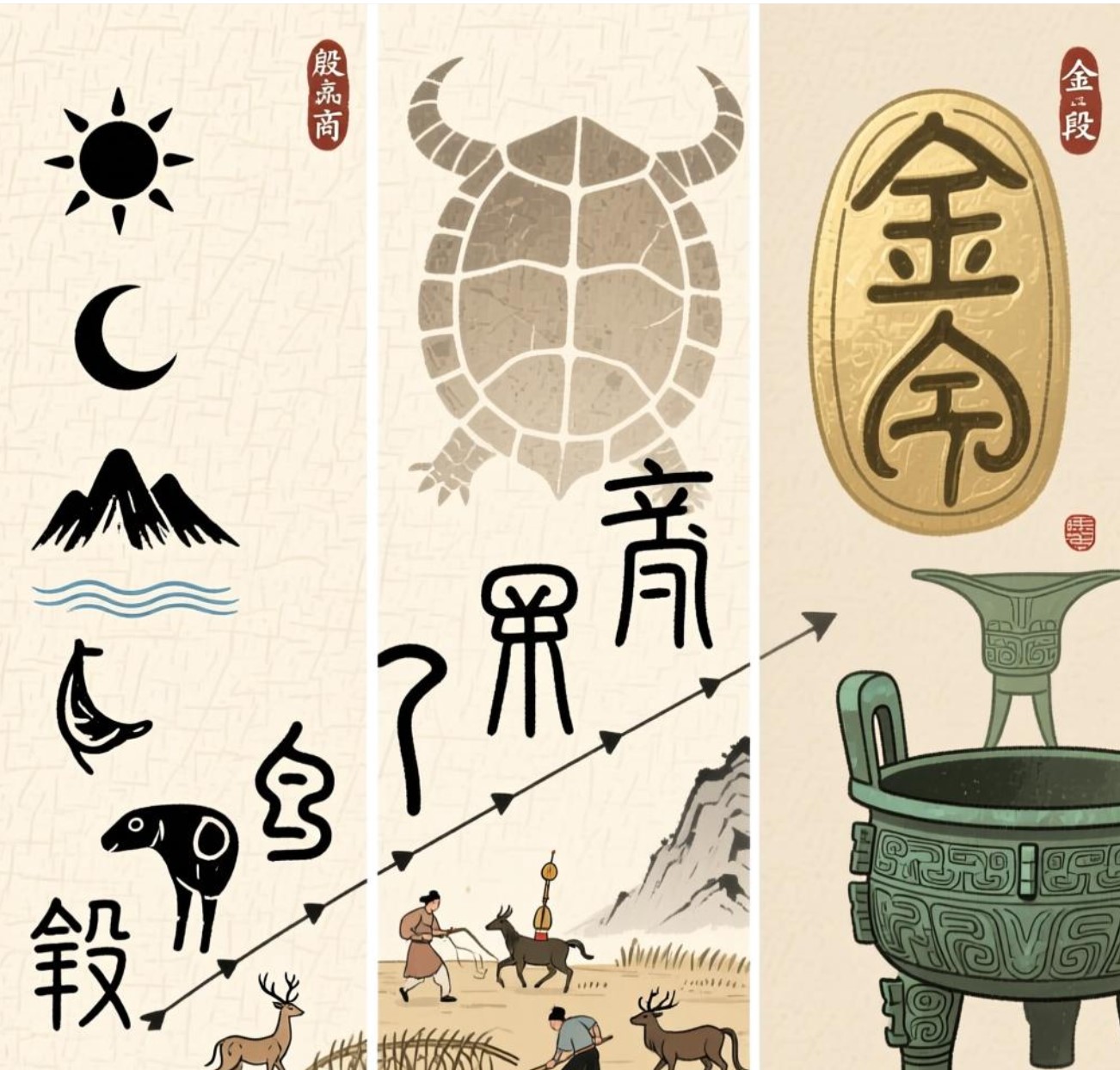
The origins of oracle bones, known as jiaguwenin Chinese, date back to the late Shang Dynasty (c. 1600–1046 BCE), primarily during the reigns of kings from Wu Ding onward. These artifacts are the oldest surviving form of systematic writing in East Asia and provide an unparalleled window into early Chinese society, religion, and governance. The bones used were typically the scapulae (shoulder blades) of oxen or the plastrons (undersides) of turtles, materials believed to possess spiritual potency. The process was a sacred ritual: diviners would inscribe questions onto the bones—regarding weather, harvests, warfare, illness, and royal affairs—apply intense heat to create cracks, and then interpret these cracks as the answers from ancestral spirits and deities. The inscriptions, therefore, are direct records of communication with the divine, blending administrative record-keeping with profound religious practice.
甲骨文的起源:中华文明与书写的黎明
甲骨文(Oracle Bones)的起源可追溯至商代晚期(约公元前1600–前1046年),主要盛行于武丁及其后的商王统治时期。这些器物是东亚现存最古老的系统书写形式,为了解早期中国的社会、宗教与治理提供了无可替代的窗口。所用甲骨多为牛的肩胛骨或龟的腹甲,这些材料被认为具有通灵之力。占卜过程是一项神圣仪式:卜官将问题刻于甲骨之上——内容涉及天象、农收、战争、疾病及王事等——然后施以灼烧令其产生裂纹,并将这些裂纹解读为祖先神灵的启示。因此,甲骨文实为与神明沟通的直接记录,将行政记事与深层的宗教实践融为一体。
From Ritual to Ruins: The Rediscovery That Rewrote History
For over three millennia, these inscribed bones lay buried and forgotten. Their modern rediscovery is a tale of scholarly detective work. In the late 19th century, "dragon bones" (longgu) were being ground into powder and sold in Chinese pharmacies as traditional medicine. It was not until 1899 that antiquarian Wang Yirong recognized the scratches on these bones as ancient writing. This serendipitous discovery triggered a fervent, often clandestine, collection and study by scholars. The primary source was the ancient Shang capital near modern Anyang, Henan province. The systematic archaeological excavations in the 1920s and 1930s, led by institutions like the Academia Sinica, confirmed the site as Yinxu, the Shang's last capital, and yielded tens of thousands of oracle bone fragments. This transformed the Shang Dynasty from a semi-legendary epoch in historical texts into a concretely verified, complex bronze-age civilization.
从仪式到废墟:改写历史的再发现
在超过三千年的时间里,这些刻字甲骨一直被掩埋与遗忘。其现代再发现则是一段学术侦探的传奇。十九世纪末,“龙骨”被研磨成粉,作为药材于中药铺售卖。直至1899年,金石学家王懿荣才认出这些骨片上的刻痕乃古代文字。这一偶然发现引发了学者们狂热且常为秘密的搜集与研究。其主要来源位于今河南安阳附近的古商都。1920至1930年代,由中央研究院等机构主导的系统性考古发掘,确认该地为殷墟——商朝最后的都城,并出土了数以万计的甲骨碎片。这将商朝从历史典籍中半传说的时代,转变为一个被实证的、复杂的青铜时代文明。
The Evolution of a Script: From Pictographs to Systematization
The script itself is a foundational chapter in the evolution of Chinese characters. Early oracle bone script is highly pictographic and variable; the same character could be written in multiple forms. Yet, it already displayed the core principles that would define Chinese writing for millennia: it was logographic (each symbol representing a word or morpheme), and its structure was evolving toward greater abstraction and standardization. Over the roughly 200-year span of the extant inscriptions, one can observe a trend from elaborate pictorial forms toward more linear, simplified, and regularized graphs. This evolution reflects the writing's transition from exclusive use by a small priestly and royal class for ritual purposes to a more functional tool for administrative documentation, laying the groundwork for the subsequent bronze script (jinwen) of the Zhou Dynasty.
书体的演进:从象形到系统化
甲骨文字体本身是汉字演变的基础篇章。早期甲骨文高度象形且多变;同一字可有多种写法。然而,它已展现出定义汉字数千年的核心原则:它是语素文字(每个符号代表一个词或语素),且其结构正朝着更抽象和标准化的方向演进。在现存甲骨文大约两百年的时间跨度内,可以观察到一种从繁复的图画形式向更线条化、简化和规整化的字形发展的趋势。这一演进反映了书写从仅限于少数祭司与王室阶层用于宗教仪式,向成为行政记录的功能性工具的转变,为后来周代的青铜器铭文奠定了基础。
Enduring Legacy: A Living Bridge to Antiquity
Today, over 150,000 oracle bone fragments have been unearthed, containing more than 4,500 distinct characters, of which about one-third have been reliably deciphered. They serve as a direct linguistic and historical bridge to the dawn of Chinese civilization. The study of these bones, known as jiaguxue, is a sophisticated interdisciplinary field combining paleography, archaeology, history, and linguistics. Far from being mere relics, oracle bones are active subjects of research that continue to yield new insights into Shang dynasty genealogy, astronomy, social structure, and even early meteorological phenomena. They stand as a testament to the astonishing continuity of Chinese culture, where the very system of writing initiated on these bones evolved directly into the characters used by billions today.
不朽的遗产:通往远古的鲜活桥梁
迄今,已出土超过十五万片甲骨碎片,包含逾四千五百个不同的字符,其中约三分之一已得到可靠释读。它们充当了直接通向中华文明黎明时期的语言与历史桥梁。甲骨学研究是一门复杂的交叉学科,融合了古文字学、考古学、历史学与语言学。甲骨远非简单的文物,它们仍是持续产生新发现的研究对象,不断为我们揭示商朝世系、天文、社会结构乃至早期气象现象的新知。它们证明了中华文化惊人的连续性——始于这些甲骨之上的书写系统,直接演变为今日数十亿人使用的汉字。
 京剧的起源及艺术价值